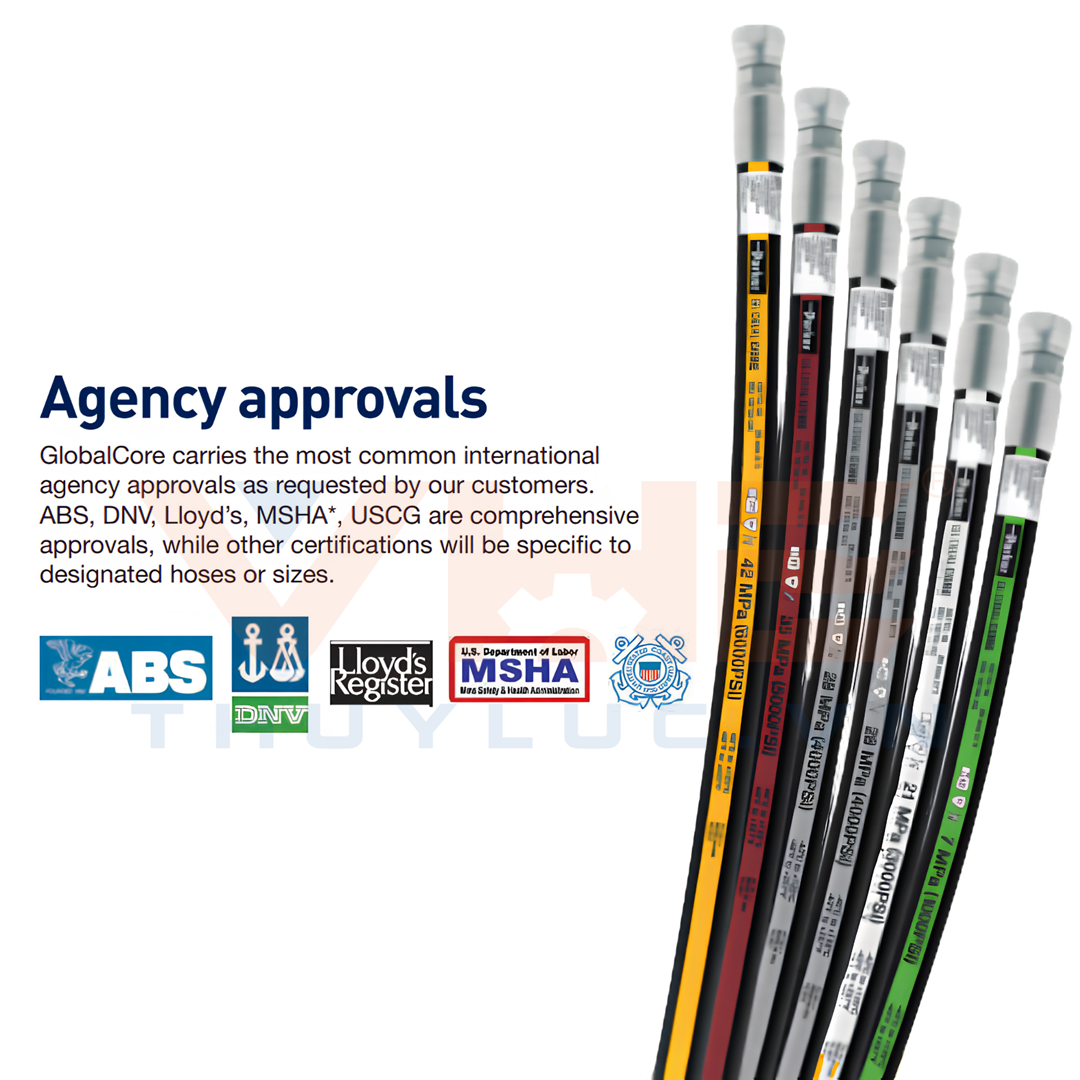
In any hydraulic system, minor components like fittings and ferrules play a decisive role in ensuring the safety and leak-free integrity of the entire network. The industry is shifting from traditional zinc-plated steel to Stainless Steel (SS), a trend that is inevitable in high-performance engineering.
So, why do seasoned engineers prioritize Stainless Steel fittings despite the higher upfront investment? Let’s join Vina-Hydraulic Equipment Joint Stock Company as we provide an in-depth analysis in the article below.
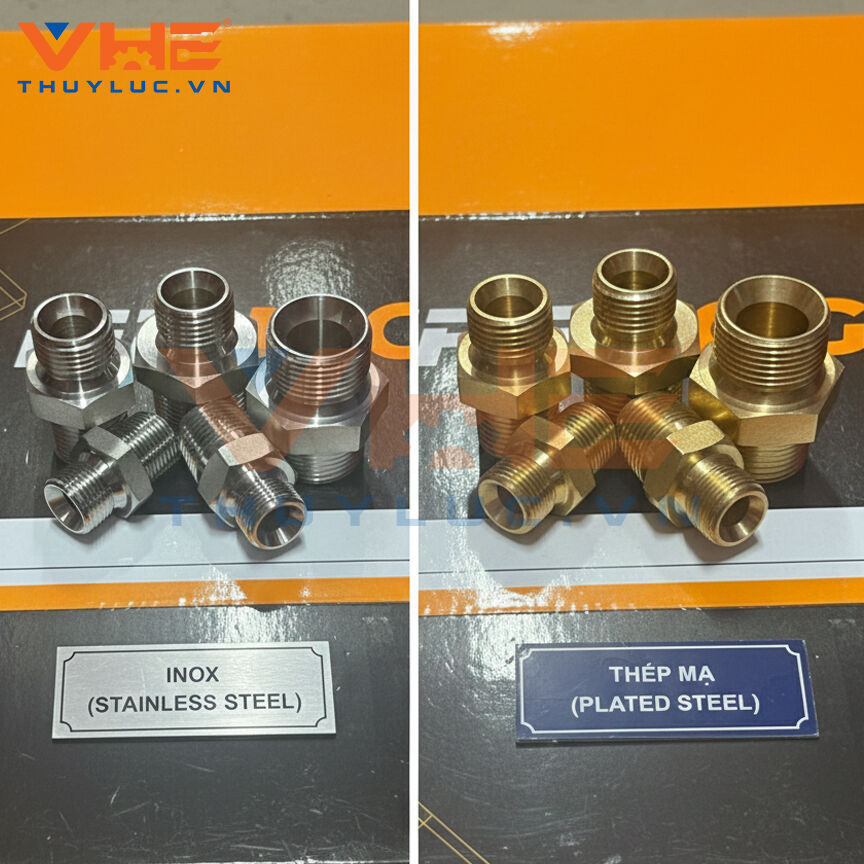
1. Technical Analysis: Stainless Steel (304/316) vs. Zinc-Plated Carbon Steel
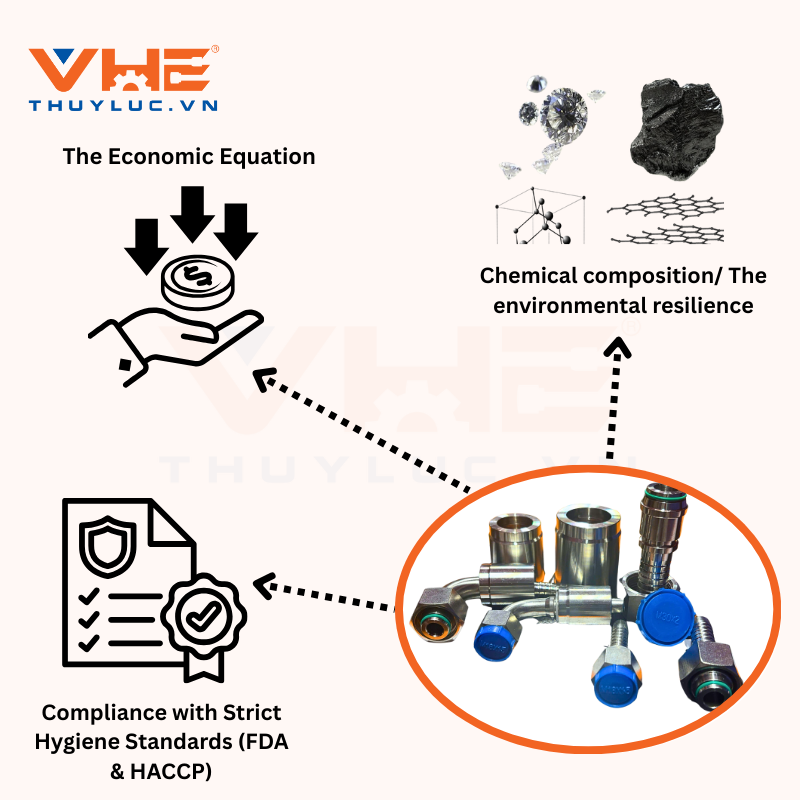
The primary distinction lies in the fundamental chemical composition and the environmental resilience of these two materials.
| Feature | Zinc-plated Steel | Stainless Steel 304 / 316 | Key Technical Insights |
| Composition | Iron + Carbon + Surface Zinc Coating | Iron Alloy + Chromium (min 10.5%) + Nickel + Molybdenum (in 316 grade) | For the Stainless Steel 316 line, the addition of Molybdenum enables the equipment to withstand Chloride environments (seawater) and corrosive acids—conditions where zinc-plated steel fails after just a few months of use. |
| Corrosion Resistance | Average (Zinc layer is prone to peeling over time) | Very High (Self-healing via Chromium Oxide layer) | According to ASTM A240 standards, the Chromium content (min 10.5%) in Stainless Steel reacts with air to create an ultra-thin Chromium Oxide layer ($Cr_2O_3$). If the surface is scratched, this layer automatically regenerates, preventing deep-seated corrosion. High resistance to salt and chemicals. |
| Operating Temperature | Approx. -30°C to 120°C | -200°C to 600°C (Depending on pressure) | Stainless Steel fittings are manufactured to SAE J514 or ISO 8434-1 standards, ensuring high-pressure resistance without thread deformation or cracking, minimizing the risk of hydraulic hose bursts. |
| Surface Durability | Prone to scratches, leading to internal rusting. | Scratch-resistant; maintains a permanent polished aesthetic. | Stainless steel retains its structural and aesthetic integrity even in abrasive working conditions. |
| Service Life | 2 - 5 years (depending on environment) | 10 - 20 years or longer | Choosing Stainless Steel significantly reduces maintenance costs and system downtime over the long term. |
2. The Economic Equation: One-Time Investment, Long-Term Value
Many businesses are hesitant because the initial cost of stainless steel fittings is 2–3 times that of galvanized steel. However, when evaluating the Total Cost of Ownership (TCO), stainless steel emerges as the more economical solution.
- Drastic Reduction in Maintenance Costs: Eliminates the need for frequent replacements caused by corrosion and oxidation.
- Minimizing Downtime Risks: Every hour of machinery downtime due to fitting leaks can result in losses of tens of millions of VND.
- Protection for High-Value Equipment: Rusted fittings can release metallic debris into the oil stream, causing terminal damage to hydraulic pumps and control valves.
- Real-world Example: In the maritime industry, a galvanized fitting may corrode within just 6 months. Replacing it on a vessel can cost 10 times the value of the component itself. In contrast, investing in Stainless Steel 316 fittings ensures durability for 5–10 years without maintenance.
3. Compliance with Strict Hygiene Standards (FDA & HACCP)
For industries such as Food & Beverage, Pharmaceuticals, and Healthcare, stainless steel fittings are not just a choice—they are a mandatory requirement.
Superior Surface Quality: Stainless steel features a smooth, non-porous surface that is chemically inert and exceptionally easy to sanitize.
Safety First: Unlike galvanized steel, which carries the risk of heavy metal leaching and paint flaking, stainless steel ensures zero contamination, maintaining the highest food safety standards.
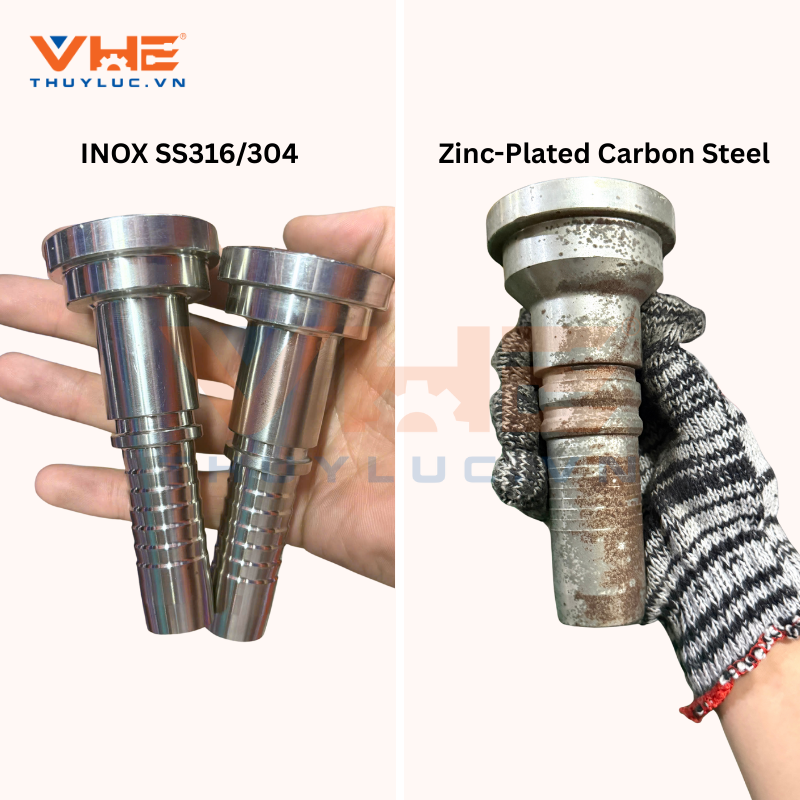
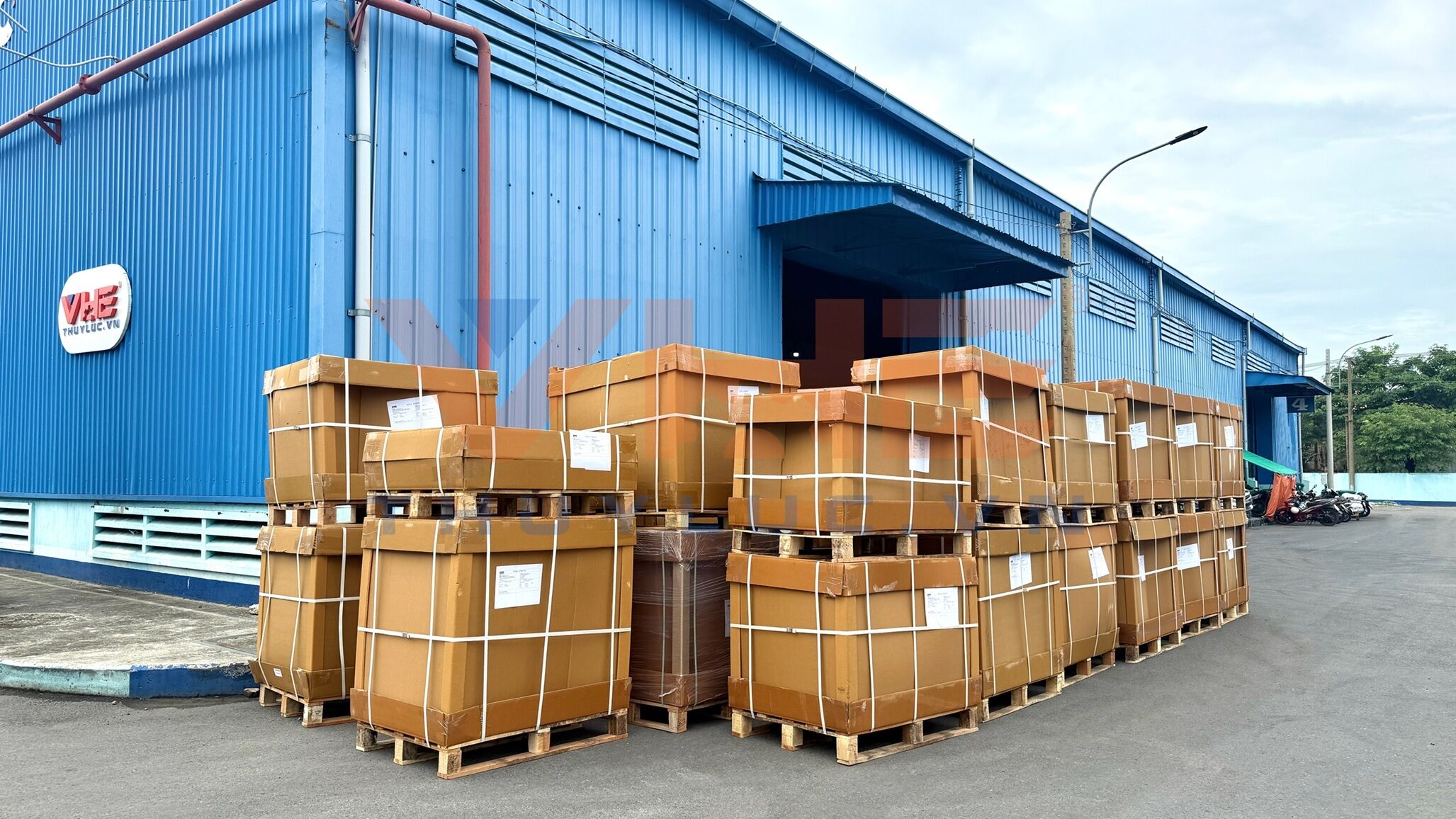
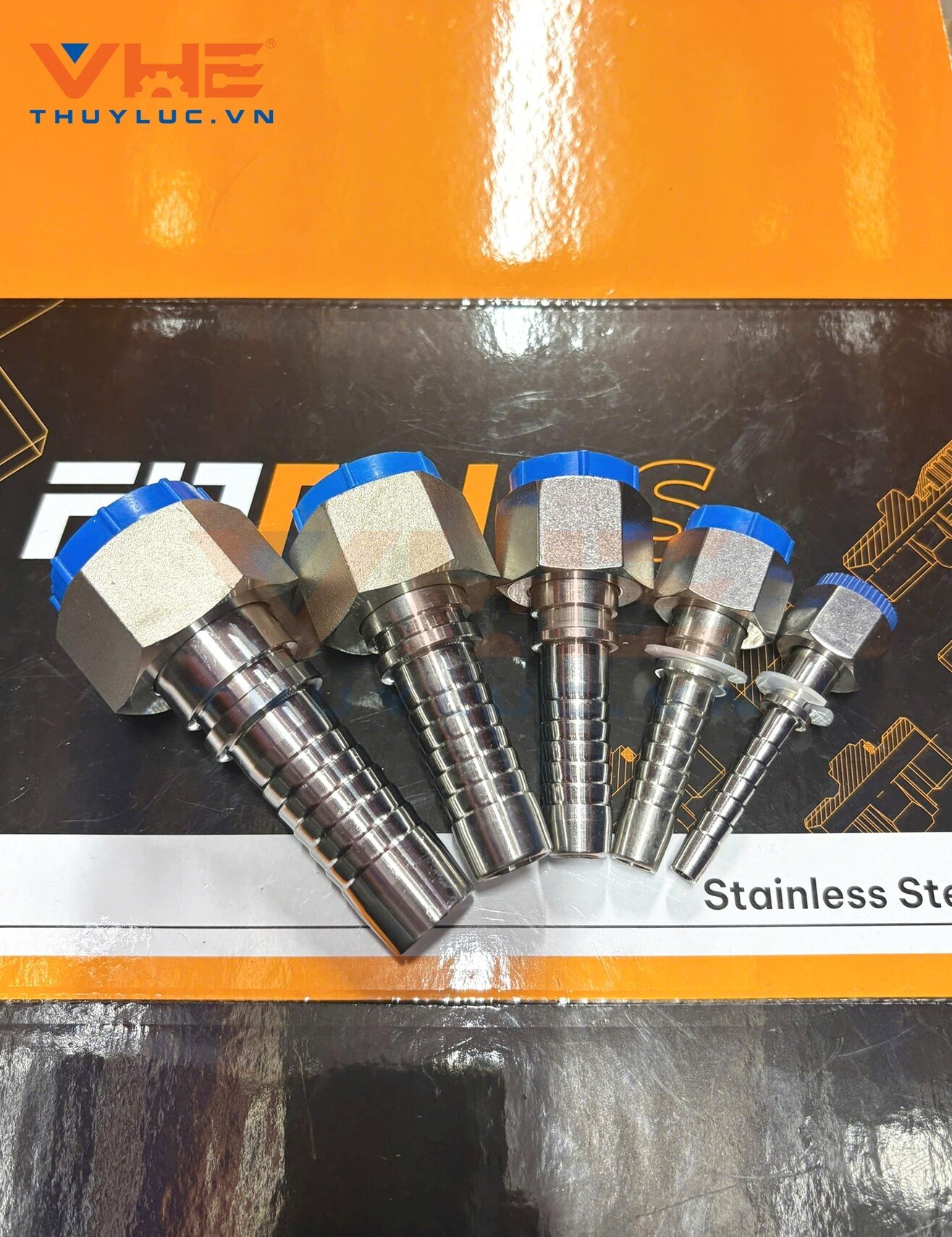
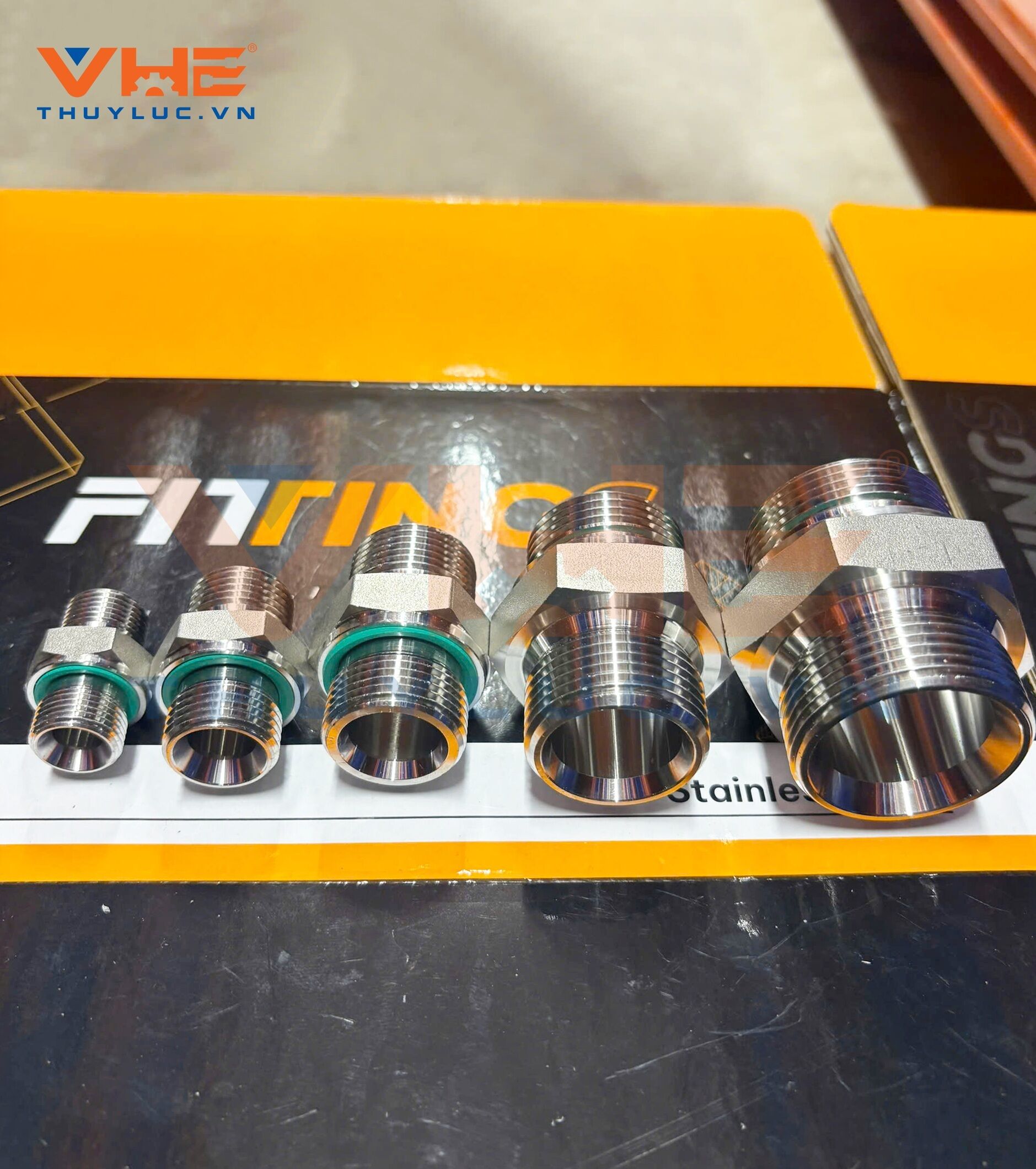
Choosing stainless steel fittings and ferrules is more than just a hardware upgrade; it is an investment in the reliability and reputation of your entire system. With our newly imported large-scale inventory, Vina Hydraulic Equipment Joint Stock Company is committed to providing the most optimized solutions for your production efficiency.
Contact Us for Technical Consultation & Detailed Quotes:
- Hotline: (+84) 903 067 588
- Email: [email protected]
- Head Office: 127 Huy Can, Gia Hoa Residential Area, Phuoc Long B Ward, Thu Duc City, Vietnam.
- HCMC Warehouse: Street No. 10, Song Than Industrial Park, Di An Ward, Ho Chi Minh City, Vietnam.
- Hanoi Warehouse: Km28, Highway 6A, Dong De Industrial Park, Phu Nghia, Hanoi, Vietnam.