Did you know? In industrial piping systems, technical standards and international certifications are subject to rigorous inspection. Any installed hydraulic hose must be strictly accompanied by documentation proving it meets the standards and certifications evaluated by recognized international organizations.
So, what exactly are these certifications, and what role do they play in your piping system? Let’s explore the details with Vina Hydraulic Equipment (VHE).
1. What are international agency approvals for hydraulic hoses?
An agency approval is a validation from an independent third-party organization confirming that a hydraulic hose has successfully passed rigorous tests for quality, durability, and resilience under specific environmental conditions.
Unlike self-declared specifications from manufacturers, these certifications serve as the most transparent "passport," proving that the hydraulic hose meets international standards for use in industries demanding high safety levels.
2. Base Standards
Before obtaining specific agency approvals, hydraulic hoses must typically comply with global fundamental manufacturing standards:
- ISO (International Organization for Standardization) Standards: Examples include ISO 18752 (a standard based on working pressure and impulse cycles) and ISO 1436. Serving as the universal language of the global engineering industry, ISO standards were designed to harmonize SAE and DIN into a unified global framework. This allows engineers to easily compare specifications regardless of the product's country of origin.
- DIN (Deutsches Institut für Normung) & EN (European Norm) Standards: Highly prevalent in Vietnamese factories, particularly within European-imported machinery systems that utilize the metric system (millimetres). Standards such as DIN EN 853 and DIN EN 856 provide extremely detailed specifications regarding dimensions, materials, and pressure resistance.
- SAE (Society of Automotive Engineers) Standards: Widely applied in the U.S. and many countries that use the imperial system (inches). The SAE J517 standard series (e.g., 100R1, 100R2, 100R12) is the most recognizable benchmark, categorizing hoses based on their material construction and pressure ranges.
3. Key Industry-Specific Certifications
Depending on the application environment, your operating system will require hydraulic hoses to hold specific certifications for the following sectors:
A. Marine & Offshore
Hydraulic systems on vessels and offshore rigs are exposed to corrosive saltwater environments, severe vibrations, and extremely high fire and explosion safety requirements. Mandatory certifications typically include:
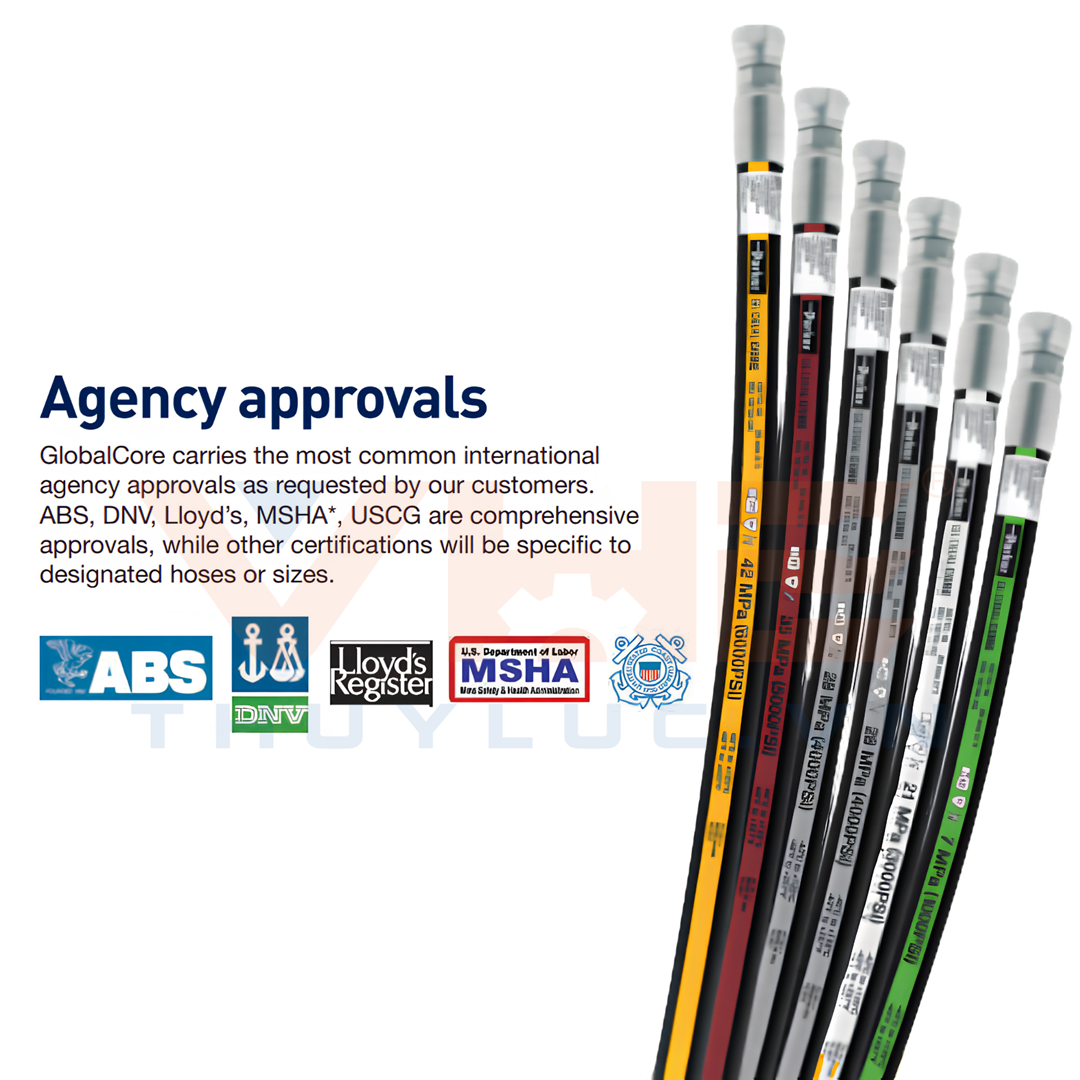
- DNV (Det Norske Veritas) / GL: A leading Norwegian-German quality certification, widely considered the gold standard for equipment installed on maritime vessels.
- ABS (American Bureau of Shipping): Approved by the U.S. classification society, ensuring that hydraulic hoses meet the rigorous safety standards for the marine and offshore industries.
- LR (Lloyd’s Register): Originating from the UK, this is a highly prestigious global maritime classification society. LR-certified hoses maintain stability under severe vibration and high pressure and have successfully passed stringent fire tests for commercial vessels.
- BV (Bureau Veritas): A global certification body based in France. BV certification ensures that hydraulic hose assemblies can withstand dynamic pressure impulses and feature an outer cover with excellent resistance to corrosive saltwater environments.
- MED (Marine Equipment Directive) - The "Wheelmark": A strict directive for marine equipment by the European Union (EU). Hydraulic hoses installed on EU-flagged vessels are strictly required to hold this certification (indicated by the steering wheel symbol printed on the hose cover), proving they have passed rigorous fire safety and marine environmental protection standards.
B. Transportation & Automotive
Hydraulic systems in vehicles (hydraulic brakes, steering systems, mobile cranes, etc.) are directly tied to human safety. Therefore, materials in this industry are heavily regulated:
- D.O.T (Department of Transportation) / FMVSS: Certified by the U.S. Department of Transportation. The FMVSS 106 standard specifies detailed requirements for brake hoses and hydraulic brake hose assemblies. Hoses must pass rigorous tests for volumetric expansion, whip resistance, and flexibility under varying temperatures. These hoses typically feature a D.O.T identification code embossed or imprinted along the layline.
C. Mining & Heavy Industry
- MSHA (Mine Safety and Health Administration): Approved by the U.S. Mine Safety and Health Administration. If a hydraulic hose is MSHA-certified, its outer cover possesses superior flame resistance, which is absolutely critical in confined and highly flammable environments like underground mines or metallurgical plants.
4. Why Should Factories Pay Special Attention to These Certifications?
- Optimizing Equipment Lifecycle (Longevity): Utilizing hoses that comply with DIN, ISO, or SAE standards ensures stable system operation, allowing them to withstand continuous pressure spikes without bursting or failing.
- Ensuring Workplace Safety: Approvals such as MSHA, DNV, or D.O.T serve as a strong commitment to minimizing the risks of fire and occupational accidents.
- Meeting Audit Requirements: Factory systems compliant with ISO 9001 or other risk management standards consistently require clear documentation for incoming materials, complete with all necessary certifications (CO, CQ, Agency Approvals).
A thorough understanding of international hose certifications is an essential skill for selecting the right materials and avoiding operational risks during maintenance and parts replacement. Investing in properly certified hoses ensures that your entire production line can seamlessly pass rigorous inspections regarding compliance with international regulations.
Are you looking to replace or design a new hydraulic piping system for your plant?
Vina Hydraulic Equipment Joint Stock Company (VHE) is always ready to conduct site surveys, advise on the most suitable hose standards, and provide detailed, accurate quotes tailored to your specific project.
Contact VHE’s technical team directly today to receive optimal solutions and the most up-to-date quotes for your system!
- Technical Consultation & Support (Zalo): 0903 067 588
- Support Email: [email protected]