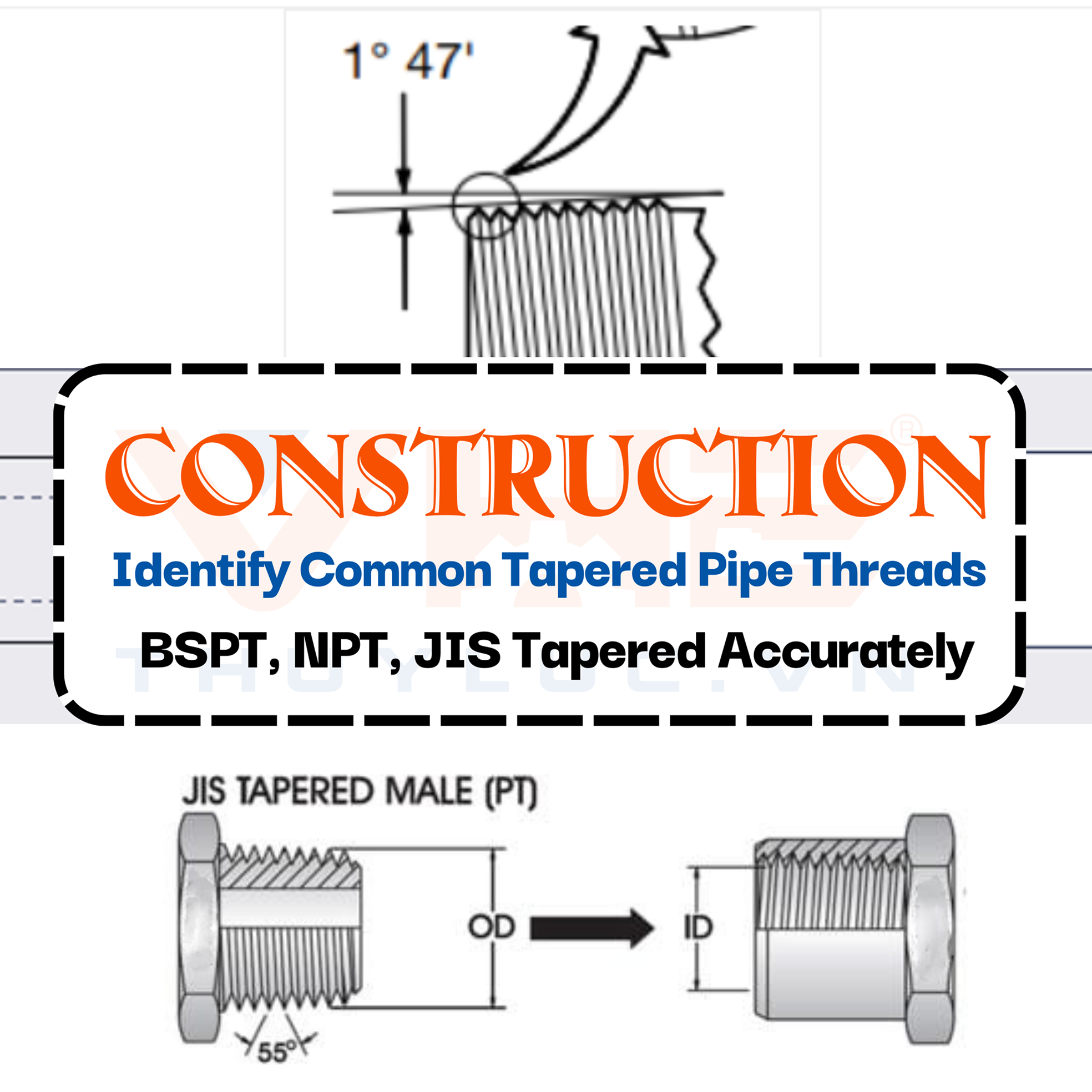
In hydraulic systems, tapered threads play a crucial role due to their ability to self-seal directly along the thread flanks. However, because they all share a similar tapered profile that gradually narrows toward the tip, distinguishing between BSPT, NPT, and JIS Tapered threads with the naked eye is incredibly difficult. This article will guide you in selecting the correct thread standard to ensure the safe and reliable operation of your system.
1. Why is it Crucial to Differentiate Tapered Threads?
Tapered threads are engineered so that their crests (peaks) and roots (valleys) wedge tightly together when torqued down, creating a pressure-tight mechanical seal.
System Leakage: This occurs because the thread pitch (threads per inch) or the thread angle (e.g., 55° vs. 60°) do not align perfectly, leaving micro-gaps for fluid to escape.
Thread Galling and Stripping: Mismatched threads will bind and crush against one another when forced. This not only ruins the connection but can permanently damage expensive stainless steel fittings or critical machinery components.
2. Detailed Characteristics of the 3 Main Tapered Thread Systems
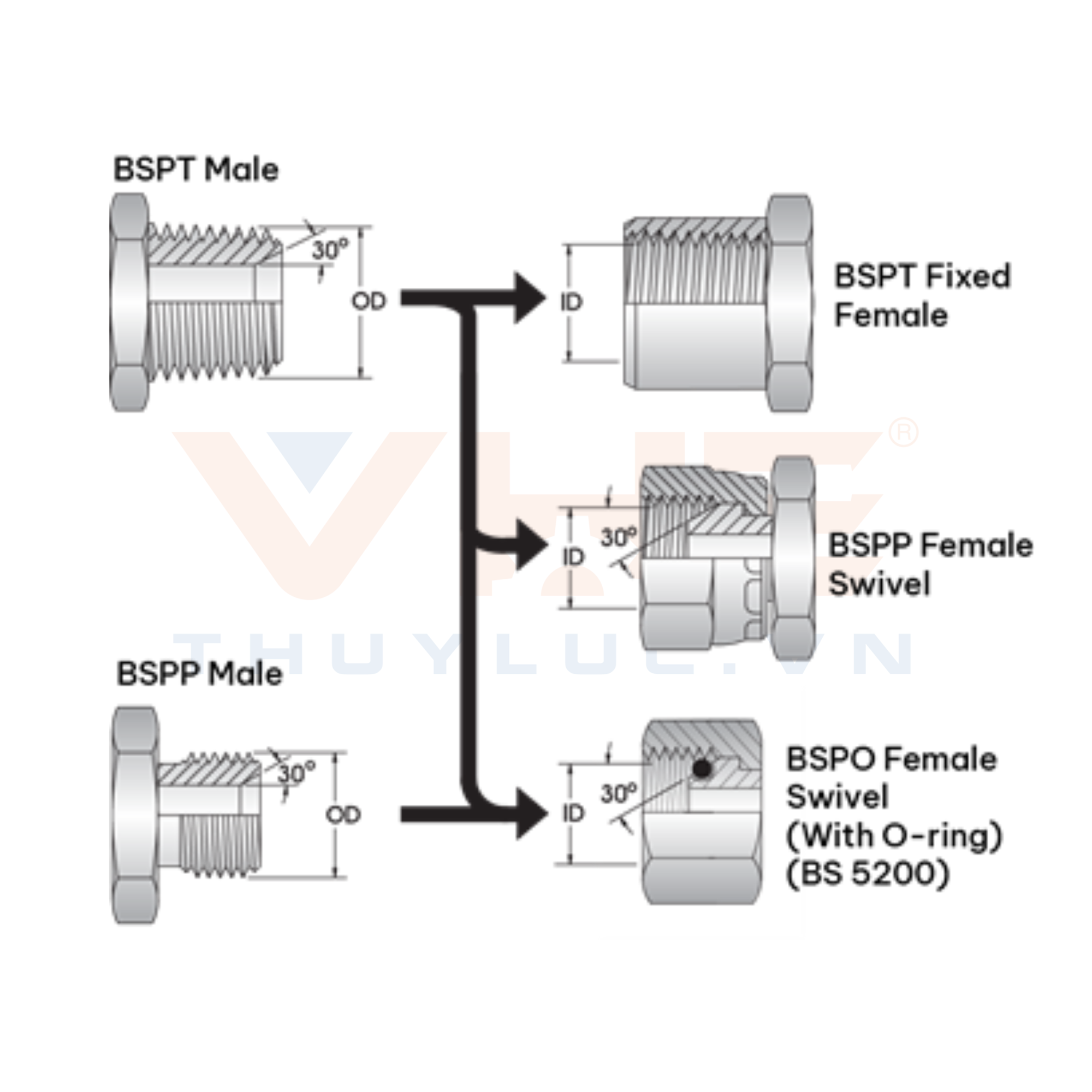
2.1. BSPT (British Standard Pipe Tapered) - British Standard
Also commonly referred to as PT threads (frequently used in Japan and South Korea) or R threads.
- Characteristics: The tapered profile looks visually similar to NPT, but the technical specifications are completely different.
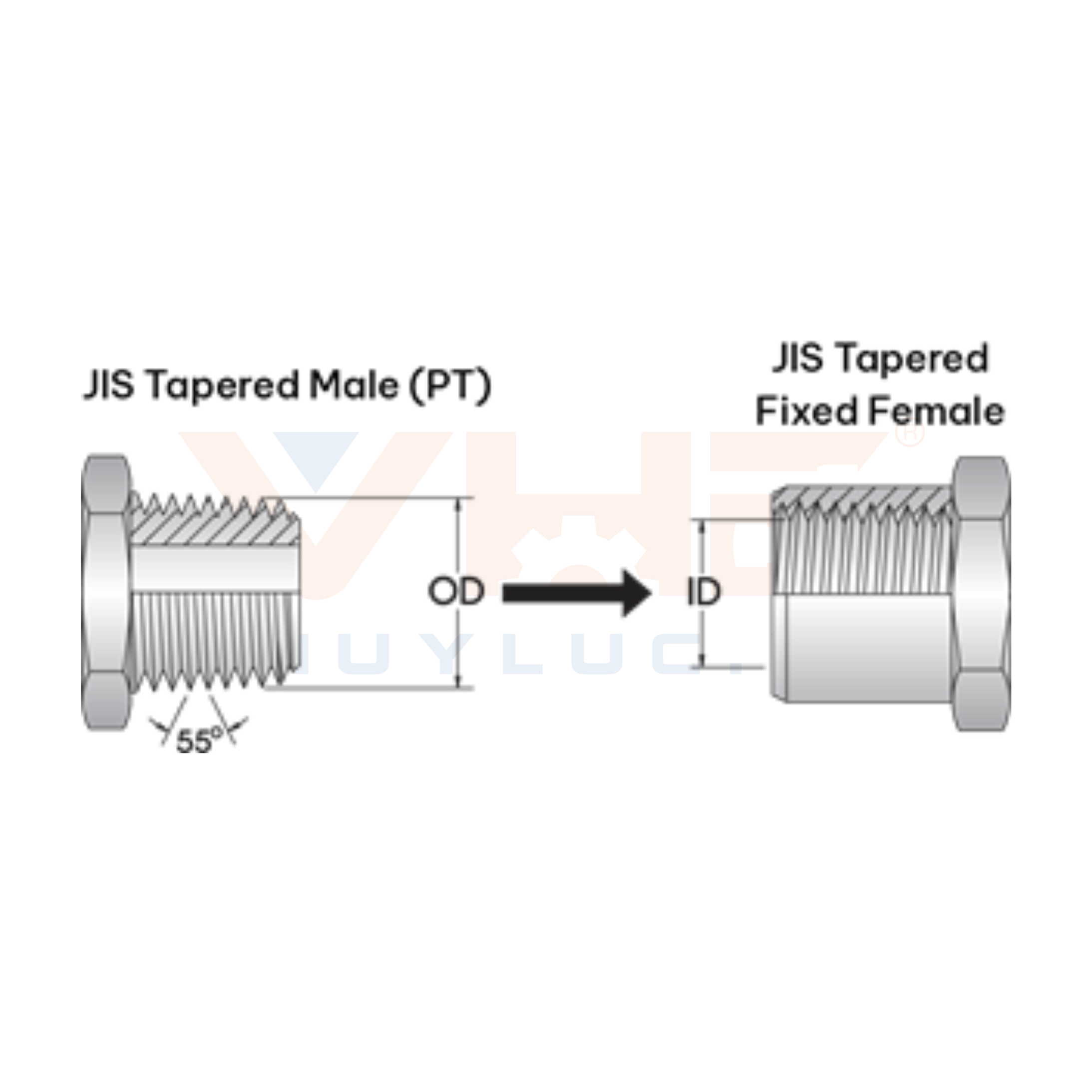
- Thread Angle: The angle between the thread flanks is 55° (sharper than NPT).
- Applications: Highly popular in the Vietnamese market, particularly within European and Asian industrial piping systems.
2.2. NPT (National Pipe Tapered) - American Standard
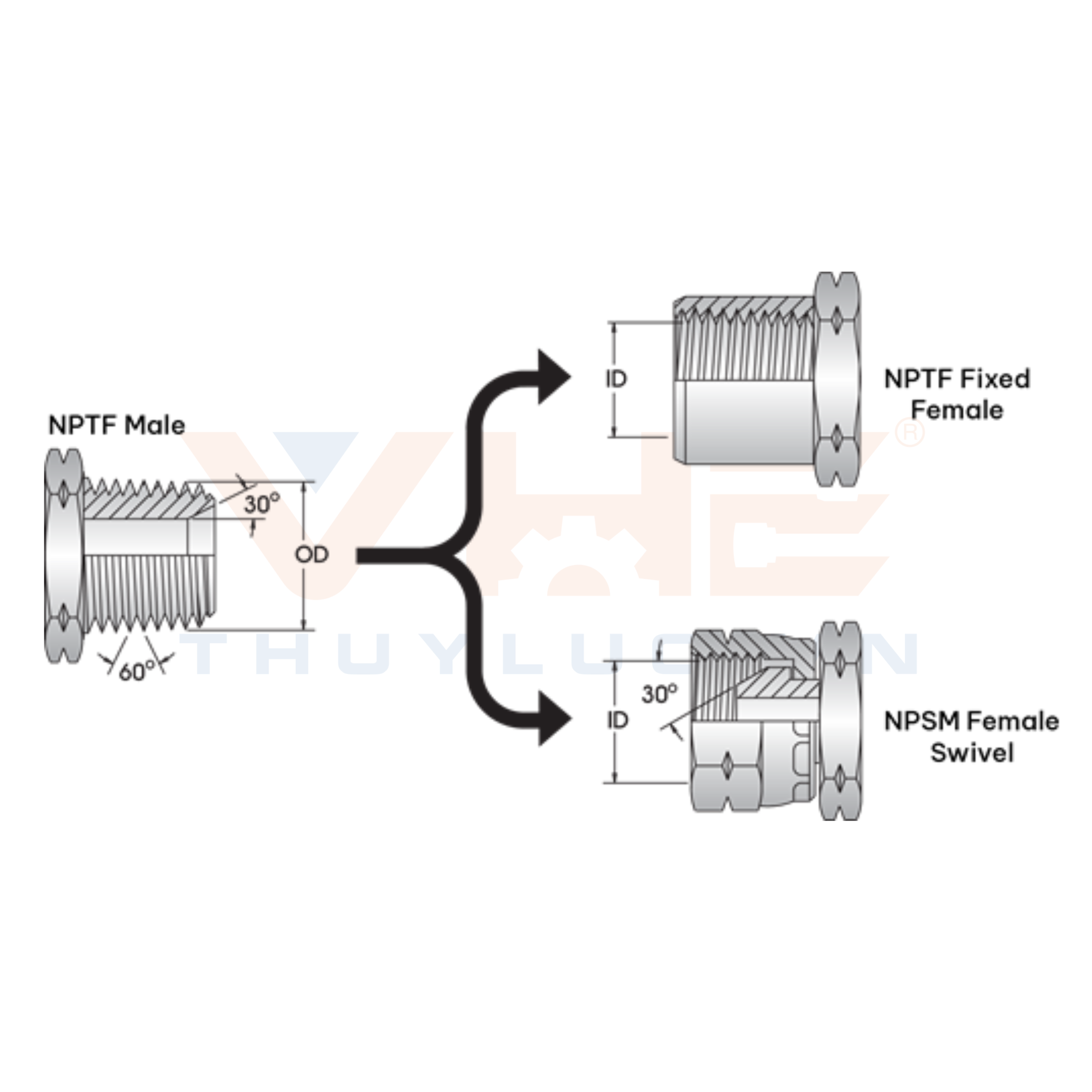
NPT is the standard American tapered thread, exceptionally common in industrial piping and oil & gas systems.
- Characteristics: It features a tapered design. When torqued down, the thread flanks compress tightly against each other to create a mechanical seal.
- Thread Angle: The angle between the thread flanks is 60°.
- Sealing Method: NPT seals via thread interference (crest and root deformation). It typically requires the use of thread sealant, such as Teflon tape (PTFE) or pipe dope, to ensure a leak-free connection.
2.3. JIS Tapered (Japanese Industrial Standard) - Japanese Standard
This thread system is frequently found on Japanese heavy equipment, construction machinery, and cranes (e.g., Komatsu, Kobelco).
- Characteristics: Fundamentally, JIS Tapered threads (often designated as PT or R) share the exact same dimensional specifications as BSPT threads.
- Thread Angle: 55°.
- Important Note: Although the thread dimensions match BSPT perfectly, in practical applications, JIS fittings are often paired with specific flange or flare configurations (like a 30° flare) that are unique to Japanese manufacturers.
3. A 3-Step Guide to Accurately Measuring and Identifying Thread Standards
To accurately determine the exact thread type you are working with, we highly recommend following this simple procedure:
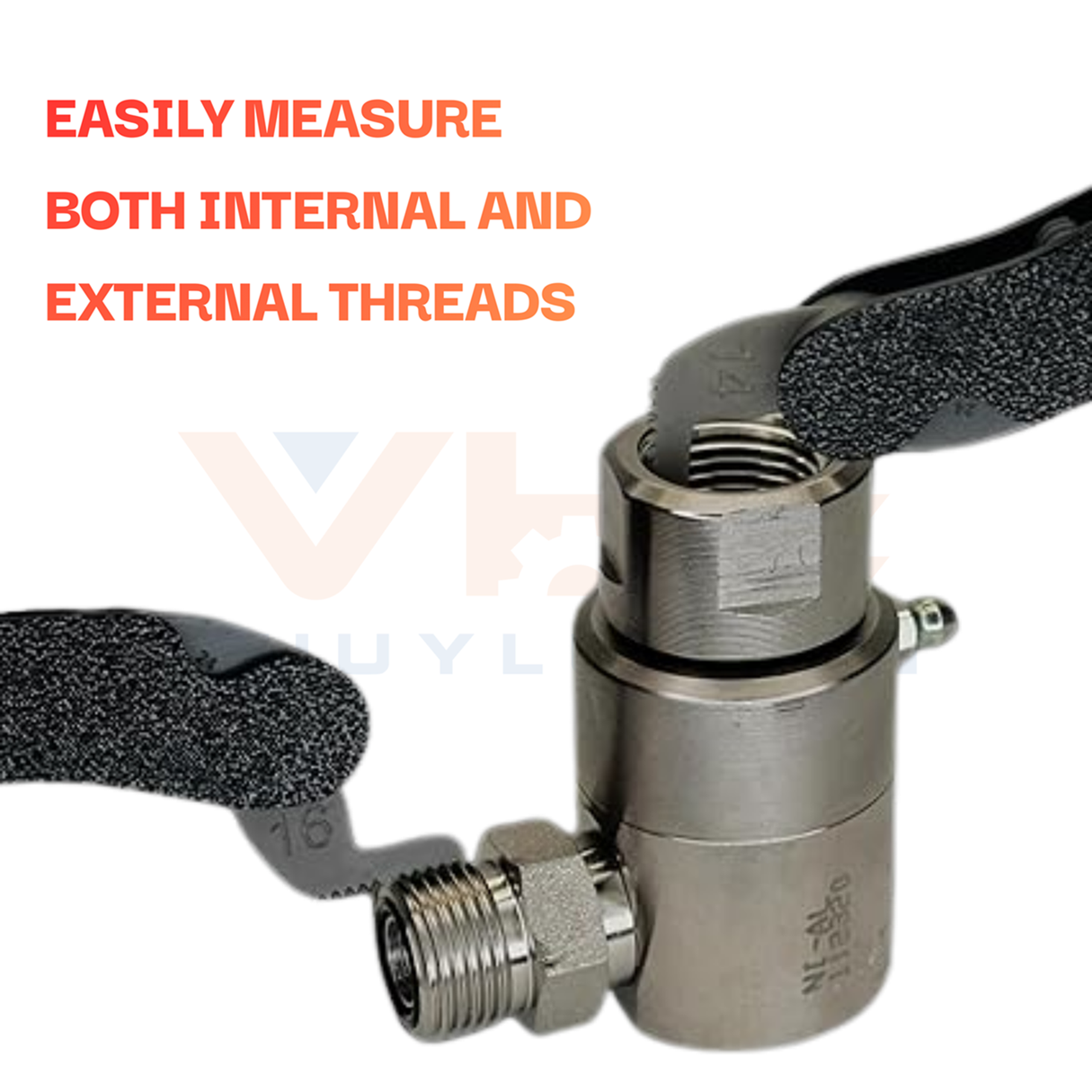
Step 1: Verify the Taper Use a caliper to measure the outside diameter at both the beginning and the end of the threaded section. If the dimension gradually decreases toward the tip, you are definitively working with a tapered thread.
Step 2: Measure the Thread Pitch Use a thread pitch gauge to determine the exact number of Threads Per Inch (TPI).
Note: NPT and BSPT have different thread counts across various sizes. However, you must be careful: for a 1/2" size, both NPT and BSPT share the exact same pitch of 14 TPI. Because the TPI can sometimes be identical, you cannot rely on pitch alone, which brings us to the final step.
Step 3: Check the Thread Angle Use a specialized thread pitch gauge to verify the angle between the thread flanks. If the threads fit snugly into a 60° gauge, it is an NPT thread. If they perfectly match a 55° gauge, you are dealing with a BSPT or JIS Tapered thread.
4. Quick comparison table of BSPT, NPT, and JIS Tapered threads.
| Characteristic | BSPT | NPT | JIS Tapered |
| Cone Angle | 30° | 30° | None |
| Thread Angle | 55° | 60° | 55° (similar BSPT) |
| Common symbols | R, Rc, PT | NPT | PT, R |
| Standard | England/Europe | America | Japan |
5. Insights from Technical Experts & Real-World Case Studies
When replacing hydraulic fittings or hoses, never guess the thread type by eye. A microscopic mismatch between a 55° and 60° thread angle can lead to severe pressure leaks after just a few hours of operation.
At Vietnam Hydraulic Equipment Joint Stock Company (VHE), we strongly advise our clients to utilize a standard caliper and thread pitch gauge prior to any installation. Particularly for systems requiring high durability or operating in corrosive environments (such as the shipbuilding or chemical industries), selecting the correct fitting material is just as critical as identifying the proper thread standard.
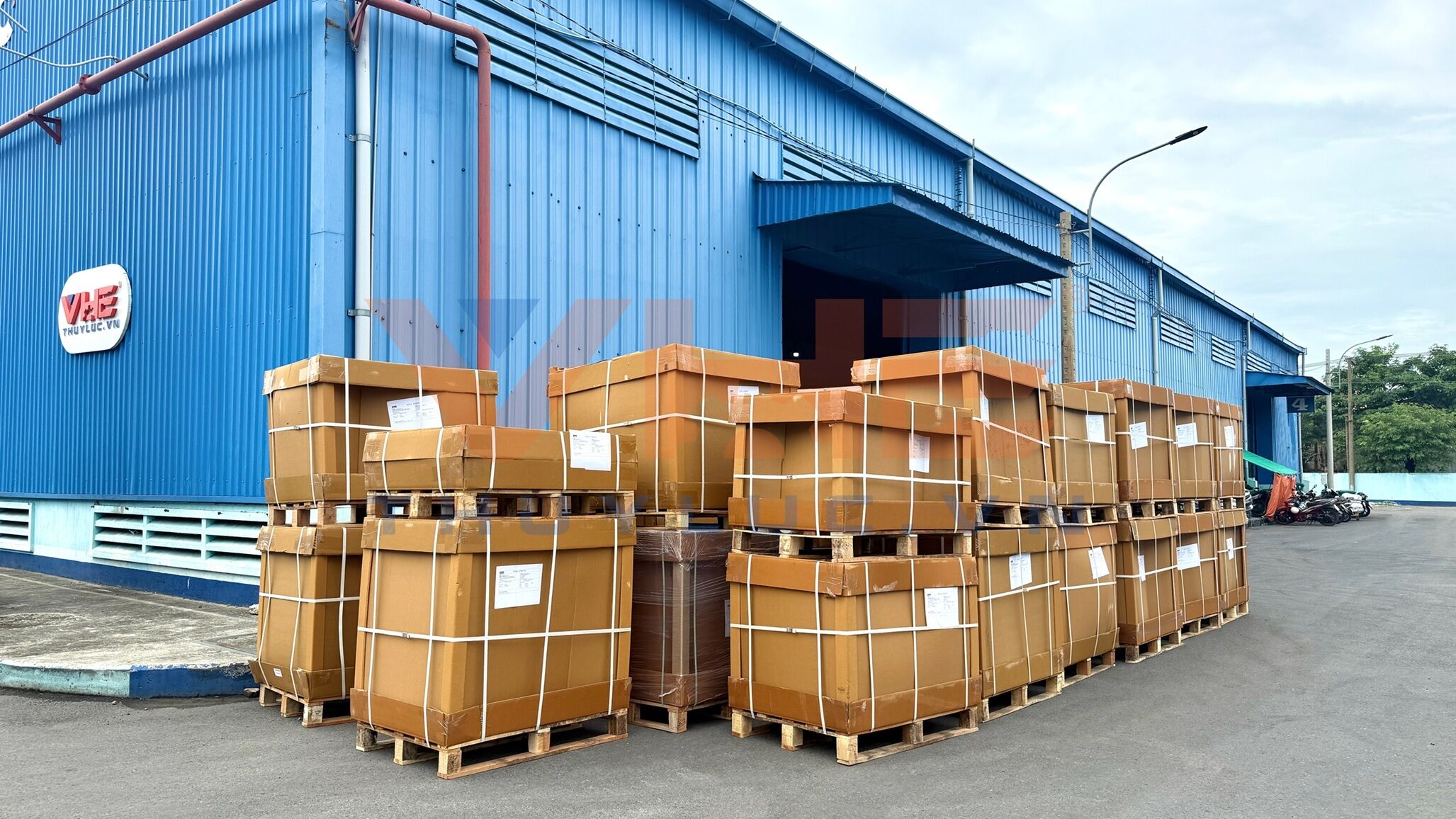
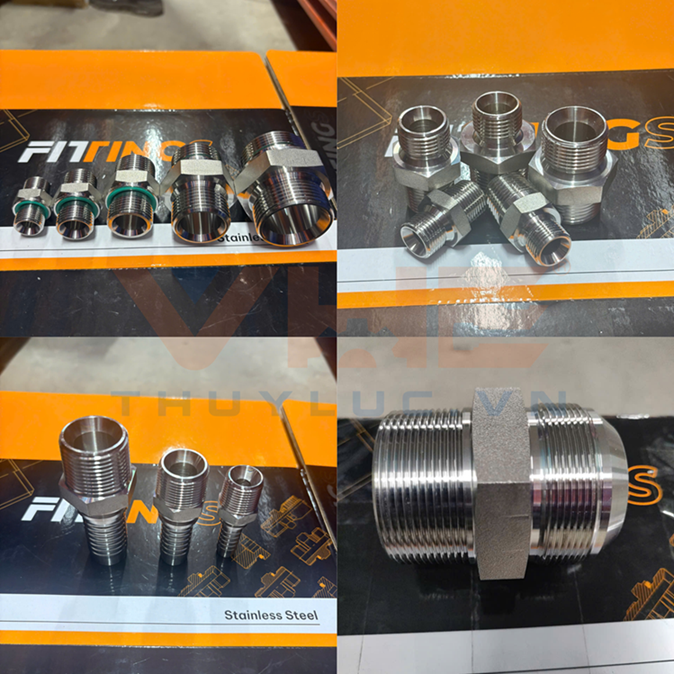
Inside the VHE Warehouse: Below is a newly arrived shipment of premium Stainless Steel fittings. These products not only guarantee absolute precision in thread pitch but also provide exceptional corrosion resistance, strictly meeting the most stringent technical requirements in the hydraulic industry.
If you are struggling to identify the correct thread system for your machinery, do not hesitate to reach out to the VHE technical team for accurate inspection and expert consultation!
- Consultation & Support: 0903 067 588
- Support Email: [email protected]