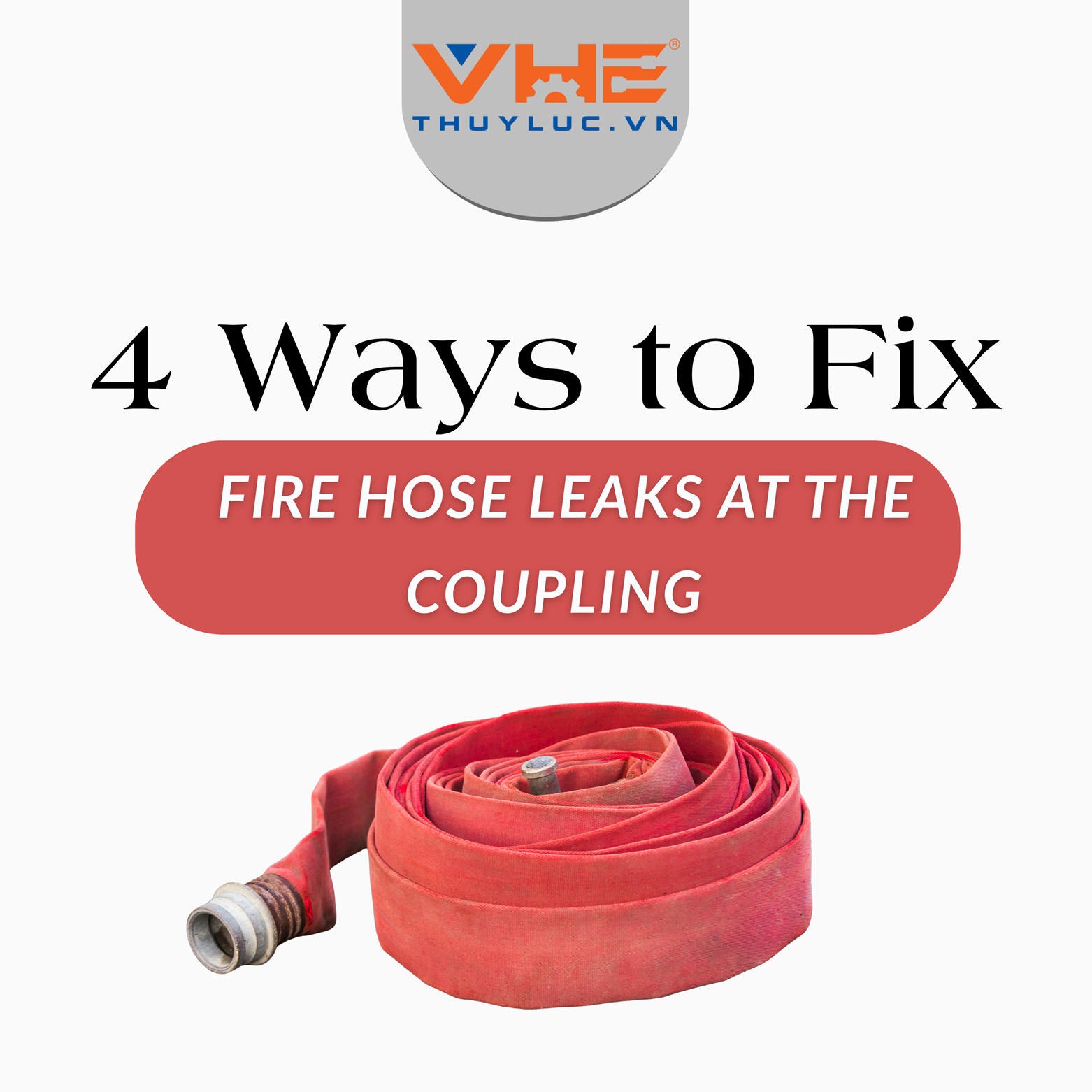
Is your fire hose constantly leaking or spraying water at the coupling? This is more than just a minor waste—it is a significant safety hazard that drastically reduces water pressure when a fire breakout occurs. For facility managers and fire safety teams, resolving these leaks is a top priority to ensure emergency readiness.
In this article, we provide a technical guide for maintenance professionals on how to inspect and troubleshoot fire hose coupling leaks according to industry standards.
1. Inspect the Rubber Gasket (Seal)
The most frequent cause of coupling leaks is a compromised internal gasket. Over time, or after long periods of inactivity, the rubber can become brittle, develop cracks, or lose its essential elasticity.
How to Fix: Start by detaching the coupling to inspect the gasket’s surface. If the seal feels hardened, flattened, or shows any signs of deformation, it must be replaced with a new, high-pressure-rated rubber gasket.
Note: Always ensure the replacement gasket matches the specific coupling standard (such as VN, Machino, or NST) to guarantee a 100% watertight seal.

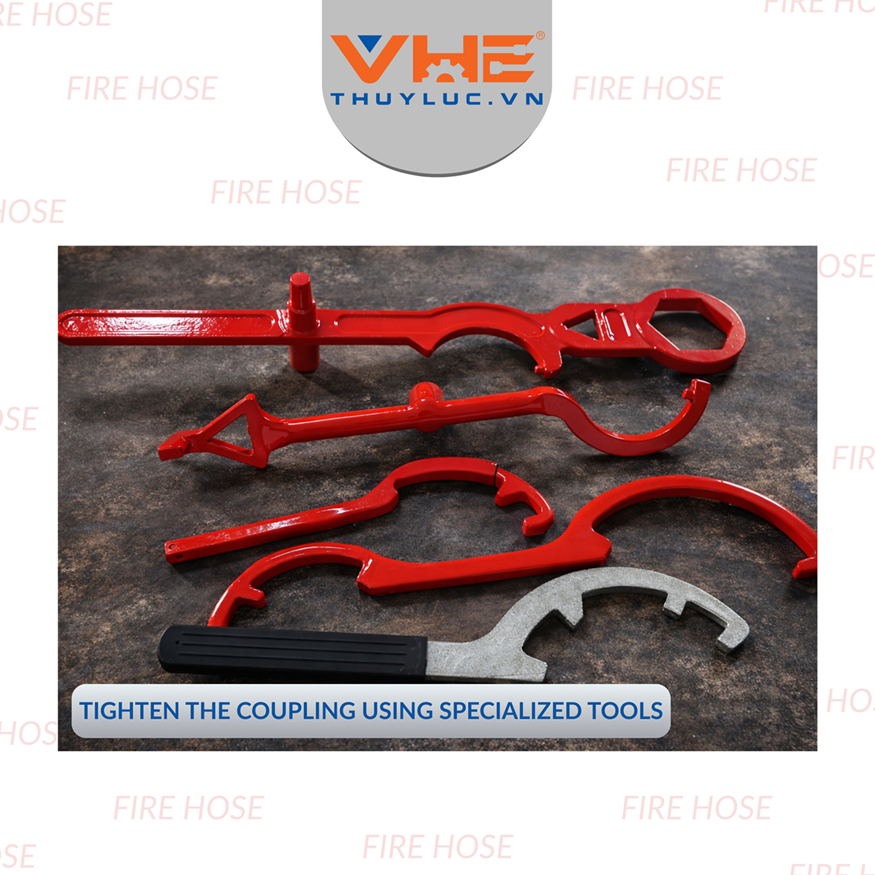
2. Tighten the Coupling Using Specialized Tools
Continuous vibrations during operation or impacts sustained during fire drills can cause coupling heads to loosen from their threads or locking lugs.
How to Fix: Utilize a specialized fire hose spanner wrench to re-tighten the connection securely.
Warning: Avoid applying excessive force with non-specialized tools (such as large tongue-and-groove pliers). Doing so can easily deform the aluminum or brass structure of the coupling, leading to jammed lugs or mechanical failure in the future.
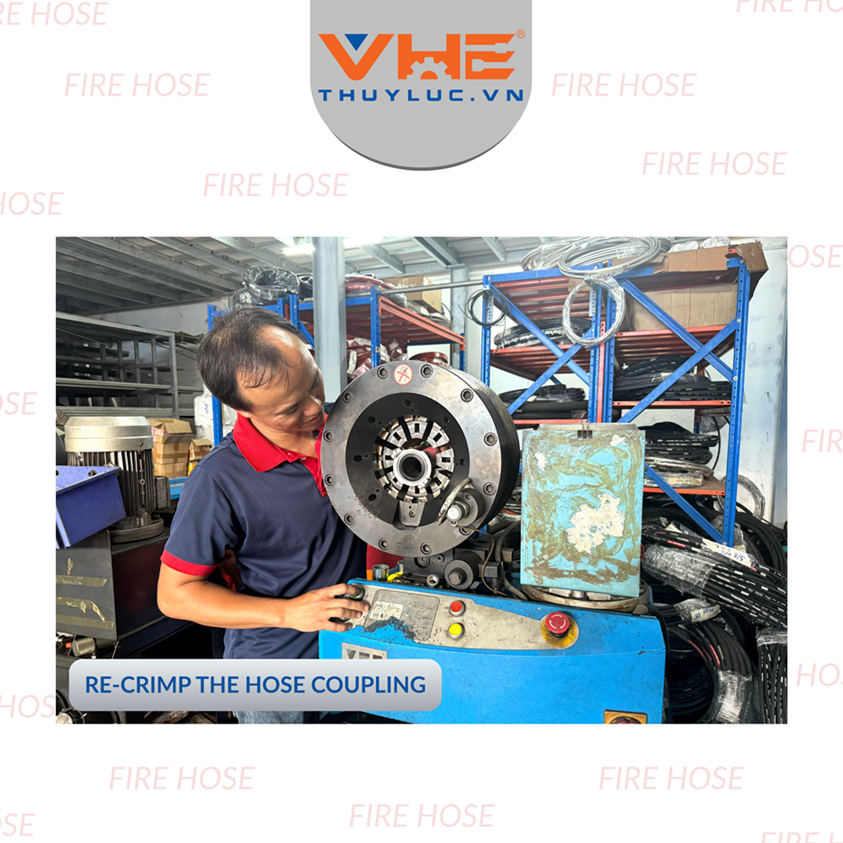
3. Re-crimp the Hose Coupling
If water is leaking specifically at the junction where the hose fabric meets the coupling collar, it indicates that the internal steel or copper binding ring has loosened, failing to secure the hose tightly against the coupling’s tailpiece.
How to Fix: Use a specialized hydraulic crimping machine to re-secure the binding ring. This process requires an experienced technician to apply the precise amount of pressure: it must be tight enough to prevent leaks under a high operating pressure of 13–17 bar, yet carefully controlled to avoid tearing the hose lining or damaging the coupling neck.
4. Replace the Hose Coupling
If the coupling neck is worn down, cracked, or the threads have become stripped due to frequent use, attempting a temporary fix will compromise safety during high-pressure operations. In such cases, structural integrity can no longer be guaranteed.
How to Fix: The best course of action is to cut off the damaged section of the hose and install a high-quality replacement coupling. This is the most critical step to fully restore the hose's performance and reliability without the high cost of purchasing an entirely new fire hose reel.

Professional Solution: Fire Hose Coupling Crimping & Assembly Services
In-house or DIY repairs are often just temporary fixes. For professional fire protection systems, all equipment must be processed using modern machinery to ensure they withstand rated working pressures and prevents dangerous blow-off incidents.
At Vina-Hydraulic Equipment Joint Stock Company (VHE), while we do not sell fire hoses, we are the leading experts in providing high-quality fire hose coupling crimping services.
Why Choose Our Professional Services?
Advanced Hydraulic Press Technology: We ensure the bond between the hose and the coupling can withstand extreme pressure, fully meeting fire safety inspection standards.
Highly Specialized Technical Team: Our experts possess deep knowledge of thread standards, hydraulic fittings, and fire protection technical requirements.
Cost Efficiency: Instead of discarding expensive hose reels, our re-crimping service allows you to reuse your equipment with maximum safety.
Proven Track Record: VHE has successfully executed numerous large-scale crimping contracts for partners and enterprises nationwide.
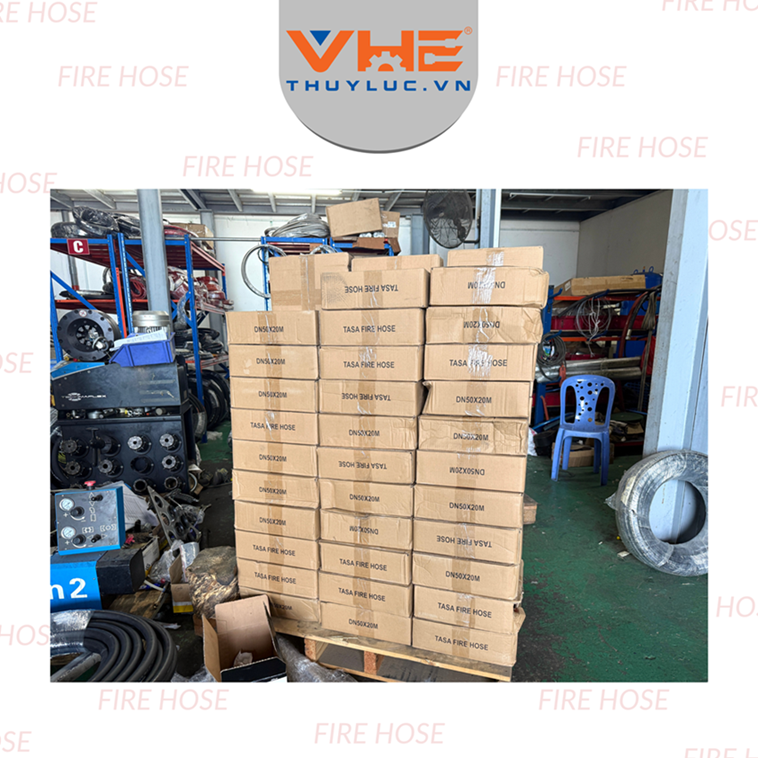
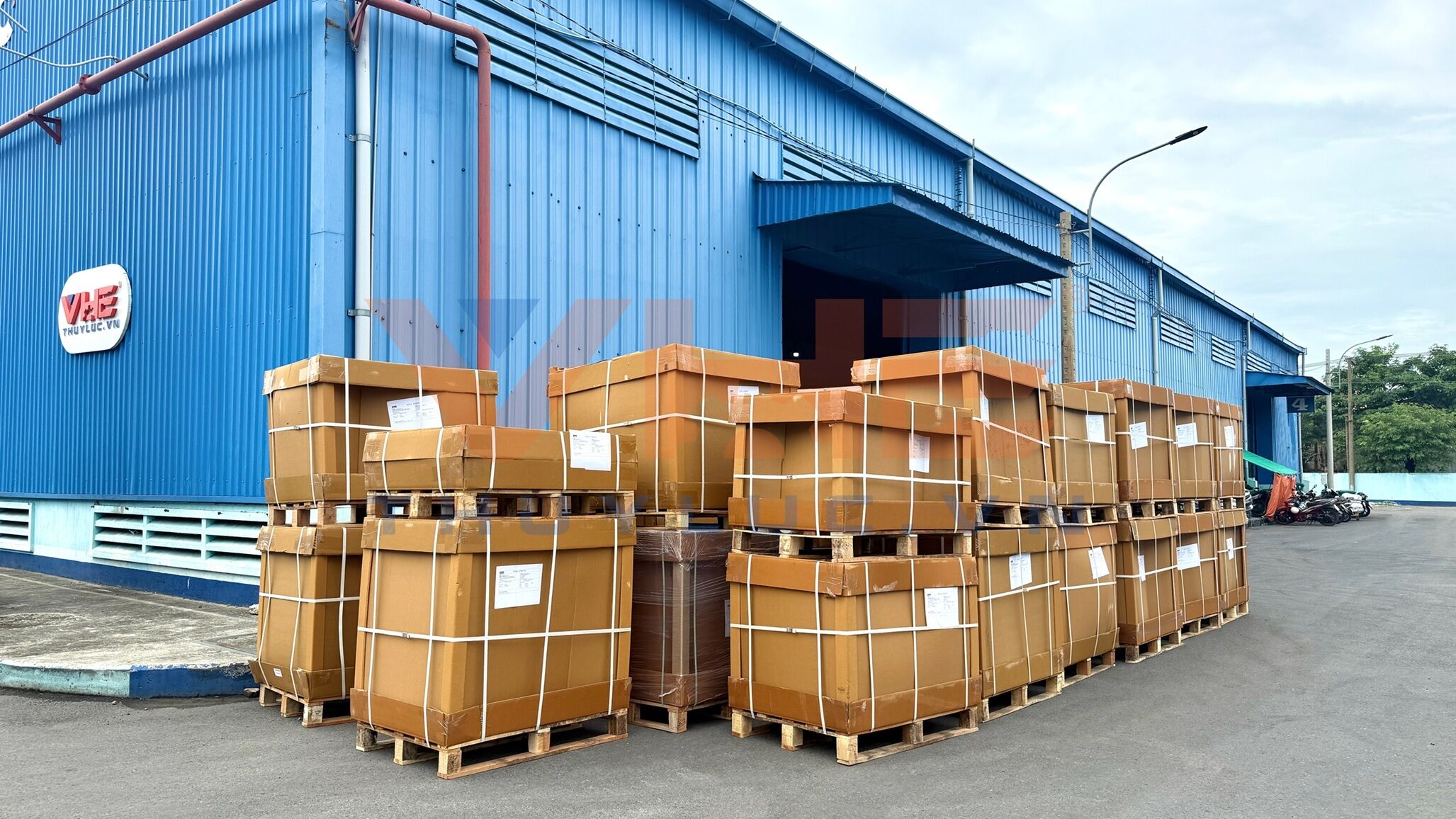
Featured Project: VHE recently completed a bulk Replace the Hose Coupling ensuring uniform quality and safety across the entire batch.
If your fire hose system is experiencing leaks or coupling failures, do not hesitate to contact our technical team for an optimized processing solution.
- Consultation & Support: 0903 067 588
- Email: [email protected]
- Address: 127 Huy Can, Gia Hoa Residential Area, Phuoc Long B Ward, Thu Duc City, Vietnam.