Hướng Dẫn Phân Biệt Các Hệ Ren Đầu Loe Phổ Biến (JIC, SAE, JIS và JIS Komatsu)

Hướng Dẫn Phân Biệt Các Hệ Ren Đầu Loe Phổ Biến (JIC, SAE, JIS và JIS Komatsu)

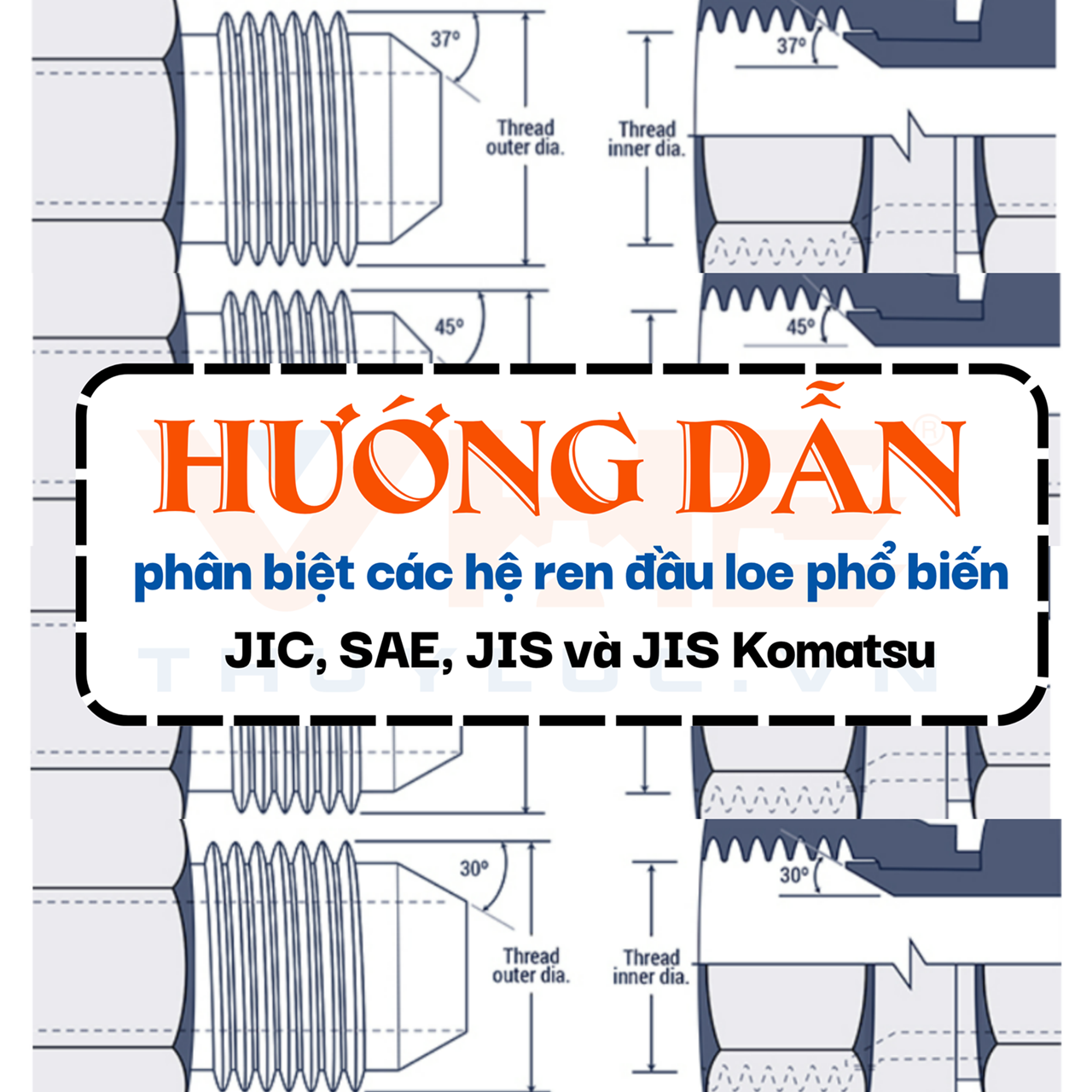
Trong kỹ thuật thủy lực, các hệ ren sử dụng bề mặt loe (Flare) để làm kín rất dễ bị nhầm lẫn do hình dáng bên ngoài tương đồng. Việc lắp nhầm không chỉ gây rò rỉ mà còn có thể phá hủy đầu nối do khác biệt về góc côn và bước răng. Bài viết này sẽ giúp bạn dễ dàng đo lường ren trong và ren ngoài để xác định chính xác 4 hệ ren: JIC 37°, SAE 45°, JIS 30° và JIS Komatsu 30°.

1. Tại sao cần phân biệt chính xác các hệ ren loe?

Mỗi hệ ren được thiết kế với một góc côn làm kín riêng biệt. Nếu lắp lẫn, bề mặt tiếp xúc sẽ không khít hoàn toàn, dẫn đến:

+ Rò rỉ dầu dưới áp suất cao.

+ Hư hỏng bề mặt loe (Metal-to-metal seat).

+ Mất an toàn cho người vận hành máy móc.

2. So sánh chi tiết 4 hệ ren phổ biến

Dựa trên đặc điểm kỹ thuật, chúng ta có thể phân loại như sau:

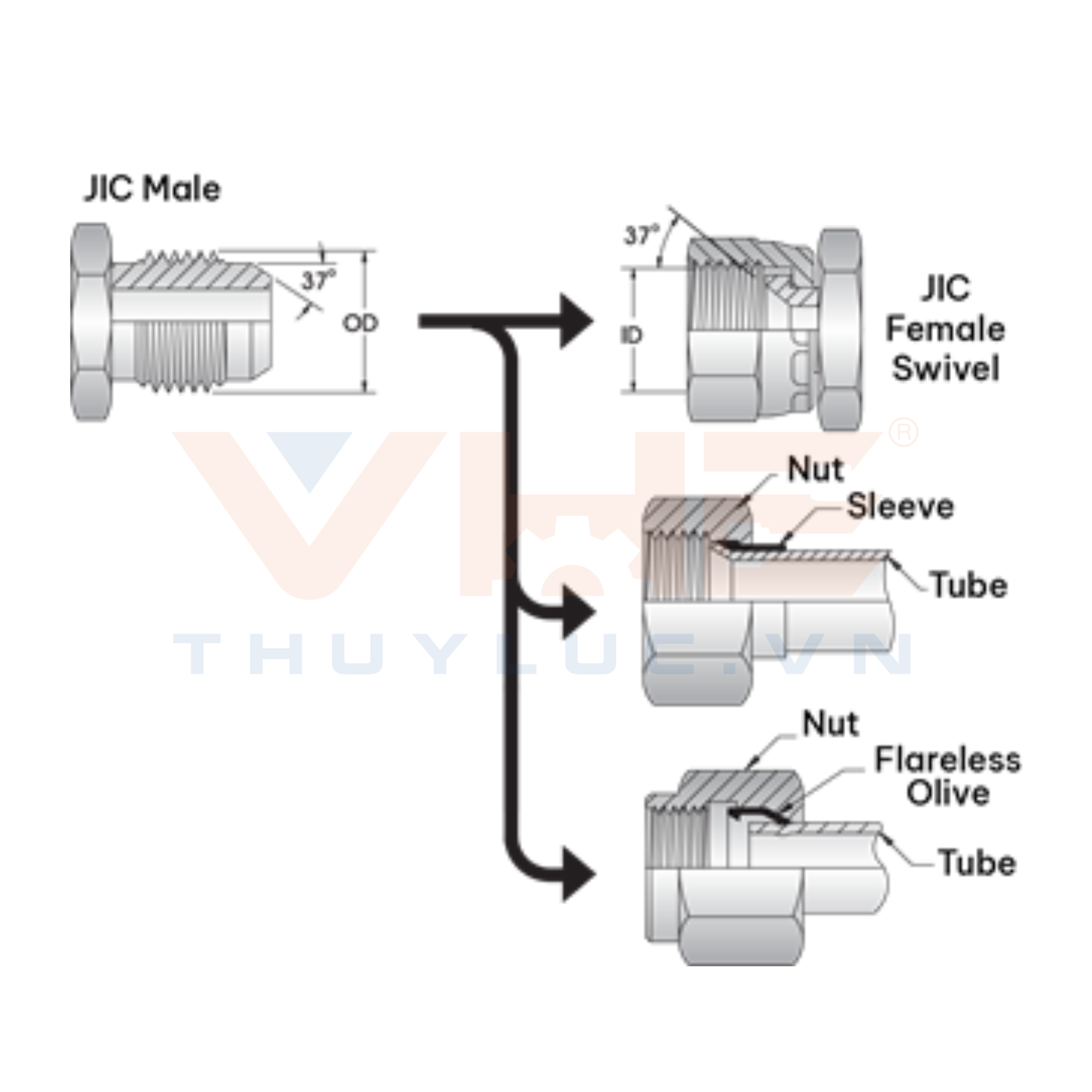
2.1. Ren JIC 37° (Joint Industry Council)

Đây là hệ ren cực kỳ phổ biến trong các thiết bị thủy lực áp suất cao.

  • Góc côn làm kín: 37° (Góc loe tổng là 74°).
  • Bước răng: Được xác định theo bảng tiêu chuẩn (thường là hệ Inch).
  • Ghi chú: Là chuẩn ren quốc tế được sử dụng rộng rãi nhất.
  • Dùng cho cả ống cứng (Flare)

Ren JIC 37° (Joint Industry Council)

2.2. Ren SAE 45° (Society of Automotive Engineers)

Thường gặp trong các hệ thống điện lạnh, điều hòa không khí hoặc các ứng dụng áp suất thấp hơn.

  • Góc côn làm kín: 45° (Góc loe tổng là 90°).
  • Bước răng: Một số size như 7/16-20, 1/2-20, 3/4-16 và 7/8-14 có bước răng giống hệt ren JIC, điều này cực kỳ dễ gây nhầm lẫn nếu không đo góc côn.
  • Dùng cho cả hệ ống cứng (Máy loe ống).
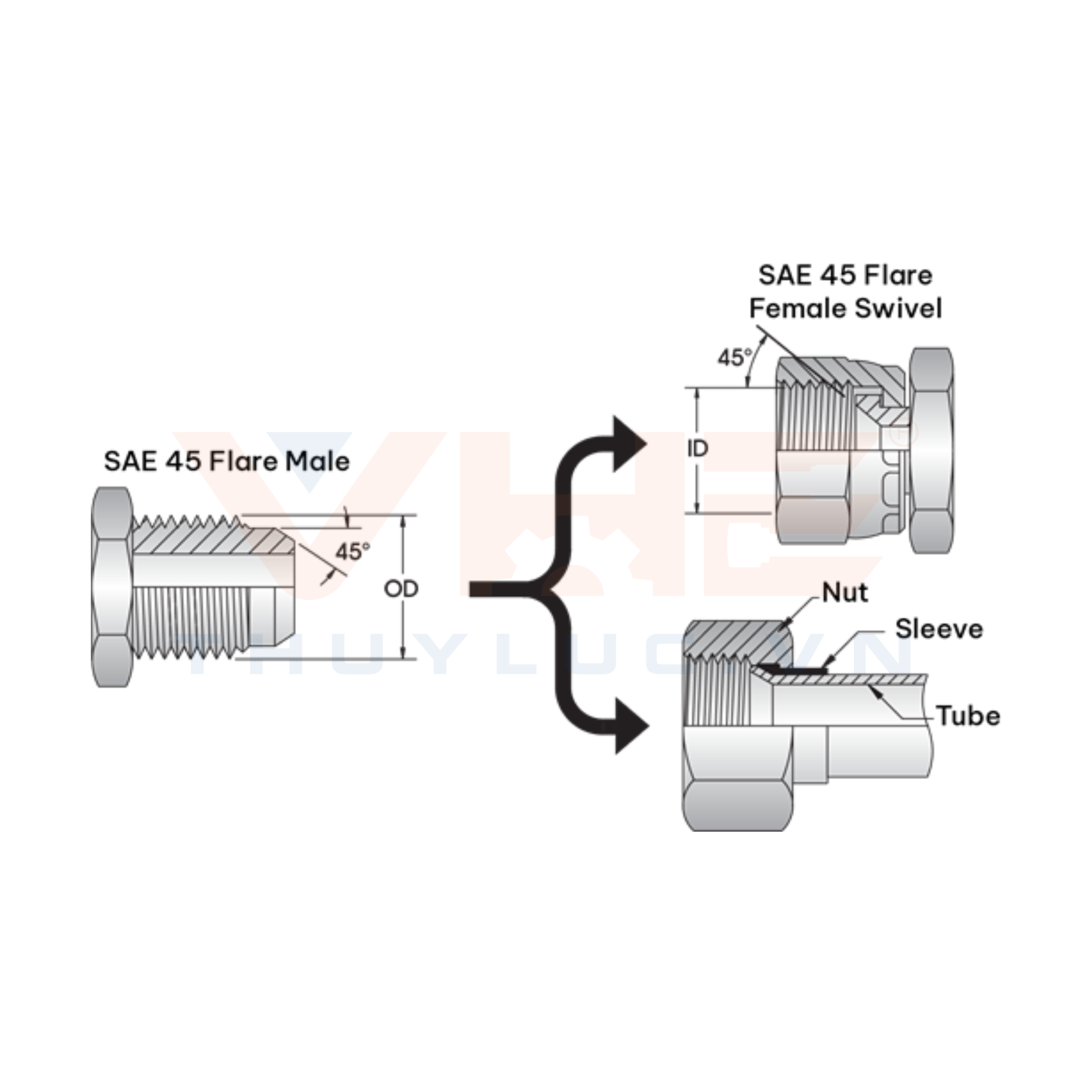
​​​​​​​Ren SAE 45° (Society of Automotive Engineers)

2.3. Ren JIS 30° (Japanese Industrial Standard)

Hệ ren tiêu chuẩn của Nhật Bản, thường được ký hiệu tắt là (PP).

  • Góc côn làm kín: 60° (Góc loe mỗi bên là 30°).
  • Bước răng: Tương tự như chuẩn ren BSPP (ren G), ngược góc côn.
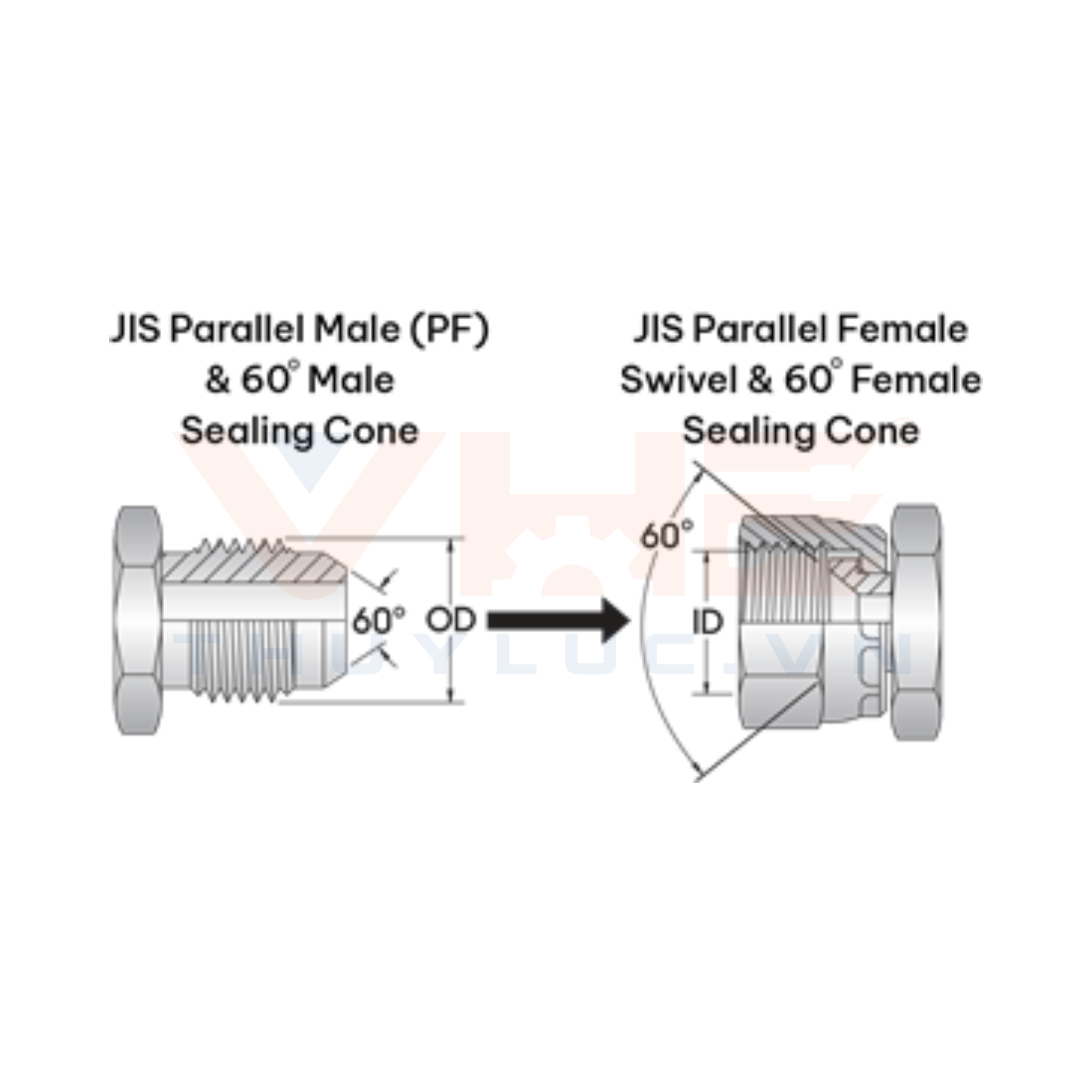
Ren JIS 30° (Japanese Industrial Standard)

2.4. Ren JIS Komatsu 30°

Được thiết kế riêng cho các dòng xe cơ giới, máy xúc của hãng Komatsu.

  • Góc côn làm kín: 60° (Góc loe mỗi bên là 30°).
  • Bước răng: Sử dụng hệ METRIC (Ren mét), khác hoàn toàn với JIS 30° thông thường.
  • Ghi chú: Đặc biệt phổ biến trên các loại xe cơ giới công trình.
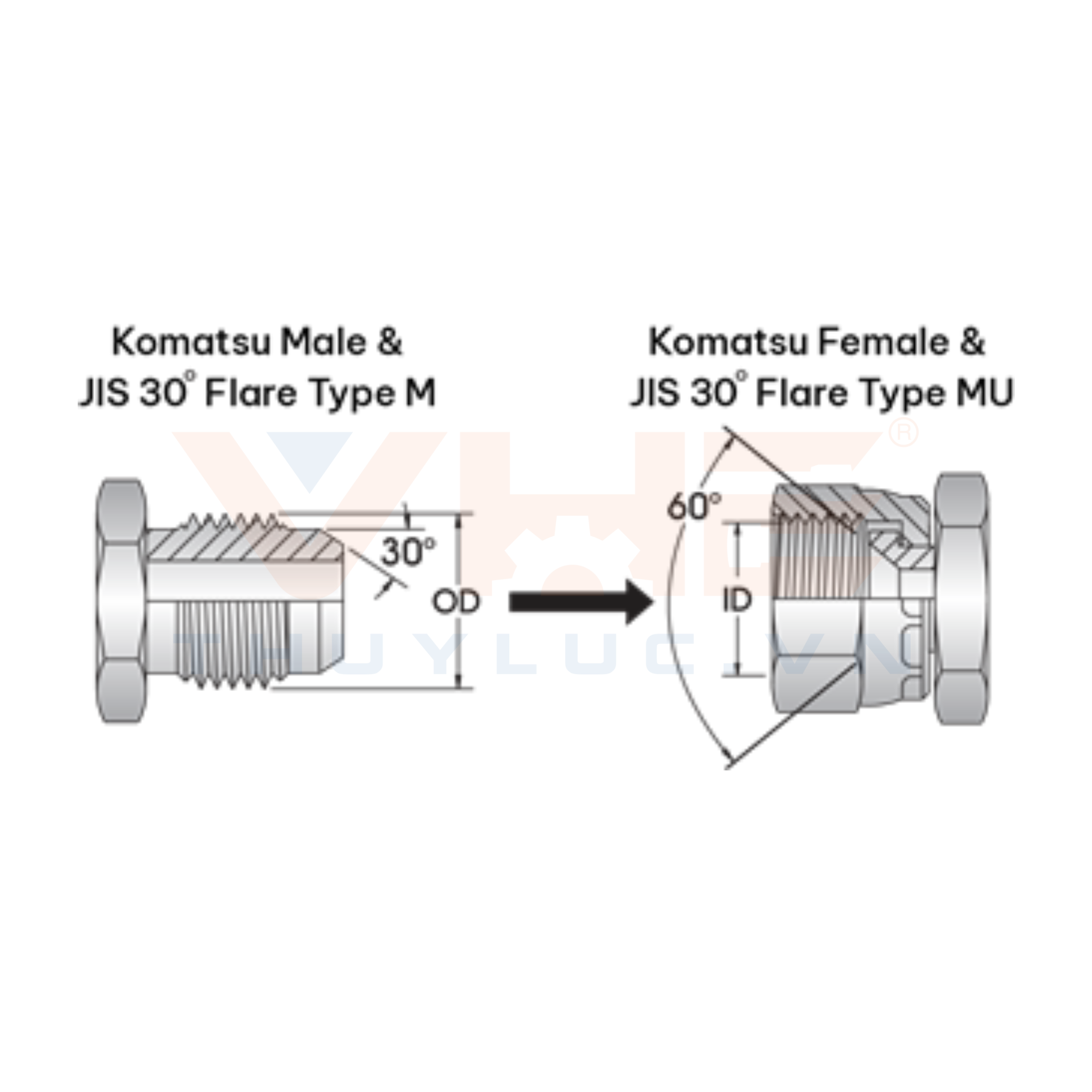
Ren JIS Komatsu 30°

3. Bảng tổng hợp thông số kỹ thuật

Nội dung so sánh

JIC 37° SAE 45° JIS 30° JIS Komatsu 30°

Góc côn làm kín

37° (74°) 45° (90°) 60° 60°

Bước răng

Theo bảng Giống ren JIC (một số size) Giống BSPP Hệ METRIC

Đặc điểm nổi bật

Phổ biến Dễ nhầm với JIC Ký hiệu (PP) Trên xe cơ giới

4. Cách xác định chuẩn ren trong 3 bước

Để phân biệt chính xác, bạn cần trang bị thước kẹp và dưỡng đo ren:

Bước 1 - Đo đường kính (OD/ID): Xác định kích thước danh định của đầu nối.

Bước 2 - Đo bước răng (TPI/Pitch): Sử dụng dưỡng để biết đó là ren hệ Inch (JIC, SAE, JIS) hay hệ Mét (Komatsu).

Bước 3 - Xác định góc côn: Đây là bước quan trọng nhất để phân biệt JIC (37°) và SAE (45°), hoặc để xác định các dòng JIS (60° tổng).

5. Lưu ý thực tế từ VHE

Việc sự nhầm lẫn giữa hệ JIC 37°, SAE 45°, JIS 30° và JIS Komatsu 30° là lỗi thường gặp nhất trong bảo trì máy móc. Tại kho của Thủy Lực Việt Nam (VHE), chúng tôi luôn có sẵn các loại đầu nối inox cao cấp đáp ứng đầy đủ các tiêu chuẩn này. Việc lựa chọn đúng vật liệu inox 316 kết hợp với chuẩn ren chính xác sẽ giúp hệ thống của bạn hoạt động bền bỉ trong mọi môi trường.

Một số mặt hàng đầu nối inox có sẵn tại kho chúng tôi:

  • Nối thẳng inox7/16”x20 JIC - R1/4”, I502507-04-04
  • Nối thẳng inox9/16”x18 JIC - R1/4”, I502507-06-04
  • Nối C90 inox7/16”x20 JIC - R1/4”, I562507-04-04
  • Nối C90 inox9/16”x18 JIC - R3/8”, I562507-06-06
  • Nối T inox7/16”x20 JIC, I702525-04-04
  • Nối T inox9/16”x18 JIC, I702525-06-06
  • Nối thẳng inox7/16”x20 JIC - G1/4”, I502503-04-04
  • Nối thẳng inox9/16”x18 JIC - G3/8”, I502503-06-06
  • Nối thẳng inox1/4” JIS - R1/4”, I520507-04-04
  • Nối thẳng inox3/8” JIS - R3/8”, I520507-06-06
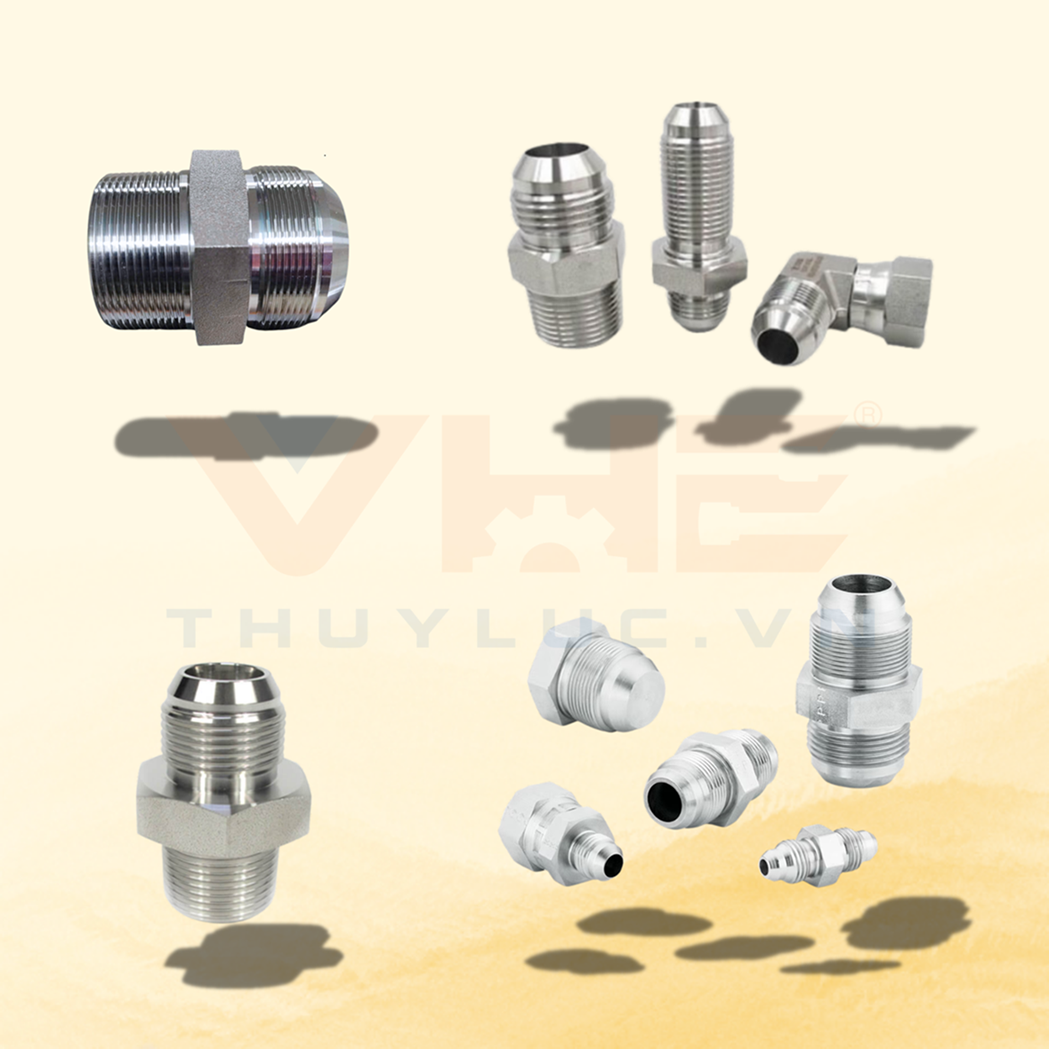
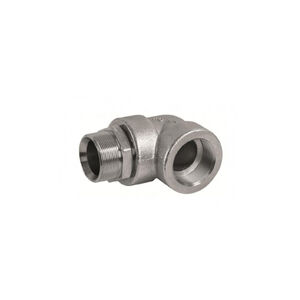
đầu nối inox cao cấp chất lượng

Nếu bạn gặp khó khăn trong việc xác định hệ ren cho hệ thống của mình, đừng ngần ngại liên hệ với đội ngũ kỹ thuật của VHE để được hỗ trợ kiểm tra và tư vấn chính xác nhé!

CÔNG TY CỔ PHẦN THIẾT BỊ THỦY LỰC VIỆT NAM

- Hỗ trợ tư vấn & Giải đáp thắc mắc: 0903 967 588 - 0903 067 588

- Email hỗ trợ: [email protected]

- Địa chỉ văn phòng: 31 Đường D20, Phường Phước Long, Thành phố Hồ Chí Minh, Việt Nam

- Địa chỉ kho xưởng HCM: Đường số 10, KCN Sóng Thần, Phường Dĩ An, Thành phố Hồ Chí Minh, Việt Nam.

- Địa chỉ kho xưởng HN: Km28, Quốc lộ 6A, Khu Công Nghiệp Đồng Đế, Xã Phú Nghĩa, Thành phố Hà Nội, Việt Nam.
XEM THÊM CÁC CÂU HỎI KHÁC

5 Crucial Considerations Before Installing Seamless Hydraulic Pipes in the Factory

The installation of high-pressure hydraulic piping systems in industrial facilities (such as shipbuilding, petrochemical, and food processing plants) is by no means a simple task. Unlike flexible hoses, seamless pipes provide greater rigidity and superior pressure resistance, yet they demand absolute precision in measurement and assembly.

A single minor deviation in dimensions or a flaw in the connection method can

Xem tiếp ...

Guide to Distinguishing Common Flare Thread Systems (JIC, SAE, JIS, and JIS Komatsu)

Guide to Distinguishing Common Flare Thread Systems (JIC, SAE, JIS, and JIS Komatsu)

In hydraulic engineering, thread systems that utilize a flare surface for sealing are frequently confused due to their nearly identical external appearances. Incorrect installation does not only lead to leakages but can also cause catastrophic failure of the fittings due to mismatched flare angles and thread pitches. This article will guide you on how to easily measure inside and outside

Xem tiếp ...

Complete Range of DIN Fittings for Seamless Steel Tubes: A Fast and Weld-Free Assembly Solution

When installing fixed piping systems for factories or outdoor transmission lines, assembling rigid pipes is always a labor-intensive task. Traditional welding processes not only require highly skilled welders but also present numerous challenges and risks when performed in confined spaces, at heights, or outdoors under harsh weather conditions.

To thoroughly resolve this issue, using DIN seamless steel pipes combined with

Xem tiếp ...

Why Choose VHE Seamless Pipes for High-Pressure Industrial Projects?

In industrial hydraulic systems, seamless pipes act as the core power transmission network...
A minor discrepancy in specifications or a lack of synchronization in connections can lead to pressure leaks, causing total production downtime and massive operational losses.

Quality Commitment from VHE Specialized Seamless Pipes

At VHE, we deeply understand the rigorous standards required by plant engineers. Our hydraulic seamless

Xem tiếp ...

Precise and Fast Custom Seamless Steel Pipe Cutting Service at VHE for Industrial Plants

Seamless Steel Pipe Cutting and Machining

Challenges in Installing Seamless Steel Pipelines in Industrial Plants

In heavy industrial facilities, thermal power plants, and chemical factories, hydraulic piping and fixed fluid conveyance systems play a critical role in daily operations. Installing these systems requires a massive volume of highly durable, pressure-resistant materials, such as SS316 stainless steel pipes, standard seamless steel pipes, and galvanized steel pipes.

However,

Xem tiếp ...

Why is seamless tubing more essential for high-pressure hydraulic systems than welded tubing?

Why is seamless tubing more essential for high-pressure hydraulic systems than welded tubing?

1. Potential Risks in Extreme Environments

Imagine a ship’s hydraulic cylinder operating in the heart of a storm, or a petrochemical refinery platform functioning under thousands of PSI. Suddenly, a hydraulic line ruptures. The consequences extend far beyond costly operational downtime—amounting to billions of VND per hour—to the grave risks of marine environmental pollution and direct threats to human life.

Xem tiếp ...

Understanding Specs & Size Chart: DIN 2391 Seamless Steel & SS316 Stainless Tubing

Understanding Specs & Size Chart: DIN 2391 Seamless Steel & SS316 Stainless Tubing

Did you know: Over 70% of leakage and pressure drop issues in hydraulic systems stem from selecting the incorrect tube standards and dimensions? In high-pressure environments, even a minor deviation in wall thickness or outside diameter can lead to severe consequences.

So, how can you accurately read the technical specifications of DIN 2391 St37.4 (NBK Phosphated) seamless steel tubes and

Xem tiếp ...

Differentiating the 3 Common Seamless Hydraulic Tubes: Black Steel, Galvanized, and SS316

In high-pressure hydraulic systems, specifying the wrong type of seamless steel tube not only leads to a wasted budget but also poses extremely dangerous risks of leakage and catastrophic blowouts. Are you currently debating between black carbon steel, galvanized steel, or SS316 stainless steel tubes? Which one is the absolute optimal choice for your project? Let Vietnam Hydraulic Equipment (VHE)

Xem tiếp ...

How to Accurately Identify Common Tapered Pipe Threads: NPT, BSPT, and JIS

How to Accurately Identify Common Tapered Pipe Threads NPT, BSPT, and JIS

In hydraulic systems, tapered threads play a crucial role due to their ability to self-seal directly along the thread flanks. However, because they all share a similar tapered profile that gradually narrows toward the tip, distinguishing between BSPT, NPT, and JIS Tapered threads with the naked eye is incredibly difficult. This article will guide you in selecting the correct thread

Xem tiếp ...

4 Ways to Fix Fire Hose Leaks at the Coupling

Is your fire hose constantly leaking or spraying water at the coupling? This is more than just a minor waste—it is a significant safety hazard that drastically reduces water pressure when a fire breakout occurs. For facility managers and fire safety teams, resolving these leaks is a top priority to ensure emergency readiness.

In this article, we provide a technical

Xem tiếp ...

HỖ TRỢ TƯ VẤN MIỄN PHÍ

Nếu không tìm được thông tin cần thiết, vui lòng liên hệ với chúng tôi để được tư vấn miễn phí

Hotline tư vấn

(028) 3503 0349

0903 967 588 - 0903 067 588

[email protected]

hoặc để lại thông tin thông qua công cụ
TƯ VẤN HỖ TRỢ ngay bên dưới, chúng tôi sẽ phản hồi ngay khi nhận được thông tin