
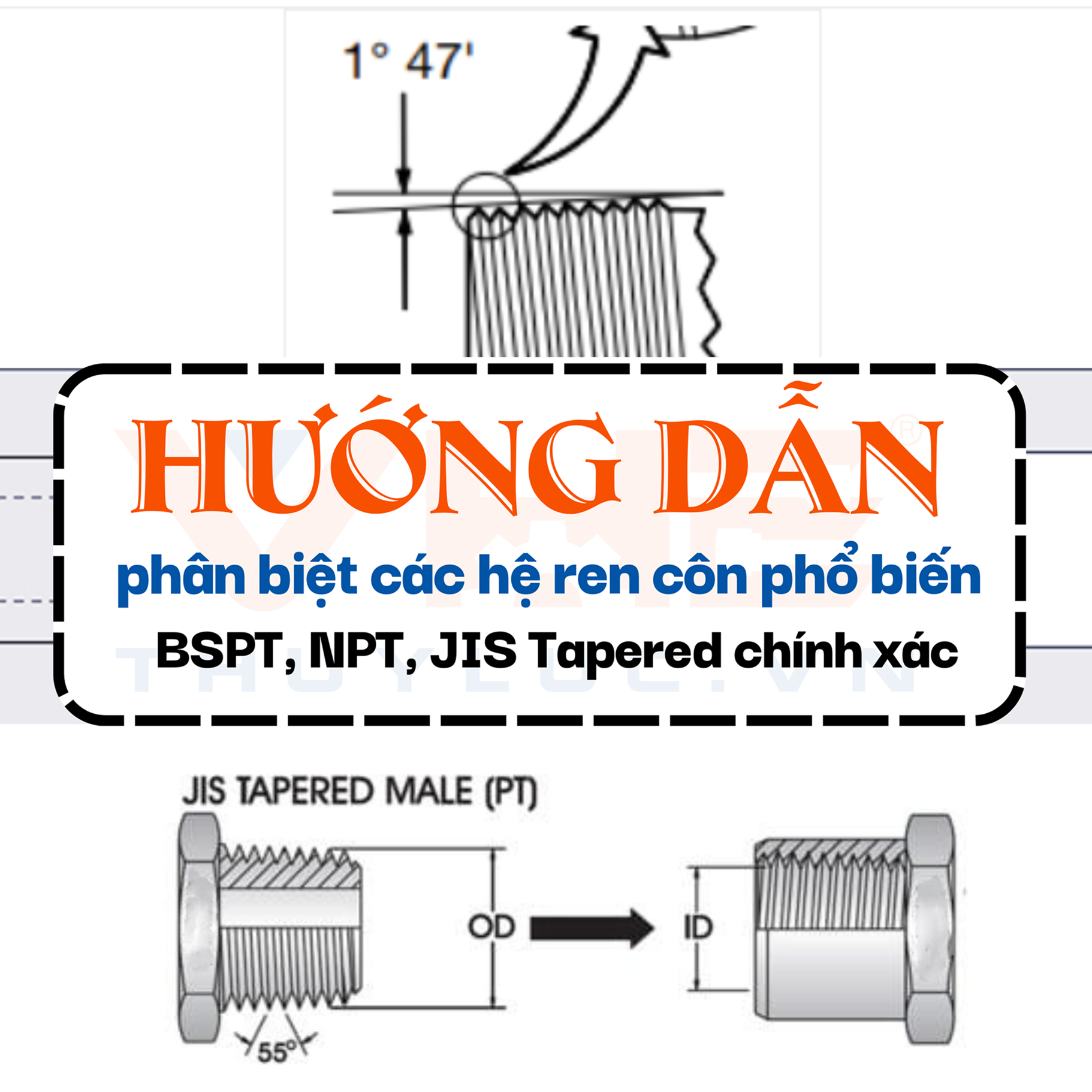
Hướng dẫn phân biệt các hệ ren côn phổ biến (BSPT, NPT, JIS Tapered) chính xác

Hướng dẫn phân biệt các hệ ren côn phổ biến (BSPT, NPT, JIS Tapered) chính xác

Trong hệ thống thủy lực, các loại ren côn đóng vai trò quan trọng nhờ khả năng tự làm kín ngay trên bề mặt ren. Tuy nhiên, do cùng có thiết kế thu nhỏ dần về phía đầu, việc phân biệt BSPT, NPT và JIS Tapered bằng mắt thường là cực kỳ khó khăn. Bài viết này sẽ giúp bạn chọn đúng chuẩn ren để đảm bảo hệ thống vận hành an toàn.

1. Tại sao cần phân biệt các hệ ren côn?

Ren côn được thiết kế để các đỉnh ren và chân ren ép chặt vào nhau khi vặn, tạo ra một mối nối kín khít. Nếu bạn lắp nhầm các hệ ren này với nhau thì sẽ xảy ra các trường hợp như sau:

- Mối nối sẽ bị rò rỉ: Do bước ren (Pitch) hoặc góc đỉnh ren không trùng khớp hoàn toàn.

- Gây cháy ren: Các răng ren sẽ đè lên nhau và làm hỏng đầu nối inox hoặc thiết bị đắt tiền.

2. Đặc điểm chi tiết của 3 hệ ren côn chủ đạo

2.1. Ren BSPT (British Standard Pipe Tapered) - Chuẩn Anh

Còn được gọi là ren PT (thường dùng ở Nhật và Hàn Quốc) hoặc ren R.

  • Đặc điểm: Hình dáng côn tương tự như NPT nhưng các thông số kỹ thuật hoàn toàn khác.
  • Góc đỉnh ren: Góc giữa 2 đỉnh là 55° (Nhọn hơn so với NPT).
  • Ứng dụng: Rất phổ biến tại thị trường Việt Nam trong các hệ thống đường ống công nghiệp Châu Âu và Châu Á.
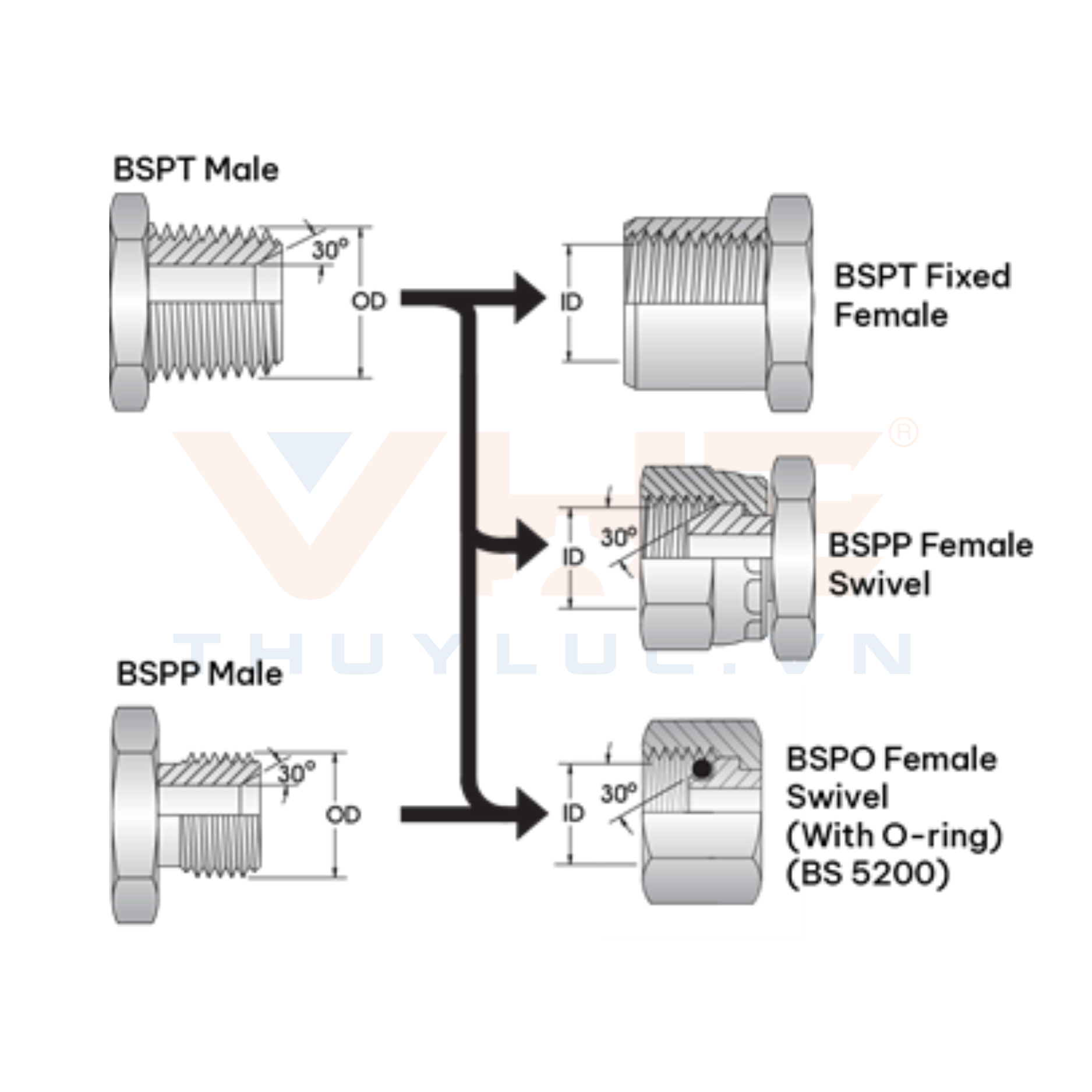
Ren BSPT (British Standard Pipe Tapered) - Chuẩn Anh

2.2. Ren NPT (National Pipe Tapered) - Chuẩn Mỹ

Ren NPT là loại ren côn tiêu chuẩn của Mỹ, cực kỳ phổ biến trong các hệ thống đường ống công nghiệp và dầu khí.

  • Đặc điểm: Ren có độ côn (tapered). Khi vặn chặt, các mặt ren ép sát vào nhau để tạo độ kín.
  • Góc đỉnh ren: Góc giữa 2 đỉnh là 60°
  • Cách làm kín: NPT làm kín bằng đỉnh răng, thường sử dụng kèm theo với cao su non/ keo làm kín.
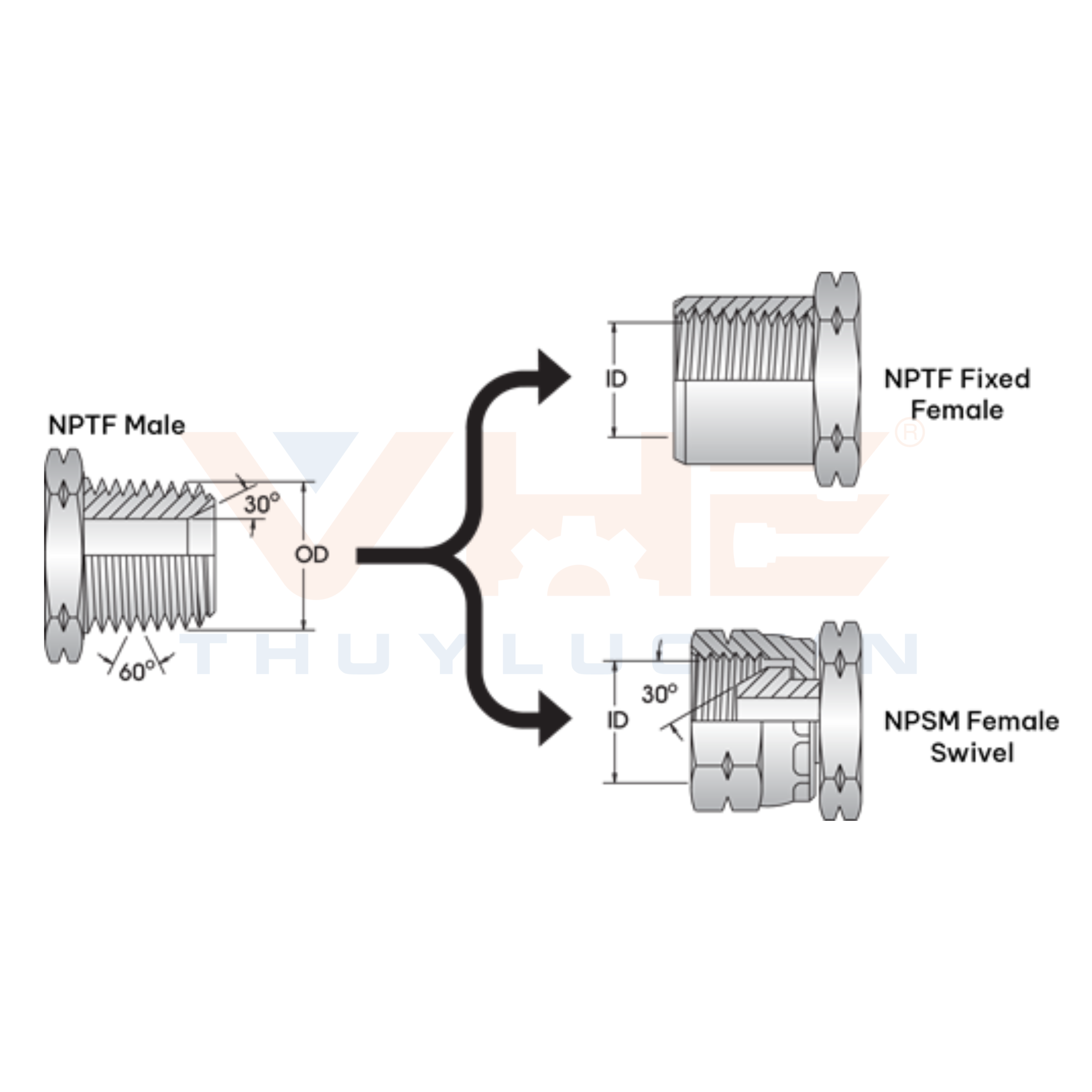
Ren NPT (National Pipe Tapered) - Chuẩn Mỹ

2.3. Ren JIS Tapered (Japanese Industrial Standard) - Chuẩn Nhật

Hệ ren này thường xuất hiện trên các dòng máy công trình, xe cẩu từ Nhật Bản (Komatsu, Kobelco...).

  • Đặc điểm: Về cơ bản, ren JIS Tapered (thường ký hiệu là PT hoặc R) có thông số tương đương với ren BSPT.
  • Góc đỉnh ren: 55°
  • Lưu ý: Dù thông số giống BSPT, nhưng trong thực tế, các đầu nối JIS thường đi kèm với các tiêu chuẩn mặt bích hoặc đầu loe đặc thù của hãng sản xuất Nhật Bản.
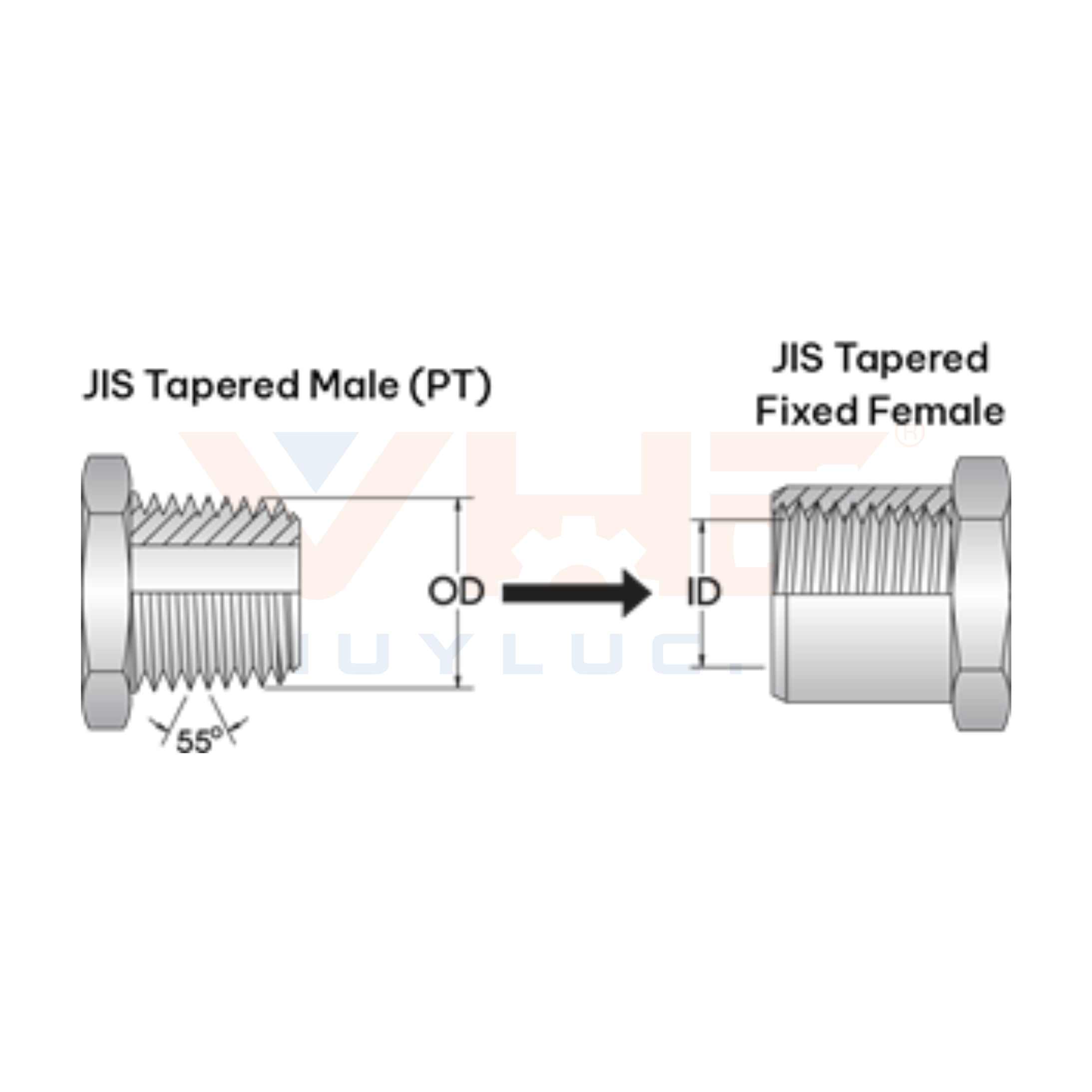
Ren JIS Tapered (Japanese Industrial Standard) - Chuẩn Nhật

3. Cách đo và chọn chuẩn ren chính xác trong 3 bước

Để xác định chính xác loại ren, bạn nên thực hiện theo quy trình sau:

- Quan sát độ côn: Sử dụng thước kẹp để xác định đường kính ở hai đầu của đoạn ren. Nếu kích thước giảm dần, bạn chắc chắn đang sở hữu một hệ ren côn.

- Đo bước ren (Pitch): Sử dụng dưỡng đo ren để xác định số răng trên mỗi inch (TPI). NPT và BSPT có số răng khác nhau ở nhiều kích thước (Ví dụ: Size 1/2" của NPT là bước ren 14, trong khi BSPT cũng là bước ren 14 nhưng góc đỉnh ren lại khác nhau).
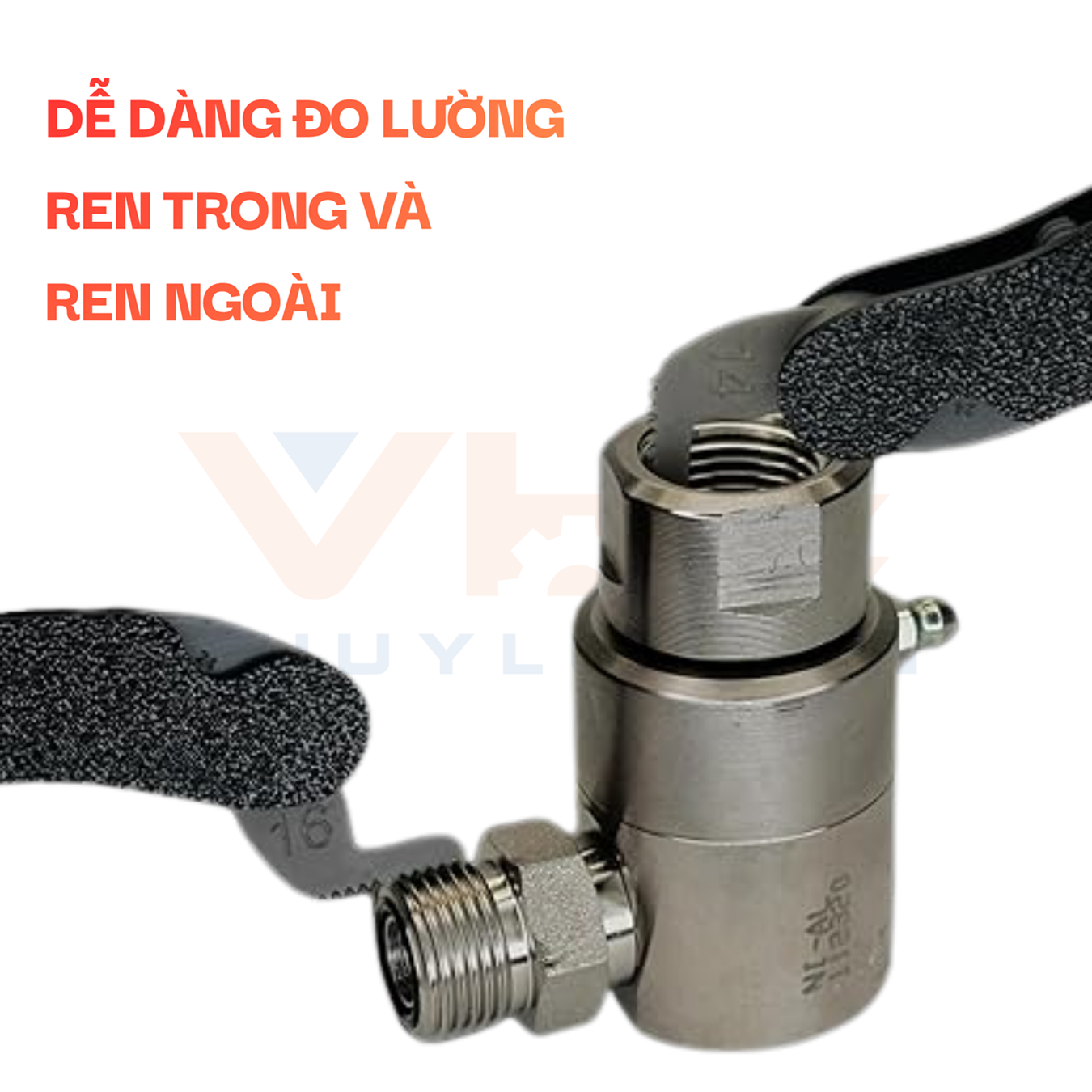
Dụng cụ đo bước ren (Pitch)

4. Bảng so sánh nhanh các loại ren BSPT, NPT, JIS Tapered

Đặc điểm

BSPT NPT JIS Tapered

Góc côn làm kín

30° 30° Không có

Góc đỉnh răng

55° 60° 55° (giống BSPT)

Ký hiệu thường gặp

R, Rc, PT NPT PT, R

Tiêu chuẩn

Anh/ Châu Âu

Mỹ Nhật Bản

5. Lời khuyên từ chuyên gia kỹ thuật và Case Study thực tế

Khi thay thế đầu nối hoặc ống thủy lực, bạn đừng bao giờ phán đoán kiểu ren bằng mắt. Một sai lệch nhỏ giữa góc đỉnh ren 55°và 60° có thể dẫn đến rò rỉ áp suất nghiêm trọng sau vài giờ vận hành.

Tại Công ty Cổ phần Thiết bị Thủy Lực Việt Nam (VHE), chúng tôi luôn khuyến nghị khách hàng sử dụng bộ thước kẹp và dưỡng đo ren tiêu chuẩn trước khi lắp đặt. Đặc biệt, với các hệ thống yêu cầu độ bền cao hoặc hoạt động trong môi trường ăn mòn (như ngành đóng tàu, hóa chất), việc chọn đúng vật liệu đầu nối cũng quan trọng không kém việc chọn chuẩn ren.

Hình ảnh thực tế từ kho VHE: Dưới đây là lô hàng đầu nối Inox (Stainless Steel) vừa cập kho. Các sản phẩm này không chỉ đảm bảo độ chính xác tuyệt đối về bước ren mà còn có khả năng chống oxy hóa vượt trội, đáp ứng các tiêu chuẩn kỹ thuật khắt khe nhất trong ngành thủy lực.
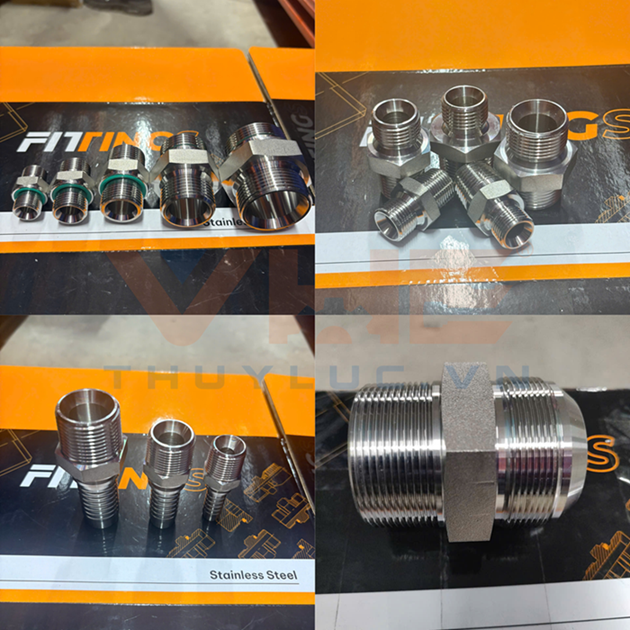
lô hàng đầu nối Inox với đầy đủ chuẩn ren côn NPT, BSPT và JIS Tapered

Nếu bạn gặp khó khăn trong việc xác định hệ ren cho hệ thống của mình, đừng ngần ngại liên hệ với đội ngũ kỹ thuật của VHE để được hỗ trợ kiểm tra và tư vấn chính xác nhé!

- Hỗ trợ tư vấn & Giải đáp thắc mắc: 0903 067 588

- Email hỗ trợ: [email protected]
XEM THÊM CÁC CÂU HỎI KHÁC

Construction to choose and install Light Series Pipe Clamps for tight spaces

Construction to choose and install Light Series Pipe Clamps for tight spaces

When installing a fixed piping system in manufacturing plants or outdoor hydraulic stations, installation space is often limited. Confined spaces and areas close to walls demand compact fastening solutions without compromising on load-bearing capacity. The optimal solution for these applications is the use of light series single hydraulic pipe clamps.

The article below will provide detailed technical specifications from the

Xem tiếp ...

Distinguishing between Heavy series and Light series Hydraulic pipe clamps

During the installation and maintenance of the hydraulic and pneumatic piping systems within industrial plants, selecting the correct pipe clamps is a decisive factor in minimizing vibration and ensuring structural support. Under the international DIN 3015 standard, pipe clamps are primarily categorized into two main lineups: the Light Series and the Heavy Series.

Therefore, what exactly sets these two series

Xem tiếp ...

What Are DIN 3015 Hydraulic Pipe Clamps? Why Are They Essential for Marine Factories?

What Are DIN 3015 Hydraulic Pipe Clamps? Why Are They Essential for Marine Factories?

1. The Hidden Risks of Pipeline Vibration Failures

In hydraulic systems within heavy industrial plants, oil rigs (Oil & Gas), or marine vessels (Marine), continuous fluctuations in pressure and flow rates generate extreme vibrations.
If only temporary or technically incorrect pipe fastening methods are used, the system will face severe consequences:

  • Cracking and bursting of oil pipelines.
  • Fluid leakage at
Xem tiếp ...

Common Flange Standards for Stainless Steel Flexible Metal Hoses

In industrial piping systems, stainless steel flexible joints play a core role in absorbing vibrations, compensating for thermal expansion, and protecting critical equipment. However, to ensure precise installation and safe operation, selecting the correct flange connection standard is vital. This article provides a comprehensive overview of the common flange standards currently used in the fabrication and welding of flexible joints.

Xem tiếp ...

How Does the Stainless Steel Braided Mesh Affect the Working Pressure of Metal Hoses?

In industrial piping system design, the corrugated metal hose is a core material for expansion compensation and vibration isolation. However, the corrugated core itself (U-Type, O-Type, or Spiral-Type) has a relatively thin wall, primarily responsible for providing flexibility and conveying media.

So, how can this pipeline withstand pressures up to hundreds of bars without deforming or bursting? The answer lies

Xem tiếp ...

Applications of Stainless Steel Flexible Hoses in Extreme Environments

In industrial piping system design, managing vibrations and installation misalignments under normal conditions is challenging enough; however, maintaining stability in the harshest environments presents an even more formidable challenge.

1. The Lifeline Piping Systems in Mega-Plants

Imagine a pipeline network transporting chemicals, thermal oil, or liquefied gases within power generation facilities or petrochemical refineries. This serves as the critical core

Xem tiếp ...

What is Flexible Metal Hose? Construction Overview and Manufacturing Standards

In industrial piping systems, vibrations, thermal expansion, and assembly misalignments are inevitable. To resolve these issues, stainless steel flexible metal hoses (also known as stainless steel braided metal hoses) are a crucial component. So, what exactly is the construction of this product, and what practical benefits does it offer to manufacturing plants? Let’s explore the details with VHE in the

Xem tiếp ...

5 Crucial Considerations Before Installing Seamless Hydraulic Pipes in the Factory

The installation of high-pressure hydraulic piping systems in industrial facilities (such as shipbuilding, petrochemical, and food processing plants) is by no means a simple task. Unlike flexible hoses, seamless pipes provide greater rigidity and superior pressure resistance, yet they demand absolute precision in measurement and assembly.

A single minor deviation in dimensions or a flaw in the connection method can

Xem tiếp ...

HỖ TRỢ TƯ VẤN MIỄN PHÍ

Nếu không tìm được thông tin cần thiết, vui lòng liên hệ với chúng tôi để được tư vấn miễn phí

Hotline tư vấn

(028) 3503 0349

0903 967 588 - 0903 067 588

[email protected]

hoặc để lại thông tin thông qua công cụ
TƯ VẤN HỖ TRỢ ngay bên dưới, chúng tôi sẽ phản hồi ngay khi nhận được thông tin