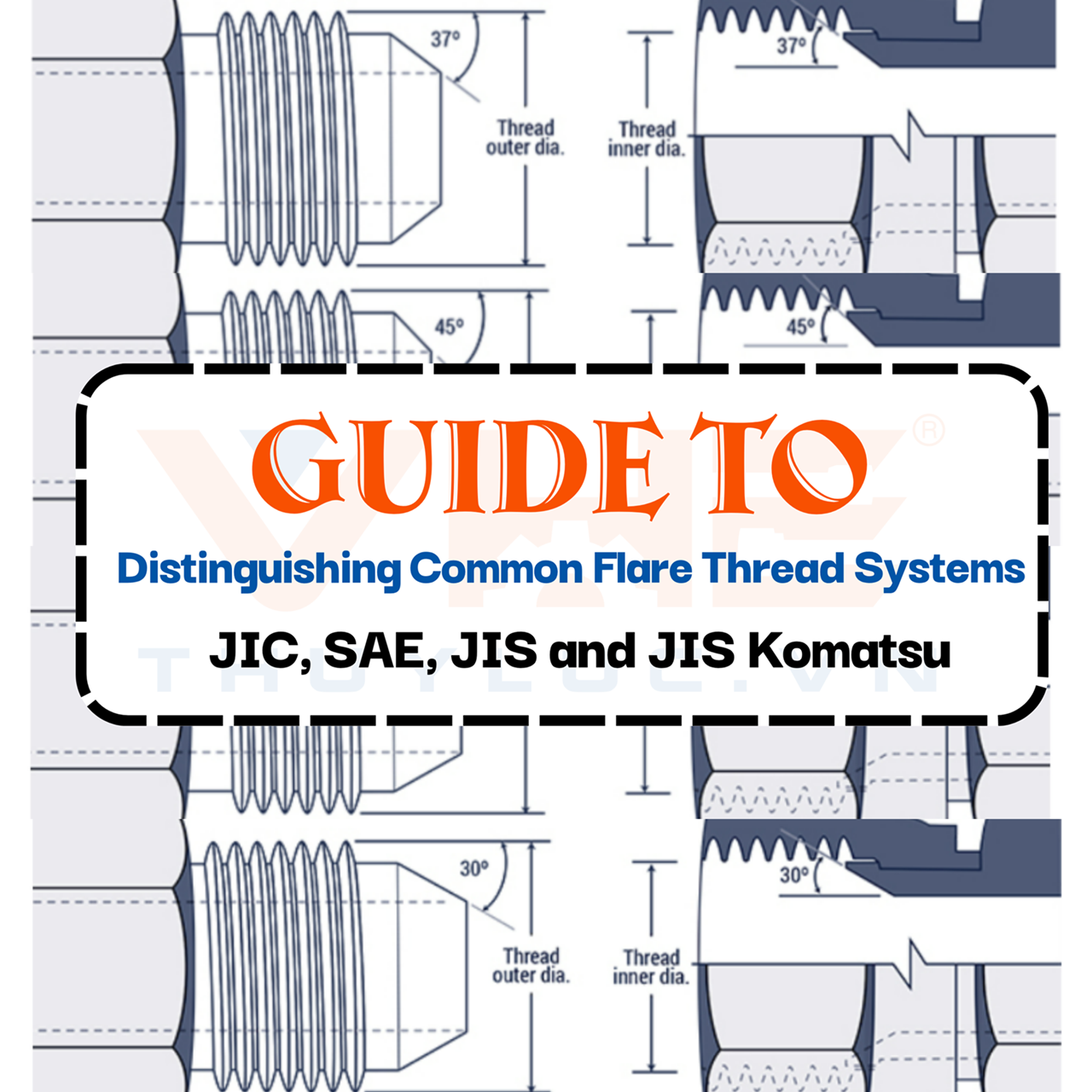
In hydraulic engineering, thread systems that utilize a flare surface for sealing are frequently confused due to their nearly identical external appearances. Incorrect installation does not only lead to leakages but can also cause catastrophic failure of the fittings due to mismatched flare angles and thread pitches. This article will guide you on how to easily measure inside and outside threads to accurately identify four key systems: JIC 37°, SAE 45°, JIS 30°, and JIS Komatsu 30°.
1. Why is Accurate Identification Essential?
Each thread system is engineered with a specific sealing cone angle. If mismatched, the contact surfaces will fail to seat perfectly, resulting in:
+ High-pressure oil leaks.
+ Permanent damage to the flare surface (Metal-to-metal seat).
+ Safety hazards for machinery operators and equipment.
2. Detailed Comparison of 4 Popular Flare Systems
Based on technical specifications, we can categorize these systems as follows:
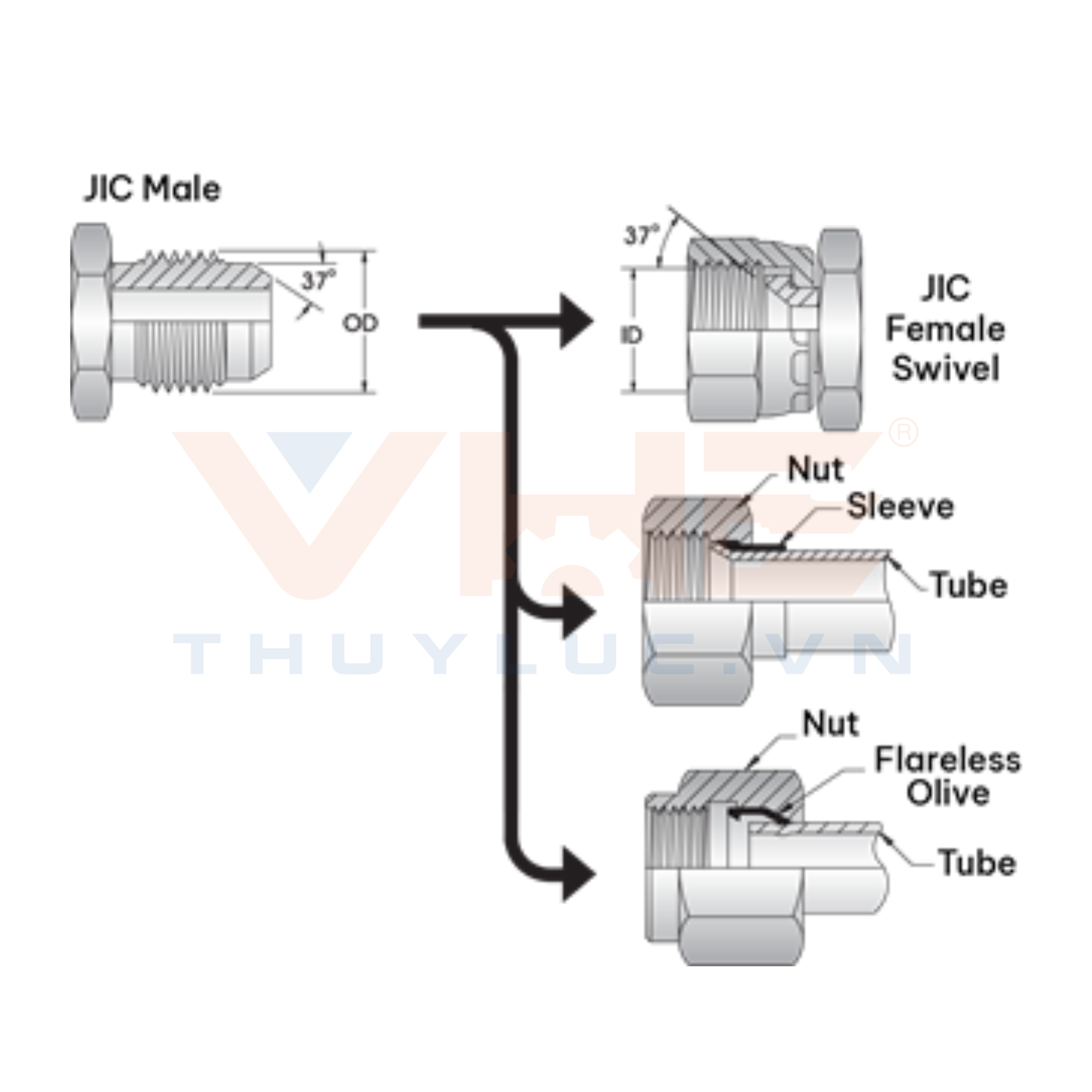
2.1. JIC 37° (Joint Industry Council)
This is an extremely common thread system in high-pressure hydraulic equipment.
- Sealing Cone Angle: 37° (Total flare angle is 74°).
- Thread Pitch: Determined by standard tables (typically Inch-based).
- Applications: The most widely used international standard; suitable for both hose fittings and rigid tubing (flare).
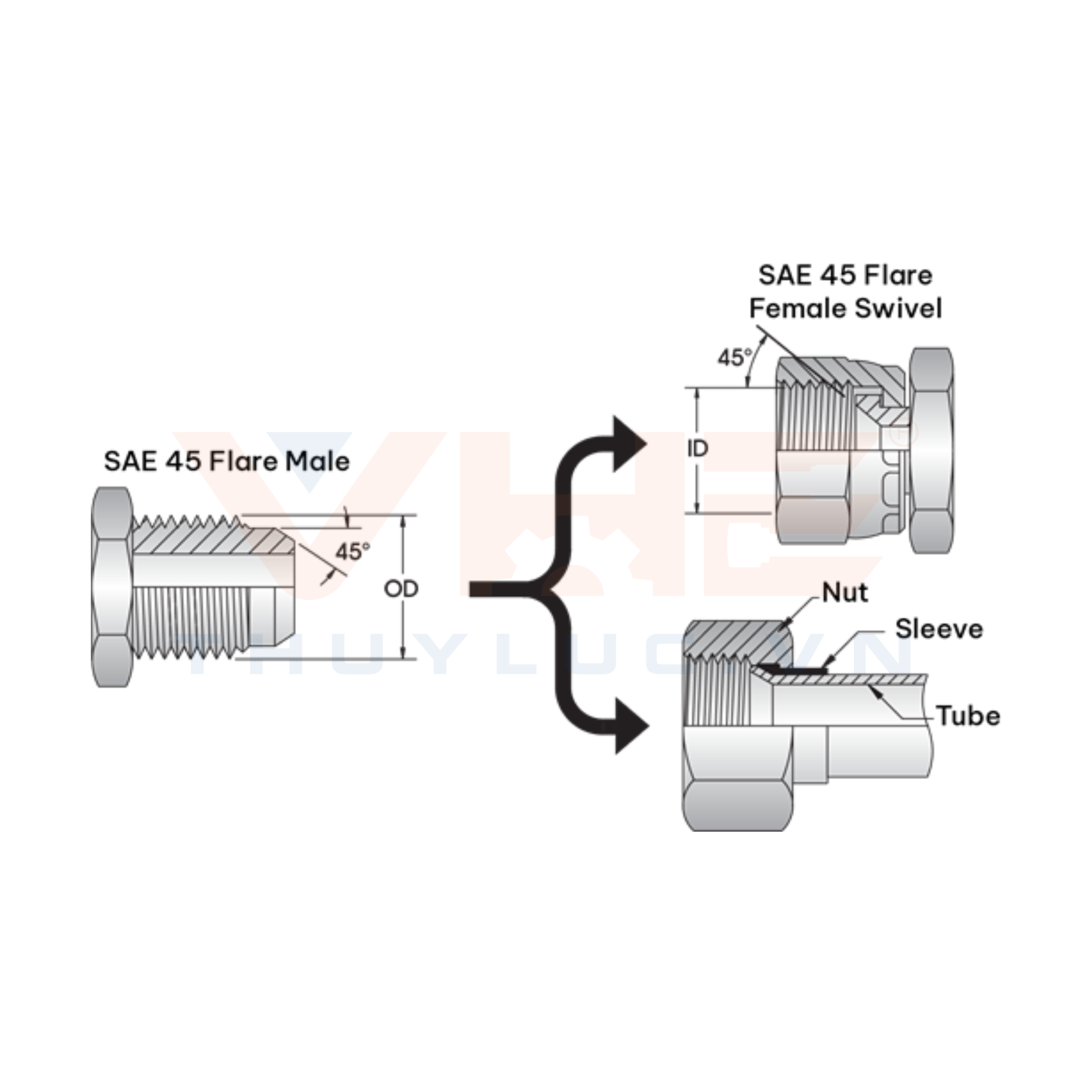
2.2. SAE 45° (Society of Automotive Engineers)
Commonly found in refrigeration, air conditioning systems, or lower-pressure applications.
- Sealing Cone Angle: 45° (Total flare angle is 90°).
- Thread Pitch: Critical Note—Certain sizes (such as 7/16-20, 1/2-20, 3/4-16, and 7/8-14) have identical thread pitches to JIC, making them extremely easy to confuse without a proper angle gauge.
- Applications: Used for rigid tubing systems (requires a tube flaring tool).
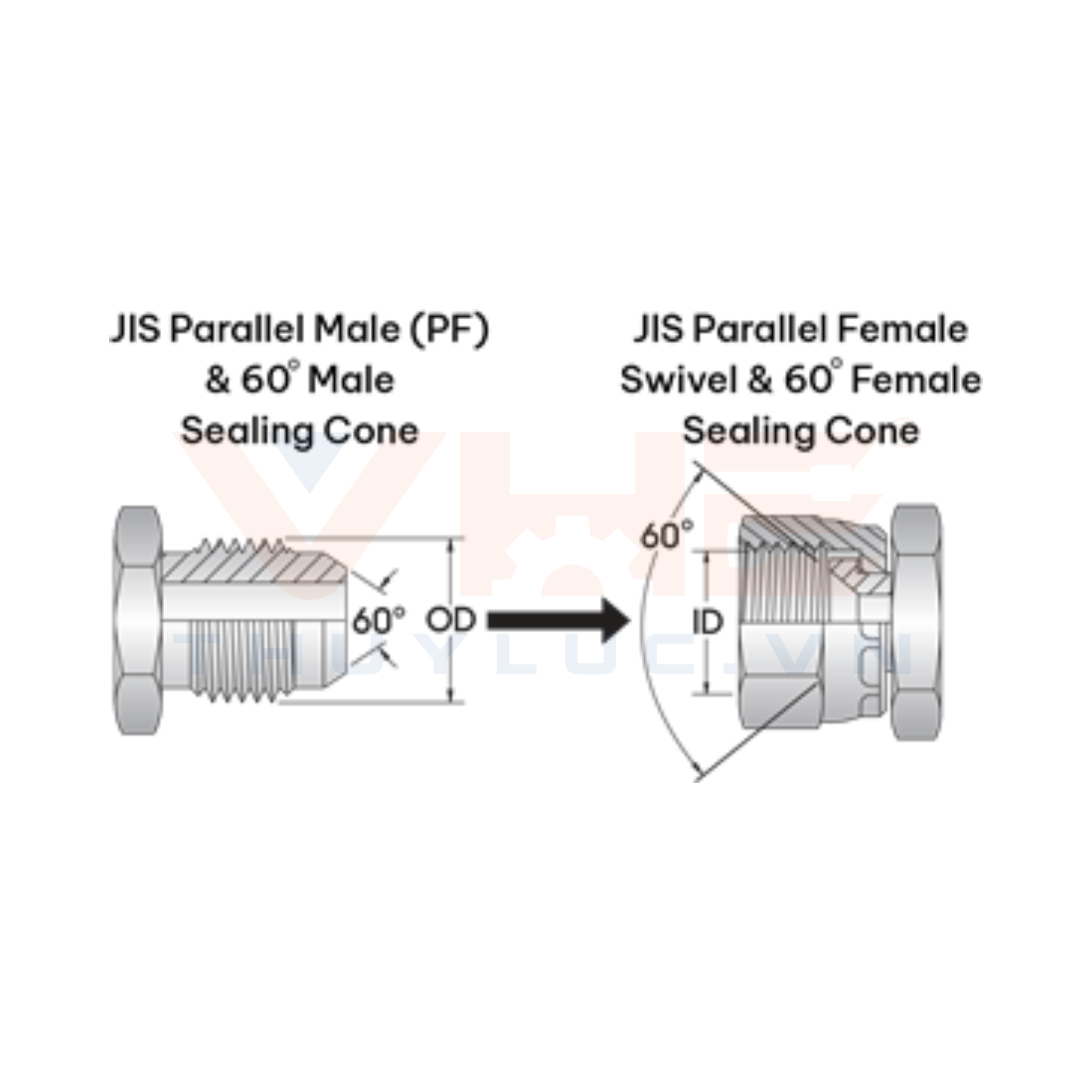
2.3. JIS 30° (Japanese Industrial Standard)
A standard Japanese thread system, often abbreviated as (PP).
- Sealing Cone Angle: 60° (30° per side).
- Thread Pitch: Similar to the BSPP (G thread) standard, but with an inverted cone angle.
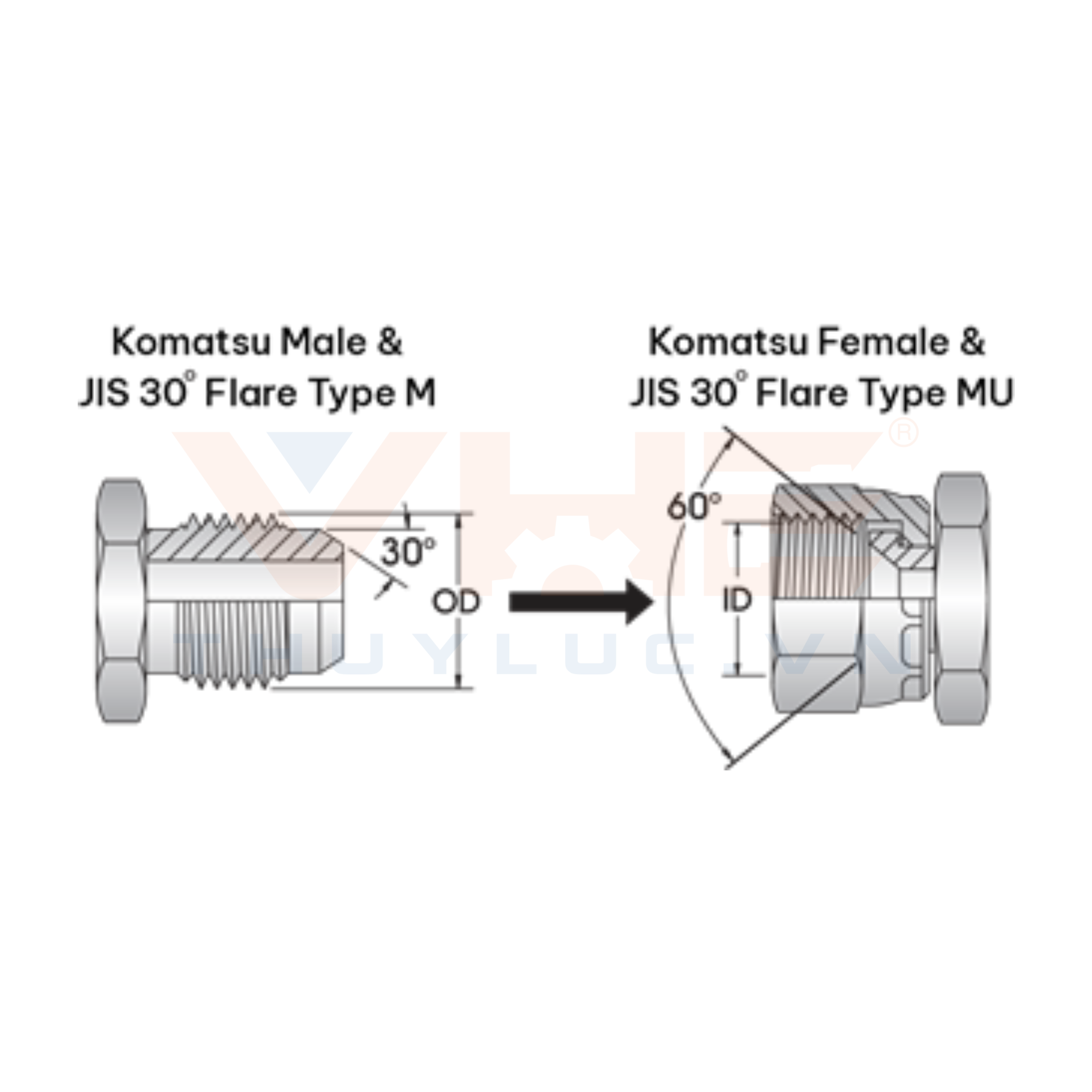
2.4. JIS Komatsu 30°
Designed exclusively for heavy machinery and excavators manufactured by Komatsu.
- Sealing Cone Angle: 60° (30° per side).
- Thread Pitch: Uses the METRIC system, making it completely incompatible with standard JIS 30°.
- Note: Highly prevalent in construction and earthmoving equipment.
3. Technical Specification Summary Table
| Comparison Criteria | JIC 37° | SAE 45° | JIS 30° | JIS Komatsu 30° |
| Sealing Cone Angle | 37°(74°) | 45°(90°) | 60° | 60° |
| Thread Pitch | Per Standard Table | Identical to JIC (select sizes) | Identical to BSPP | METRIC System |
| Key Features | Widely Used | Easily confused with JIC | Abbreviated as (PP) | Found on heavy machinery |
4. Three Steps to Identify Thread Standards Accurately
To differentiate between these systems correctly, you should be equipped with a veneer calliper and a thread pitch gauge:
Step 1 - Measure Diameters (OD/ID): Determine the fitting's nominal size.
Step 2 - Measure Thread Pitch (TPI/Pitch): Use a gauge to identify if it is an Inch system (JIC, SAE, JIS) or a Metric system (Komatsu).
Step 3 - Determine the Cone Angle: This is the most critical step for distinguishing between JIC (37°) and SAE (45°), or for identifying the JIS series (total angle of 60°).
5. Practical Notes from VHE
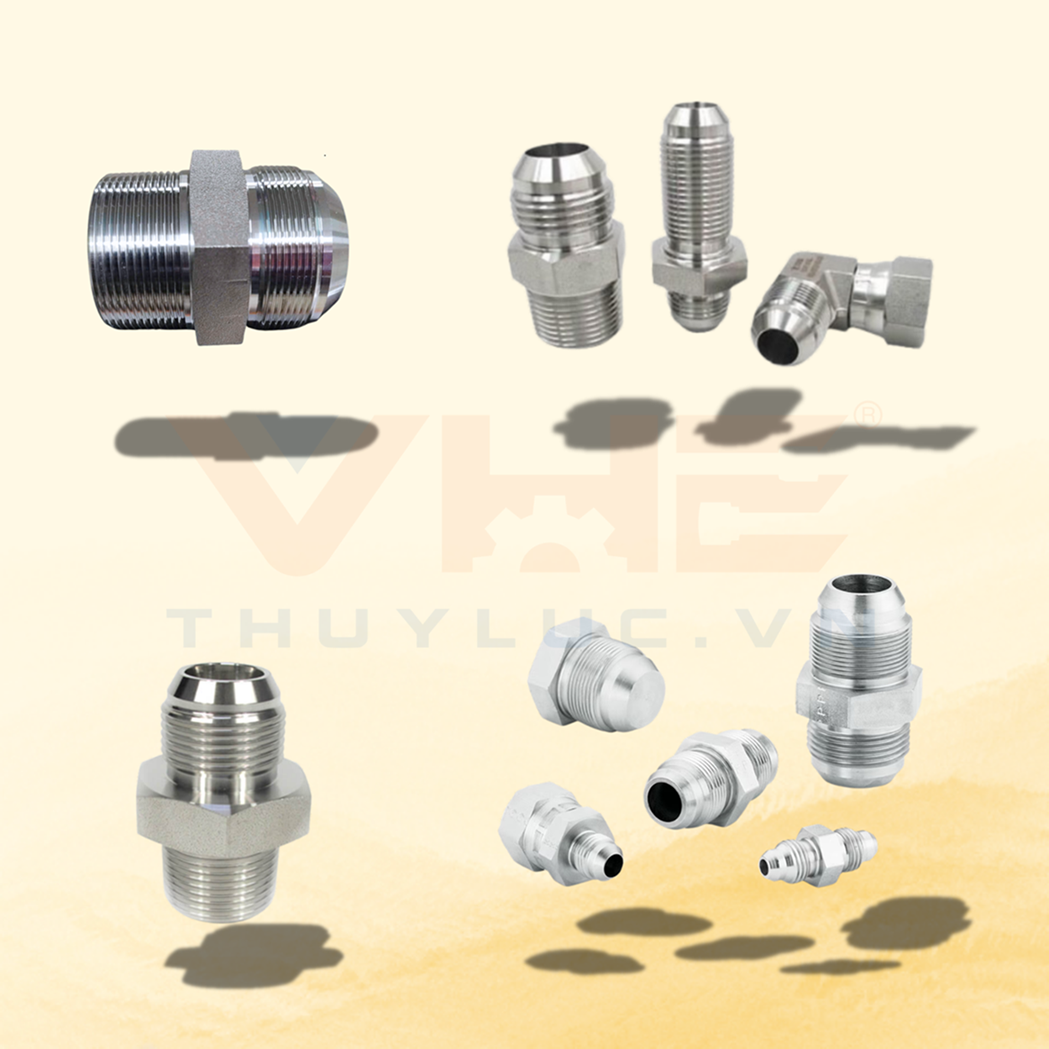
Confusing JIC 37°, SAE 45°, JIS 30°, and JIS Komatsu 30° is one of the most common errors in machinery maintenance. At Vina Hydraulic Equipment (VHE), we maintain a comprehensive stock of high-quality stainless steel fittings meeting all these standards. Selecting the correct Grade 316 Stainless Steel material combined with the precise thread standard will ensure your system operates durably in any environment.
Featured Stainless Steel Fittings in Our Stock:
- Stainless Steel Straight Connector: 7/16”x20 JIC - R1/4” (I502507-04-04).
- Stainless Steel Straight Connector: 9/16”x18 JIC - R1/4” (I502507-06-04).
- Stainless Steel 90° Elbow: 7/16”x20 JIC - R1/4” (I562507-04-04).
- Stainless Steel 90° Elbow: 9/16”x18 JIC - R3/8” (I562507-06-06).
- Stainless Steel Tee Connector: 7/16”x20 JIC (I702525-04-04).
- Stainless Steel Tee Connector: 9/16”x18 JIC (I702525-06-06).
- Stainless Steel Straight Connector: 7/16”x20 JIC - G1/4” (I502503-04-04).
- Stainless Steel Straight Connector: 9/16”x18 JIC - G3/8” (I502503-06-06).
- Stainless Steel Straight Connector: 1/4” JIS - R1/4” (I520507-04-04).
- Stainless Steel Straight Connector: 3/8” JIS - R3/8” (I520507-06-06).
If you face any challenges in identifying the thread system for your equipment, do not hesitate to contact VHE's technical team for precise inspection and consultation!
VINA-HYDRAULIC EQUIPMENT JOINT STOCK COMPANY (VHE)
- Consultation & Support: 0903 967 588 - 0903 067 588
- Email Support: [email protected]
- Head Office: 31 D20 Street, Phuoc Long Ward, Ho Chi Minh City, Vietnam
- HCM Warehouse: Street No. 10, Song Than IP, Di An Ward, Ho Chi Minh City, Vietnam
- Hanoi Warehouse: Km28, Highway 6A, Dong De IP, Phu Nghia, Hanoi, Vietnam