Construction to choose and install Light Series Pipe Clamps for tight spaces

Construction to choose and install Light Series Pipe Clamps for tight spaces

When installing a fixed piping system in manufacturing plants or outdoor hydraulic stations, installation space is often limited. Confined spaces and areas close to walls demand compact fastening solutions without compromising on load-bearing capacity. The optimal solution for these applications is the use of light series single hydraulic pipe clamps.

The article below will provide detailed technical specifications from the manufacturer, along with a precise installation guide for fluid piping systems. 

1. Why are confined spaces required to have a light series hydraulic pipe clamps?

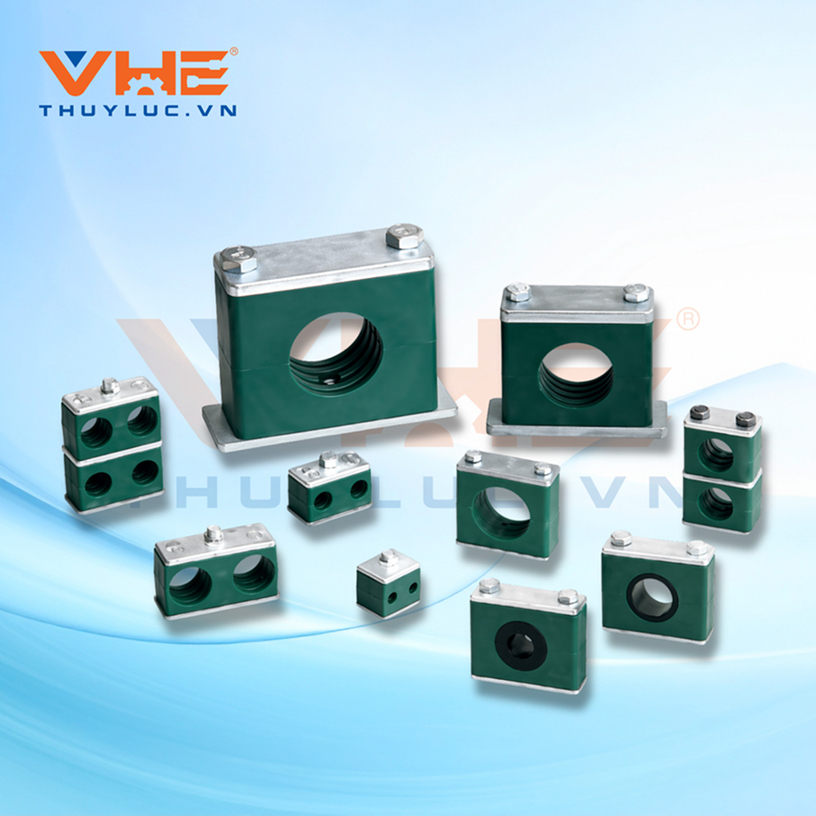
When designing and installing pipelines in tight corners or close to walls, twin or stacked clamps often take up too much space and make tightening bolts difficult. The defining characteristic of light series single plastic hydraulic pipe clamps is their compact design with a single clamping bore, allowing technicians to easily mount the pipes flush against machine panels or base frames.

In contrast to heavy series dedicated to multi-tier stacking, light series pipe clamps are specifically designed for systems with normal mechanical pressure, making them optimized for installation within the confined spaces of industrial machinery.

2. Standard Technical Specifications

To choose the right pipe clamps for your piping system, it is essential to adhere to international standards. The light series pipe clamps require the following characteristic

Manufacturing standard: Strictly manufactured in compliance with the German industrial standard DIN 3015

Outside diameter: Supports clamping tube diameters from 6mm to 75mm

Materials and temperature resistance:

  • PP (Polypropylene): Typically green in color, with a temperature resistance ranging from -30°C to +90°C. Suitable for most general piping applications.
  • PA (Polyamide 6): Typically black in color, capable of withstanding temperatures from -40°C to +120°C.
  • Aluminum Alloy: Single-hole aluminum pipe clamps offer exceptional mechanical strength in harsh environments.

3. Recommended Distances for Installation of Hydraulic Pipe Clamps 

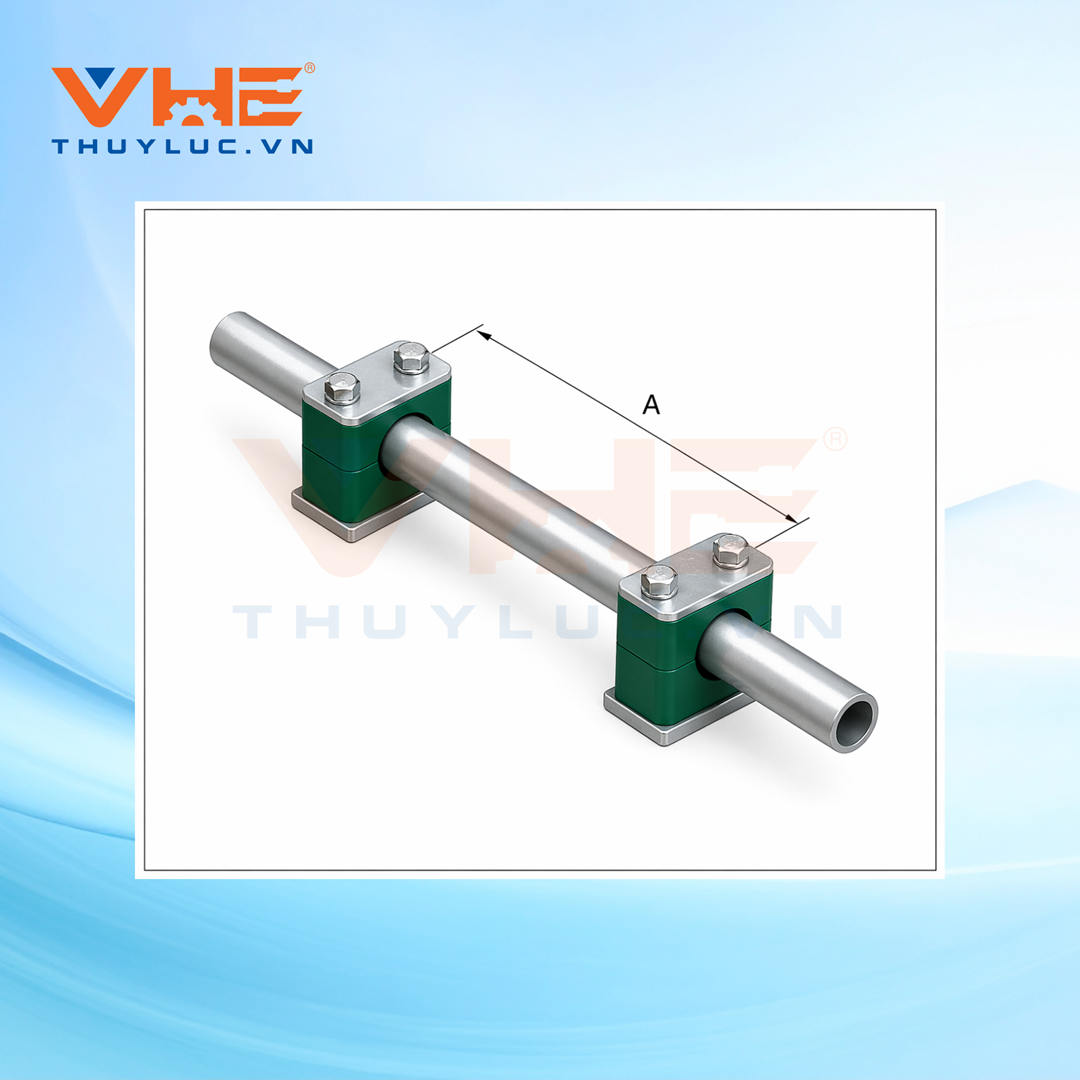
Proper clamp spacing is crucial to prevent the piping from sagging or vibrating during fluid flow. Below is the recommended installation distance for a fixed piping system in outdoor environments or plants.

Tube O.D Clamp spacing (m)
6mm - 14mm 0.9
15mm - 22mm 1.2
23mm - 28mm 1.5
30mm - 38mm 2
40mm - 48mm 2.5
50mm - 57mm 3

Recommended Distances for Installation of Hydraulic Pipe Clamps

4. Installation Guide for Light Series Hydraulic Pipe Clamps in Wall-Adjacent Areas

4.1. Installation on Welding Plates

This is a common method when routing pipelines along fixed steel frames in a factory.

1. Mark the position and weld the metal base plate onto a sturdy support surface.

2. Crucial Note: Never perform welding while the plastic clamp halves are attached to the base, as the high heat will melt the plastic components.

3. Once the welded plate has cooled completely, attach the lower clamp half to the base.

4. Place the hydraulic tube into the groove of the lower half.

5. Position the upper clamp half on top and use screws to tighten the cover plate securely.
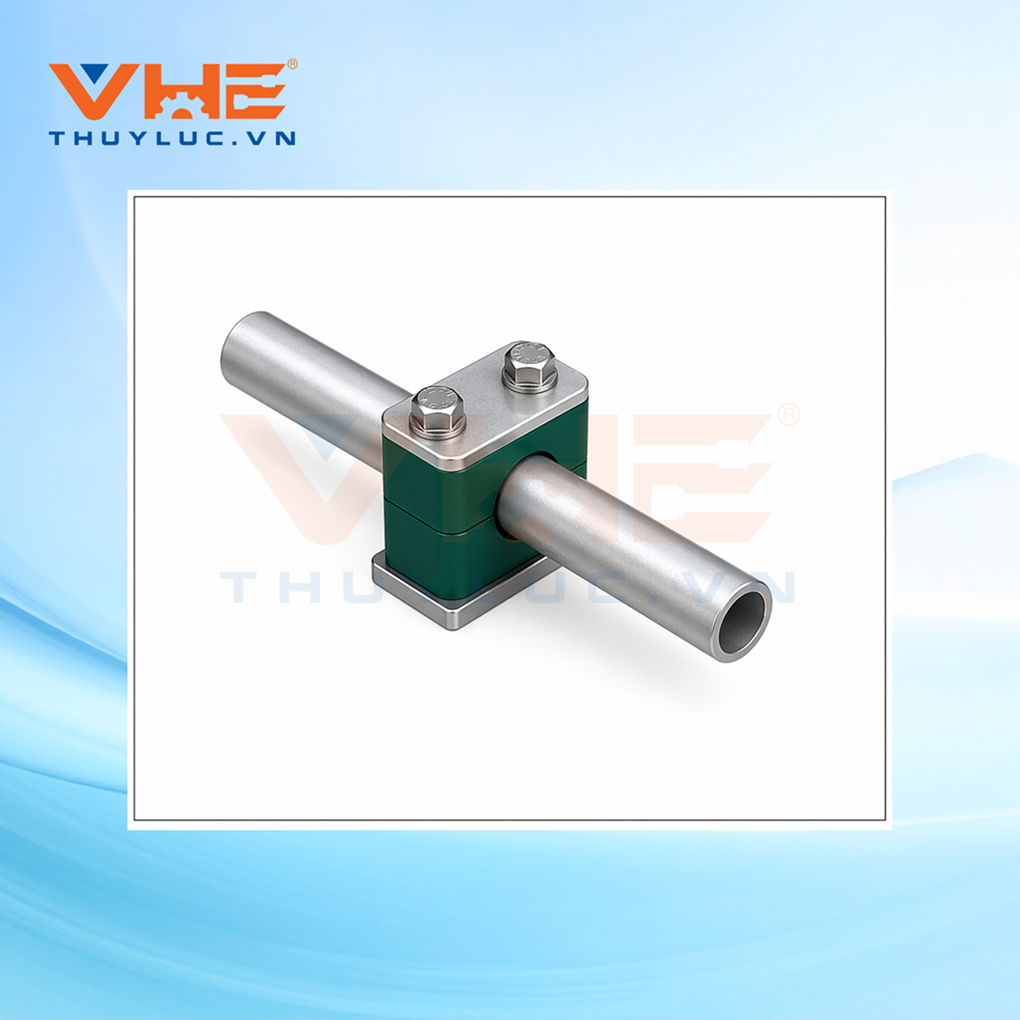
Hydraulic Light Pipe Clamps DIN 3015

4.2. Installation on Rail-Supports 

This method is highly convenient when machine walls have existing rail channels or when flexible spacing adjustment is required.

1. Rail supports can be either welded or bolted securely to the base.

2. Slide the rail nuts into the channel and turn them 90 degrees to lock them into position.

3. Mount the lower clamp half onto the nut, insert the pipeline, fit the upper half, and tighten the screws.

4.3. Special Attention at Pipe Bends and Elbows 

At intricate bends within confined spaces, pipelines endure significant torsional stress. When the hydraulic piping features curved sections, it is mandatory to position the clamps as close to both sides of the bend as possible. This helps eliminate vibration forces acting on the tube fittings.
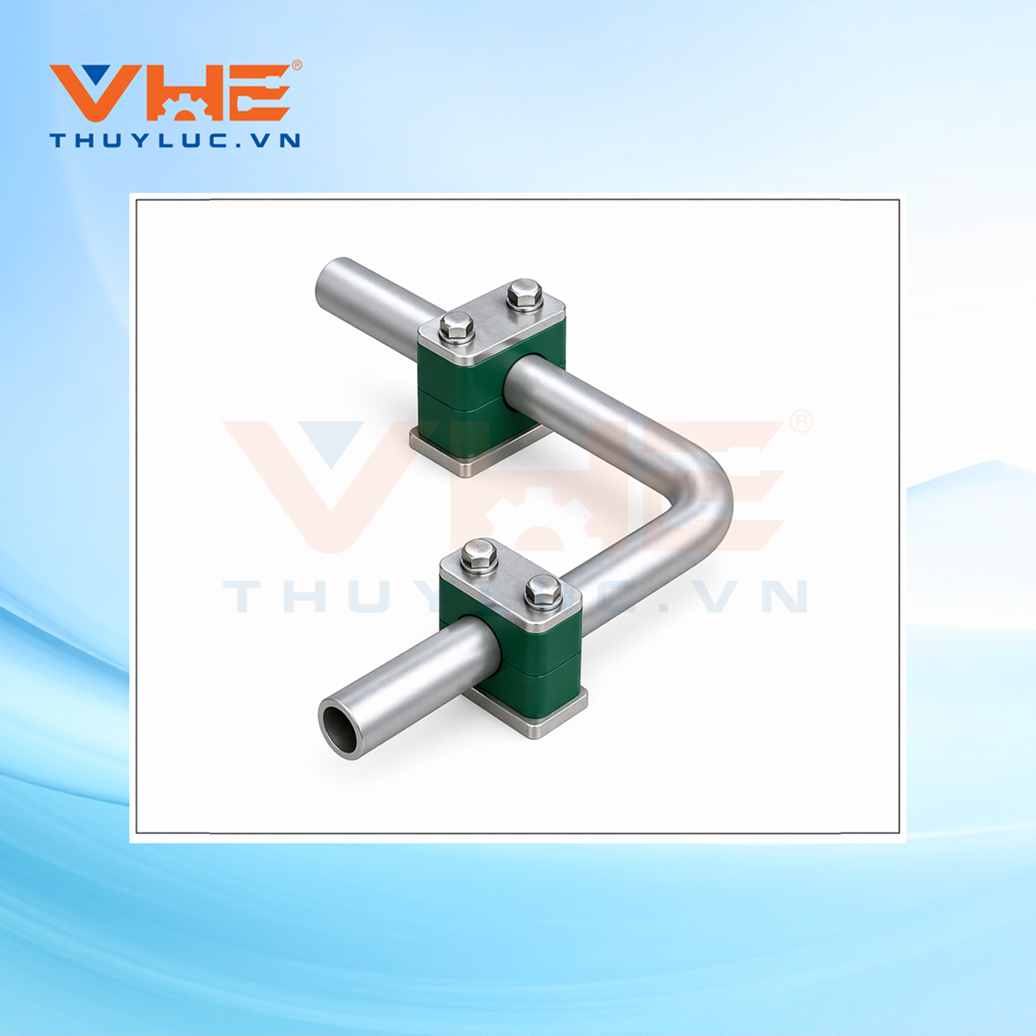
Hydraulic Pipe Clamps DIN 3015

Conclusion

Selecting the right Light series pipe clamps (DIN 3015) not only solves the challenge of confined spaces close to the machine, but also ensures the long-term durability of fixed rigid piping systems.

For the most accurate material configuration consulting for your industrial projects, and to receive a detailed quotation, do not hesitate to get in touch with the Sales Department of Vina Hydraulic Equipment Joint Stock Company (VHE) directly.

- Hotline: 0903 067 588

- Email: [email protected]
XEM THÊM CÁC CÂU HỎI KHÁC

Distinguishing between Heavy series and Light series Hydraulic pipe clamps

During the installation and maintenance of the hydraulic and pneumatic piping systems within industrial plants, selecting the correct pipe clamps is a decisive factor in minimizing vibration and ensuring structural support. Under the international DIN 3015 standard, pipe clamps are primarily categorized into two main lineups: the Light Series and the Heavy Series.

Therefore, what exactly sets these two series

Xem tiếp ...

What Are DIN 3015 Hydraulic Pipe Clamps? Why Are They Essential for Marine Factories?

What Are DIN 3015 Hydraulic Pipe Clamps? Why Are They Essential for Marine Factories?

1. The Hidden Risks of Pipeline Vibration Failures

In hydraulic systems within heavy industrial plants, oil rigs (Oil & Gas), or marine vessels (Marine), continuous fluctuations in pressure and flow rates generate extreme vibrations.
If only temporary or technically incorrect pipe fastening methods are used, the system will face severe consequences:

  • Cracking and bursting of oil pipelines.
  • Fluid leakage at
Xem tiếp ...

Common Flange Standards for Stainless Steel Flexible Metal Hoses

In industrial piping systems, stainless steel flexible joints play a core role in absorbing vibrations, compensating for thermal expansion, and protecting critical equipment. However, to ensure precise installation and safe operation, selecting the correct flange connection standard is vital. This article provides a comprehensive overview of the common flange standards currently used in the fabrication and welding of flexible joints.

Xem tiếp ...

How Does the Stainless Steel Braided Mesh Affect the Working Pressure of Metal Hoses?

In industrial piping system design, the corrugated metal hose is a core material for expansion compensation and vibration isolation. However, the corrugated core itself (U-Type, O-Type, or Spiral-Type) has a relatively thin wall, primarily responsible for providing flexibility and conveying media.

So, how can this pipeline withstand pressures up to hundreds of bars without deforming or bursting? The answer lies

Xem tiếp ...

Applications of Stainless Steel Flexible Hoses in Extreme Environments

In industrial piping system design, managing vibrations and installation misalignments under normal conditions is challenging enough; however, maintaining stability in the harshest environments presents an even more formidable challenge.

1. The Lifeline Piping Systems in Mega-Plants

Imagine a pipeline network transporting chemicals, thermal oil, or liquefied gases within power generation facilities or petrochemical refineries. This serves as the critical core

Xem tiếp ...

What is Flexible Metal Hose? Construction Overview and Manufacturing Standards

In industrial piping systems, vibrations, thermal expansion, and assembly misalignments are inevitable. To resolve these issues, stainless steel flexible metal hoses (also known as stainless steel braided metal hoses) are a crucial component. So, what exactly is the construction of this product, and what practical benefits does it offer to manufacturing plants? Let’s explore the details with VHE in the

Xem tiếp ...

5 Crucial Considerations Before Installing Seamless Hydraulic Pipes in the Factory

The installation of high-pressure hydraulic piping systems in industrial facilities (such as shipbuilding, petrochemical, and food processing plants) is by no means a simple task. Unlike flexible hoses, seamless pipes provide greater rigidity and superior pressure resistance, yet they demand absolute precision in measurement and assembly.

A single minor deviation in dimensions or a flaw in the connection method can

Xem tiếp ...

Guide to Distinguishing Common Flare Thread Systems (JIC, SAE, JIS, and JIS Komatsu)

Guide to Distinguishing Common Flare Thread Systems (JIC, SAE, JIS, and JIS Komatsu)

In hydraulic engineering, thread systems that utilize a flare surface for sealing are frequently confused due to their nearly identical external appearances. Incorrect installation does not only lead to leakages but can also cause catastrophic failure of the fittings due to mismatched flare angles and thread pitches. This article will guide you on how to easily measure inside and outside

Xem tiếp ...

HỖ TRỢ TƯ VẤN MIỄN PHÍ

Nếu không tìm được thông tin cần thiết, vui lòng liên hệ với chúng tôi để được tư vấn miễn phí

Hotline tư vấn

(028) 3503 0349

0903 967 588 - 0903 067 588

[email protected]

hoặc để lại thông tin thông qua công cụ
TƯ VẤN HỖ TRỢ ngay bên dưới, chúng tôi sẽ phản hồi ngay khi nhận được thông tin