A Guide to Selecting Fittings for the Food, Pharmaceutical, and Chemical Industries

Typically, a minor leak or a hidden corner where media stagnates at pipe connections can ruin an entire batch of products worth billions of VND. In industries requiring absolute strictness such as food and beverage (F&B), pharmaceuticals, and chemicals, selecting the right fitting is not just a matter of mechanical assembly; it is a critical issue of hygiene safety and fire/explosion prevention.

If you are wondering which type of fitting to integrate into your plant's stainless steel flexible hose systems or rigid piping, follow this article, as it will provide you with the core standards.
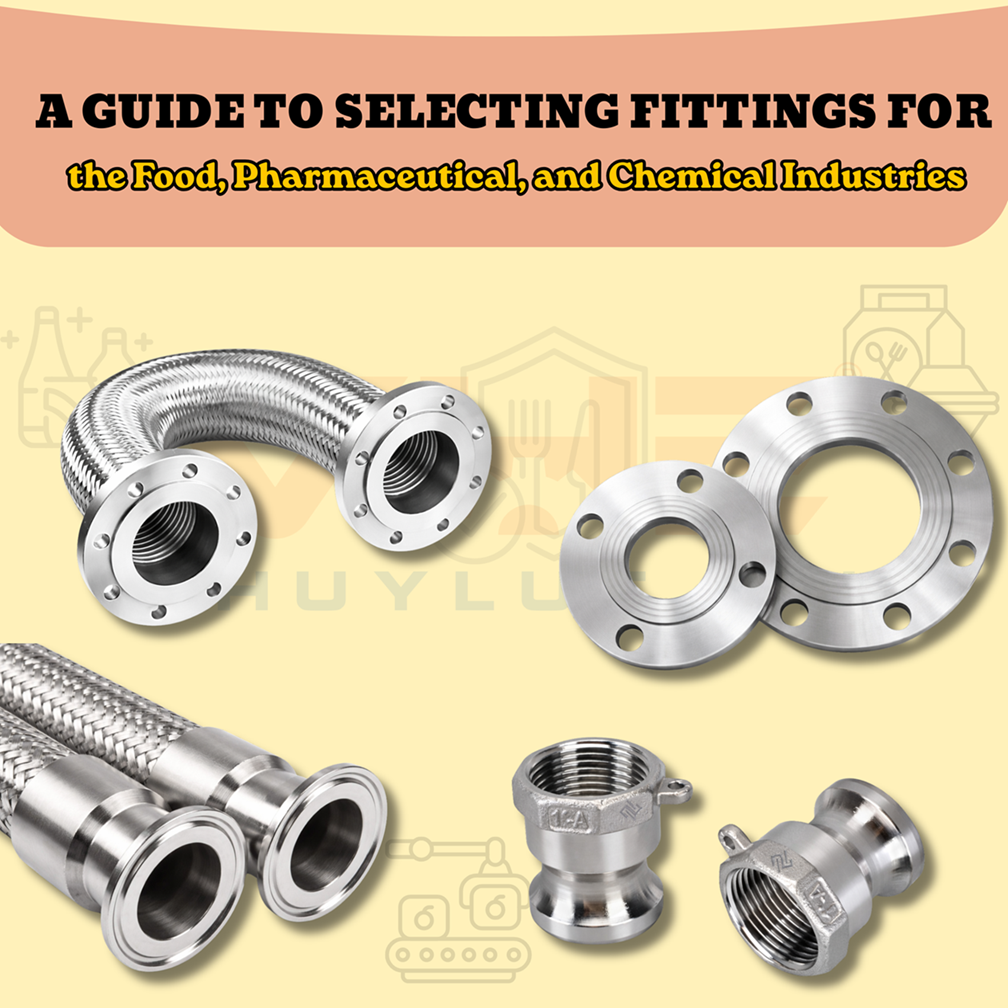
A Guide to Selecting Fittings for the Food, Pharmaceutical, and Chemical Industries

Each working environment has its own set of standard rules for connectors. Below is the technical standard classification:

1. Fitting Standards for the Food & Pharmaceutical Industries (Sanitary) 

The specific characteristic of the sanitary sector is the stringent sterile requirements and the frequent chemical or hot-steam cleaning of systems (CIP/SIP).

  • Connection Type: It is usually to use sanitary Tri-Clamp fittings according to international standards such as SMS or DIN. The sealing mechanism using a clamp and gasket (Silicone, EPDM, or PTFE) allows engineers to assemble and disassemble extremely quickly. Most importantly, the Clamp face has no recessed threads, eliminating dead corners so bacteria have no chance to accumulate.
  • Accompanying Mechanical Properties: Food pumping systems (milk, syrup...) typically have a stable flow rate but require significant bending. The corrugated metal hose core should prioritize the O Type (excellent bending radius, high flexibility) or the U Type (standard/common) series to combine with sanitary Clamp ends.
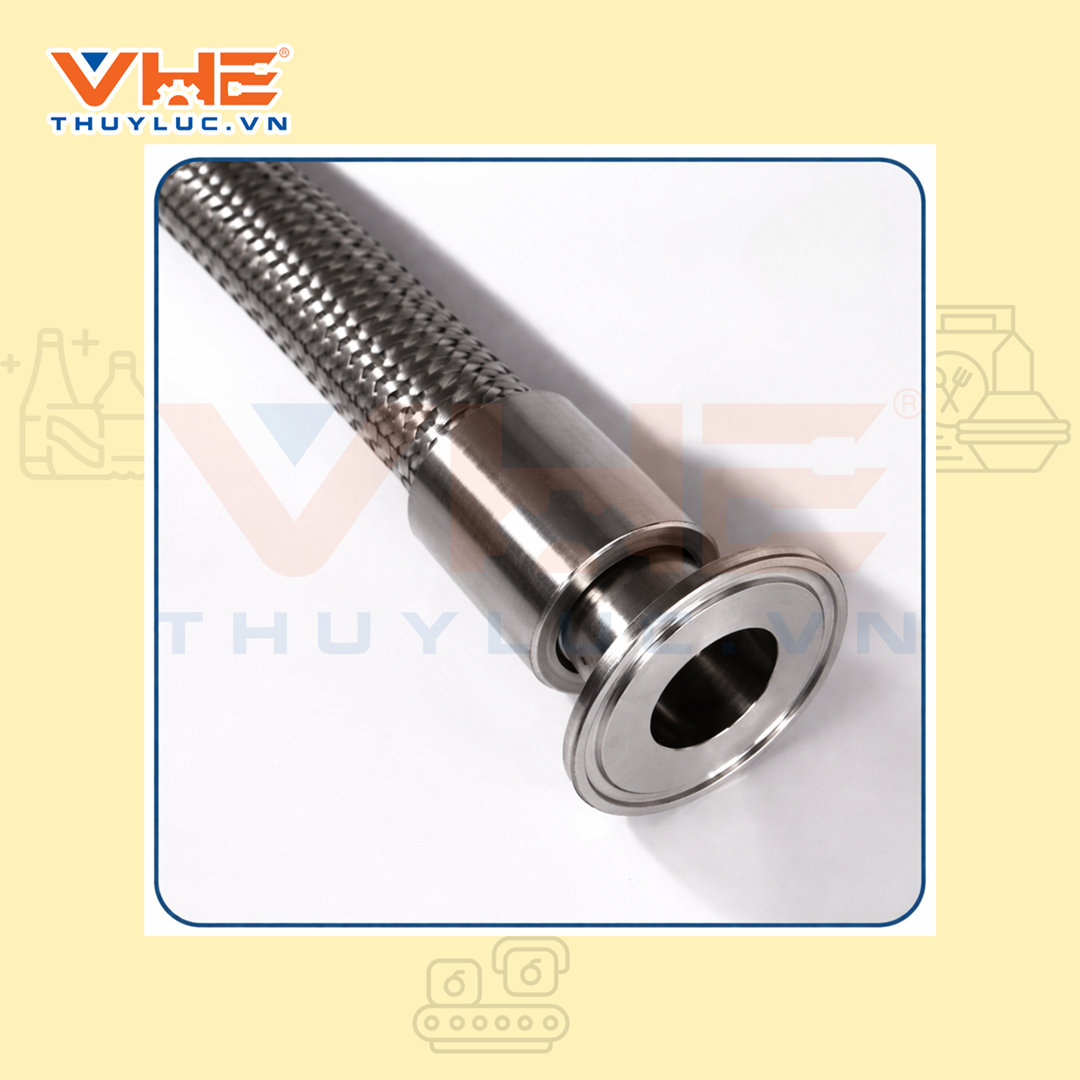
Fitting Standards for the Food & Pharmaceutical Industries (Sanitary) 

2. Fitting Standards for the Chemical Industry 

In contrast to the sanitary sector, the chemical industry (fertilizer plants, petrochemical refineries, caustic soda plants...) prioritizes chemical corrosion resistance and high temperature/pressure tolerance.

  • Fixed Connection Type: Requires a secure grip, capable of withstanding strong vibrating pressures. Top choices are Flanges (common standards: BS 4504, JIS B2220, ANSI B16.5) or Concave/Flat Conical Threaded Weld Fittings (BSP, JIC standards).
  • Quick-Release Connection Type: If flexible filling of light chemicals, petroleum, or paint transfer is required, Stainless Steel Camlock Quick Couplings (Type A, D...) are the optimal solution.
  • Pressure - Temperature Considerations: It is necessary to calculate the pressure derating based on temperature. For instance, a hose that withstands 60 bar at ambient conditions will have its safe pressure threshold drop to 48 bar when conveying hot steam or chemicals up to 260°C. Under these severe conditions, a Spiral Type corrugated hose combined with a thick braided mesh will handle the load effectively.
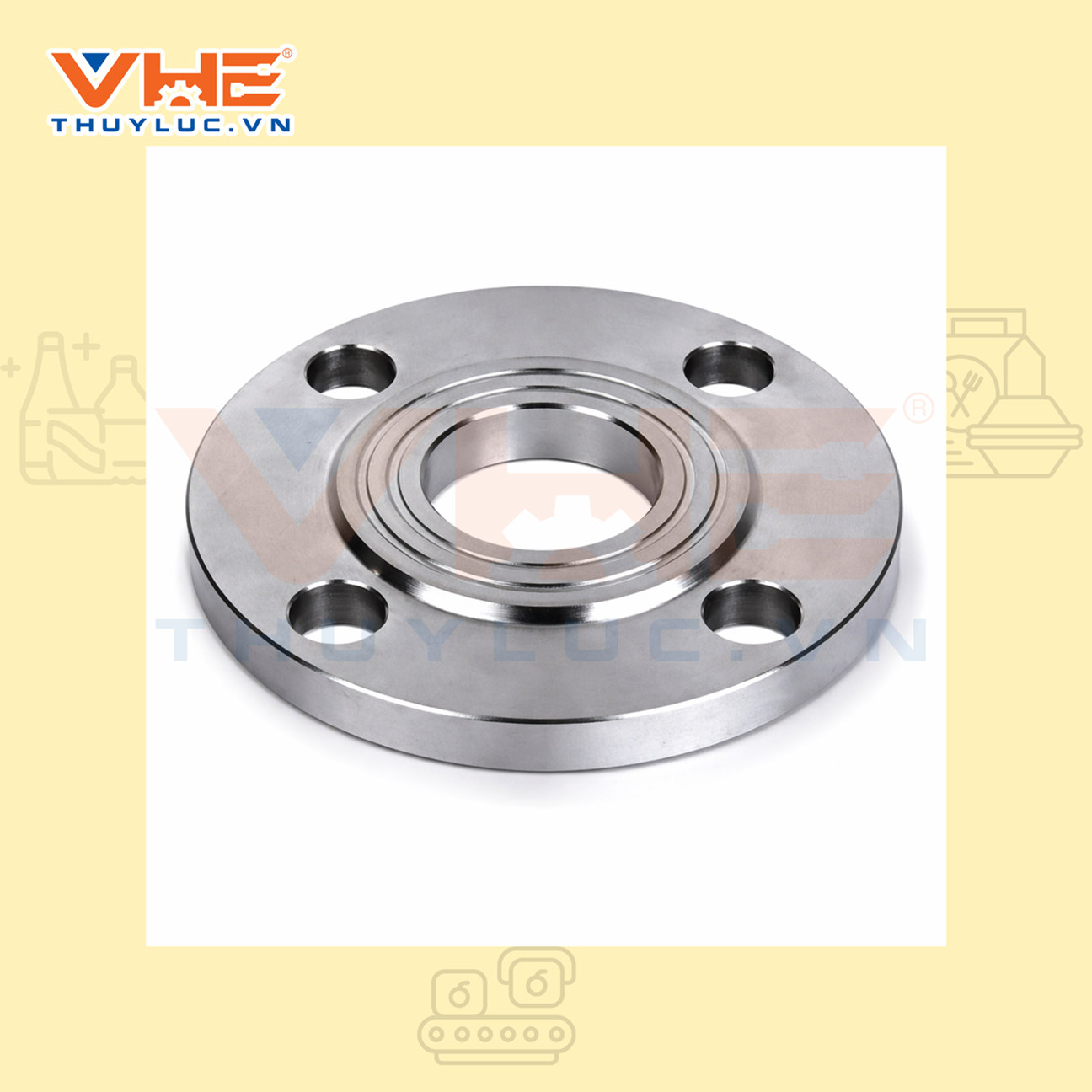
Fitting Standards for the Chemical Industry

Knowing how to choose the right fitting standard is one thing, but fabricating and fully assembling it into a complete stainless steel flexible hose requires a strict technical process.

At the VHE fabrication workshop, we standardize the machining process with 8 closed-loop steps. The difference that creates the product's lifespan lies in 4 core stages:

1. Braid Attachment Welding (Weld 1): Firmly securing the braided mesh layer to the corrugated hose core, ensuring the mesh does not fray, wear, or slip under pressure.

2. Fitting Welding (Weld 2): Utilizing the TIG welding method to connect the sanitary Clamp, flange, or threaded fitting to the hose body.

3. Weld Cleaning and Polishing: A mandatory requirement for the food and pharmaceutical industries. The stainless steel weld surface must be treated to be smoothly polished, free of slag, scale, or black soot.

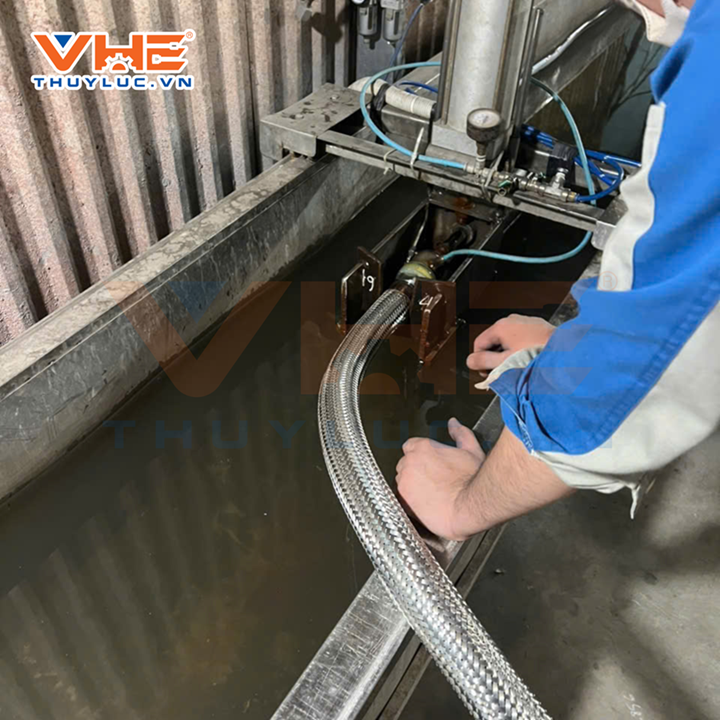
4. Pneumatic Pressure Testing: Before leaving the factory, the finished product must pass a leak pressure test, guaranteeing absolute tightness.
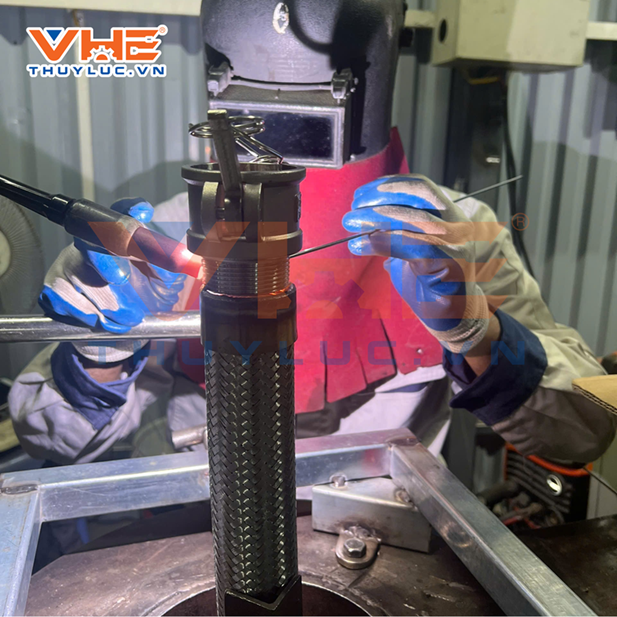
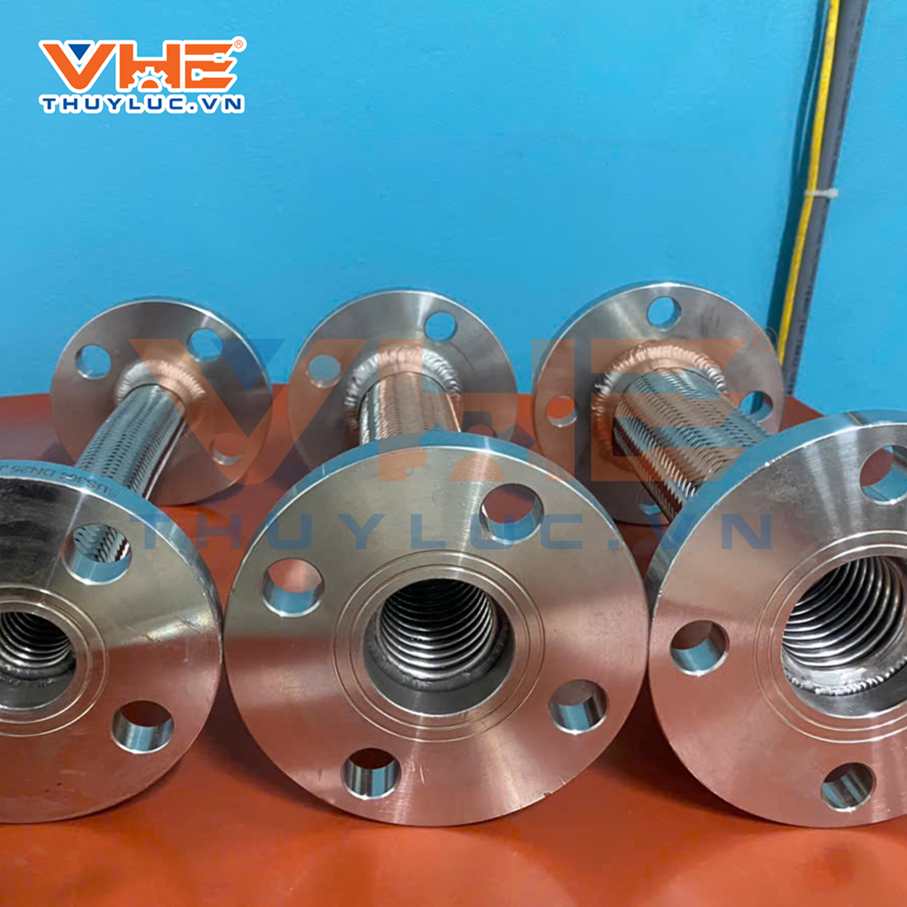
TIG welding of stainless steel flexible metal hose

Stainless steel flexible metal hoses with flanged ends

Pneumatic testing for flexible metal hose

Do not let a leak disrupt your production line! When contacting us for fabrication, please provide the 7 vital survey factors: Size, Movement conditions (static/vibrating/sliding), Working temperature, Pressure, Media type, Fitting type, and Included accessories.

Our team of experienced technicians will immediately measure, consult, and execute the most precise fabrication tailored exactly to your plant's system.

Contact us immediately to receive a direct workshop fabrication quote:

- Technical Consultation Hotline: 0903 967 588 - 0903 067 588

- Support Email: [email protected]

- Hanoi Fabrication Workshop: Km28, National Route 6A, Dong De Industrial Park, Phu Nghia Commune, Hanoi City.
XEM THÊM CÁC CÂU HỎI KHÁC

Distinguishing between Heavy series and Light series Hydraulic pipe clamps

During the installation and maintenance of the hydraulic and pneumatic piping systems within industrial plants, selecting the correct pipe clamps is a decisive factor in minimizing vibration and ensuring structural support. Under the international DIN 3015 standard, pipe clamps are primarily categorized into two main lineups: the Light Series and the Heavy Series.

Therefore, what exactly sets these two series

Xem tiếp ...

What Are DIN 3015 Hydraulic Pipe Clamps? Why Are They Essential for Marine Factories?

What Are DIN 3015 Hydraulic Pipe Clamps? Why Are They Essential for Marine Factories?

1. The Hidden Risks of Pipeline Vibration Failures

In hydraulic systems within heavy industrial plants, oil rigs (Oil & Gas), or marine vessels (Marine), continuous fluctuations in pressure and flow rates generate extreme vibrations.
If only temporary or technically incorrect pipe fastening methods are used, the system will face severe consequences:

  • Cracking and bursting of oil pipelines.
  • Fluid leakage at
Xem tiếp ...

Common Flange Standards for Stainless Steel Flexible Metal Hoses

In industrial piping systems, stainless steel flexible joints play a core role in absorbing vibrations, compensating for thermal expansion, and protecting critical equipment. However, to ensure precise installation and safe operation, selecting the correct flange connection standard is vital. This article provides a comprehensive overview of the common flange standards currently used in the fabrication and welding of flexible joints.

Xem tiếp ...

How Does the Stainless Steel Braided Mesh Affect the Working Pressure of Metal Hoses?

In industrial piping system design, the corrugated metal hose is a core material for expansion compensation and vibration isolation. However, the corrugated core itself (U-Type, O-Type, or Spiral-Type) has a relatively thin wall, primarily responsible for providing flexibility and conveying media.

So, how can this pipeline withstand pressures up to hundreds of bars without deforming or bursting? The answer lies

Xem tiếp ...

Applications of Stainless Steel Flexible Hoses in Extreme Environments

In industrial piping system design, managing vibrations and installation misalignments under normal conditions is challenging enough; however, maintaining stability in the harshest environments presents an even more formidable challenge.

1. The Lifeline Piping Systems in Mega-Plants

Imagine a pipeline network transporting chemicals, thermal oil, or liquefied gases within power generation facilities or petrochemical refineries. This serves as the critical core

Xem tiếp ...

What is Flexible Metal Hose? Construction Overview and Manufacturing Standards

In industrial piping systems, vibrations, thermal expansion, and assembly misalignments are inevitable. To resolve these issues, stainless steel flexible metal hoses (also known as stainless steel braided metal hoses) are a crucial component. So, what exactly is the construction of this product, and what practical benefits does it offer to manufacturing plants? Let’s explore the details with VHE in the

Xem tiếp ...

5 Crucial Considerations Before Installing Seamless Hydraulic Pipes in the Factory

The installation of high-pressure hydraulic piping systems in industrial facilities (such as shipbuilding, petrochemical, and food processing plants) is by no means a simple task. Unlike flexible hoses, seamless pipes provide greater rigidity and superior pressure resistance, yet they demand absolute precision in measurement and assembly.

A single minor deviation in dimensions or a flaw in the connection method can

Xem tiếp ...

Guide to Distinguishing Common Flare Thread Systems (JIC, SAE, JIS, and JIS Komatsu)

Guide to Distinguishing Common Flare Thread Systems (JIC, SAE, JIS, and JIS Komatsu)

In hydraulic engineering, thread systems that utilize a flare surface for sealing are frequently confused due to their nearly identical external appearances. Incorrect installation does not only lead to leakages but can also cause catastrophic failure of the fittings due to mismatched flare angles and thread pitches. This article will guide you on how to easily measure inside and outside

Xem tiếp ...

Complete Range of DIN Fittings for Seamless Steel Tubes: A Fast and Weld-Free Assembly Solution

When installing fixed piping systems for factories or outdoor transmission lines, assembling rigid pipes is always a labor-intensive task. Traditional welding processes not only require highly skilled welders but also present numerous challenges and risks when performed in confined spaces, at heights, or outdoors under harsh weather conditions.

To thoroughly resolve this issue, using DIN seamless steel pipes combined with

Xem tiếp ...

HỖ TRỢ TƯ VẤN MIỄN PHÍ

Nếu không tìm được thông tin cần thiết, vui lòng liên hệ với chúng tôi để được tư vấn miễn phí

Hotline tư vấn

(028) 3503 0349

0903 967 588 - 0903 067 588

[email protected]

hoặc để lại thông tin thông qua công cụ
TƯ VẤN HỖ TRỢ ngay bên dưới, chúng tôi sẽ phản hồi ngay khi nhận được thông tin