Inox 201 là gì?

Inox 201 là loại thép không gỉ chi phí thấp thay thế cho inox 304

Inox 201 hay còn gọi là thép không gỉ 201 (tiếng anh 201 stainless steel). Là mác thép thuộc nhóm Austentic, có thành phần chủ yếu là crom, niken và mangan. Nó được phát triển vào những năm 1950 do thiếu niken trên toàn thế giới.

Inox 201 là một giải pháp chi phí thấp hơn thay thế cho các thép không gỉ Cr-Ni như inox 301 và inox 304. Niken được thay thế bằng việc bổ sung Mangan và Nito. Inox 201 về cơ bản không có từ tính trong điều kiện ủ và trở thành từ tính khi được làm lạnh.

Thành phần hóa học của inox 201 được thể hiện trong bảng dưới đây:
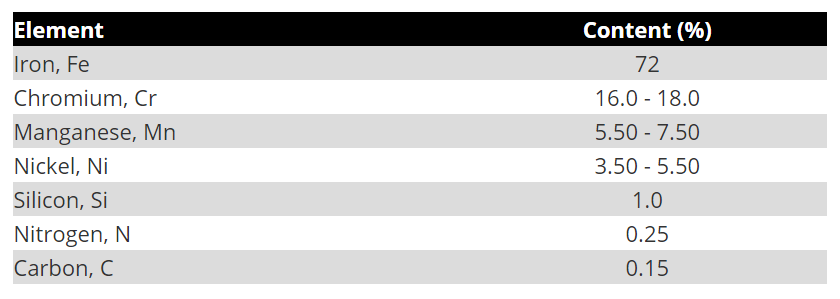
Bảng Thành phần hóa học của inox 201

Phương pháp sản xuất

Nhiệt độ ủ cho inox 201 là từ 1850-2000 ° F. Làm mát nhanh chóng qua dải kết tủa cacbua (1500 - 800o F) là cần thiết để giữ cacbua trong dung dịch và ngăn ngừa sự nhạy cảm. Thép không gỉ 201 không cứng bằng cách xử lý nhiệt, nó chỉ cứng bằng cách làm lạnh.

Kỹ thuật hàn

Thép không gỉ 201 có thể được hàn bằng tất cả các phương pháp thông. Giống như các loại thép không gỉ austenit khác mà cacbon không được kiểm soát dưới 0,03%, loại inox 201 dễ bị ăn mòn giữa các hạt trong vùng chịu nhiệt hàn.
Khẳ năng chịu nhiệt

Inox 201 có khả năng chịu được nhiệt độ trong khoảng 1149-1232°C (2100-2250°F).

Khả năng chịu ăn mòn

Inox 201 có khả năng chịu được nhiều môi trường ăn mòn từ nhẹ đến trung bình. Nó có khả năng chống ăn mòn gần giống với inox 301 và đã được thay thế thành công cho inox 304 trong nhiều môi trường nhẹ.

Các dạng thành phẩm

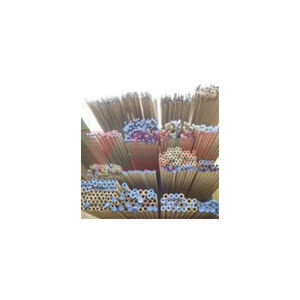
Hiện nay inox 201 sử dụng khá phổ biến trong đời sống và được sản xuất dưới các dạng như: Cuộn, tấm, ống, hộp, thanh la, thanh v, cây đặc và các loại phụ kiện

Ứng dụng của inox 201 trong đời sống

Thép không gỉ 201 được sử dụng phổ biến trong đời sống hàng ngày, từ dân dụng tới công nghiệp. Một số ứng dụng cụ thể như làm giường, tủ, bàn ghế, máy giặt, cửa sổ, cầu thang, lan can, thiết bị gia dụng, nhà bếp và thiết bị đựng thực phẩm, bồn rửa, dụng cụ nấu nướng, xe lửa đường sắt, rơ moóc máy kéo và ô tô…
XEM THÊM CÁC CÂU HỎI KHÁC

Understanding Specs & Size Chart: DIN 2391 Seamless Steel & SS316 Stainless Tubing

Understanding Specs & Size Chart: DIN 2391 Seamless Steel & SS316 Stainless Tubing

Did you know: Over 70% of leakage and pressure drop issues in hydraulic systems stem from selecting the incorrect tube standards and dimensions? In high-pressure environments, even a minor deviation in wall thickness or outside diameter can lead to severe consequences.

So, how can you accurately read the technical specifications of DIN 2391 St37.4 (NBK Phosphated) seamless steel tubes and

Xem tiếp ...

Differentiating the 3 Common Seamless Hydraulic Tubes: Black Steel, Galvanized, and SS316

In high-pressure hydraulic systems, specifying the wrong type of seamless steel tube not only leads to a wasted budget but also poses extremely dangerous risks of leakage and catastrophic blowouts. Are you currently debating between black carbon steel, galvanized steel, or SS316 stainless steel tubes? Which one is the absolute optimal choice for your project? Let Vietnam Hydraulic Equipment (VHE)

Xem tiếp ...

How to Accurately Identify Common Tapered Pipe Threads: NPT, BSPT, and JIS

How to Accurately Identify Common Tapered Pipe Threads NPT, BSPT, and JIS

In hydraulic systems, tapered threads play a crucial role due to their ability to self-seal directly along the thread flanks. However, because they all share a similar tapered profile that gradually narrows toward the tip, distinguishing between BSPT, NPT, and JIS Tapered threads with the naked eye is incredibly difficult. This article will guide you in selecting the correct thread

Xem tiếp ...

4 Ways to Fix Fire Hose Leaks at the Coupling

Is your fire hose constantly leaking or spraying water at the coupling? This is more than just a minor waste—it is a significant safety hazard that drastically reduces water pressure when a fire breakout occurs. For facility managers and fire safety teams, resolving these leaks is a top priority to ensure emergency readiness.

In this article, we provide a technical

Xem tiếp ...

2026's Top 4 Marine Stainless Steel Hydraulic Connectors

In the marine environment, the greatest risk to any hydraulic system is not just pressure, it is galvanic corrosion. A leaking fitting does more than just cause oil loss; it can paralyze critical systems, from steering gear to cargo cranes

Are you searching for a durable connection solution that is durable enough to withstand salt spray and high-impact pressure? That

Xem tiếp ...

Construction to distinguish Grade 304 vs. 316 Stainless Steel in Hydraulic Systems

In the hydraulic industry, choosing the material of the connector, crimping fitting, and valves is not only an aesthetic choice, but also a critical decision that dictates the lifespan of the entire system. While Grade 304 and Grade 316 are the two most prevalent stainless steels used, their distinct chemical compositions grant them unique properties tailored for specific environments. Misidentifying

Xem tiếp ...

Why Stainless Steel Fittings and Ferrules Outperform Plated Steel

In any hydraulic system, minor components like fittings and ferrules play a decisive role in ensuring the safety and leak-free integrity of the entire network. The industry is shifting from traditional zinc-plated steel to Stainless Steel (SS), a trend that is inevitable in high-performance engineering.

So, why do seasoned engineers prioritize Stainless Steel fittings despite the higher upfront investment? Let’s

Xem tiếp ...

Why is the 648AA hydraulic hose a good choice for Heavy-Duty Fluid Transfer on Offshore Rigs?

1. The challenges in Fluid Transfer for the Oil & Gas Maritime Industries

In extreme environments such as offshore drilling rigs and supply vessels, the transfer of heavy-duty fluids, including liquid mud, fuel, seawater, and barite, presents significant operational challenges. These demanding applications require equipment engineered for maximum durability and resilience under constant stress

To meet these rigorous standards, the

Xem tiếp ...

Can Parker Hydraulic Hoses be used for mobile equipment?

For those working at construction sites, nothing is more frustrating than a hydraulic hose burst while an excavator or crane is in full operation. Oil spills everywhere, schedules grind to a halt, and downtime costs—including repair fees and machine rentals—can skyrocket to tens of millions of VND per day.

The question is: Can Parker hydraulic hoses be used for mobile

Xem tiếp ...

Characteristics, Classification, Applications of Welding Neck Flanges

Welding Neck Flange (WNF) is a widely utilized component in high-pressure piping systems across various industries. In this article, Vina-Hydraulic Equipment Joint Stock Company  (VHE) will provide you with an in-depth look at its key characteristics, classification, and practical applications in modern engineering.

Characteristics, Classification, Applications of Welding Neck Flanges

Welding Neck Flanges

1. What is a Welding Neck Flange? Structural Characteristics

A Welding Neck Flange (WNF), also known as

Xem tiếp ...

HỖ TRỢ TƯ VẤN MIỄN PHÍ

Nếu không tìm được thông tin cần thiết, vui lòng liên hệ với chúng tôi để được tư vấn miễn phí

Hotline tư vấn

(028) 3503 0349

0903 967 588 - 0903 067 588

[email protected]

hoặc để lại thông tin thông qua công cụ
TƯ VẤN HỖ TRỢ ngay bên dưới, chúng tôi sẽ phản hồi ngay khi nhận được thông tin